The world has finally put a number on saving nature. By 2030, at least USD 200 billion a year is supposed to flow toward biodiversity from every source, public and private, domestic and international. That target exists because, for decades, the money protecting ecosystems has been a rounding error next to the money degrading them. Biodiversity finance is the practice of closing that gap: mobilizing financial resources, redirecting financial flows, and building the instruments that let financial institutions treat healthy ecosystems as something worth funding rather than something to work around. This is the landscape view of how that money actually moves, through governments, banks, and blended-finance deals, and where a project like reef restoration fits inside it.
Key Takeaways
- Biodiversity finance is the practice of redirecting public and private financial resources toward biodiversity conservation, coordinated globally through BIOFIN, a UNDP initiative running in 133 countries as of 2025.
- Target 19 of the Kunming-Montreal Global Biodiversity Framework calls for mobilizing at least USD 200 billion a year by 2030, naming blended finance, green bonds, payment for ecosystem services, and biodiversity offsets and credits as specific mechanisms.
- A roughly USD 700 billion annual financing gap remains between current spending and the 2030 goal.
- Seychelles’ 2018 blue bond and Gabon’s 2023 debt-for-nature swap show the same instrument working at two very different scales.
- Every biodiversity finance instrument needs a measurable, monitored project to fund. Reef restoration is a working example of that kind of project.
What Is Biodiversity Finance?
Biodiversity finance is the practice of mobilizing financial resources, public and private, to support biodiversity conservation and reverse biodiversity loss, rather than financing the economic activity that causes it.¹ The United Nations Development Programme has run the practical side of this work since 2012 through its Biodiversity Finance Initiative, known as BIOFIN. The methodology helps national governments build Biodiversity Finance Plans, a structured accounting of what a country currently spends on nature, what it needs, and where new finance solutions can close the difference. BIOFIN has grown from an initial cohort of 41 countries into a network spanning 133 countries as of 2025, with the Global Environment Facility backing implementation in more than 90 of them.¹ It is not a single fund. It is a shared methodology, and a catalog of more than 150 practical tools countries can draw from depending on their own economy and conservation priorities.¹
The stakes are not abstract. The World Economic Forum’s nature-positive economy analysis, cited by UNDP, puts the potential business value of shifting major economic systems toward nature-friendly practices at USD 10.1 trillion a year by 2030, alongside 395 million new jobs.² That is the upside case for treating biodiversity finance as economic infrastructure rather than charity.
Global Biodiversity Finance and the Kunming-Montreal Framework’s $200 Billion Goal
The USD 200 billion figure comes from Target 19 of the Kunming-Montreal Global Biodiversity Framework, the global biodiversity agreement adopted in December 2022. Target 19 is unusually specific about how that money is supposed to arrive, which makes it a useful map of the entire biodiversity finance field. It calls for substantially increasing financial resources from all sources, domestic and international, public and private, to implement national biodiversity strategies and action plans, and it names the instruments explicitly: international financial resources reaching at least USD 20 billion a year by 2025 and USD 30 billion by 2030, focused on least developed countries and small island developing states; domestic resource mobilization through national biodiversity finance plans; private finance mechanisms including blended finance and impact funds; and specific tools such as payment for ecosystem services, green bonds, and biodiversity offsets and credits, all expected to carry environmental and social safeguards.³ It also calls for collective action that respects the role of Indigenous peoples and local communities, including non-market, community-based approaches to managing natural resources.³ Almost every instrument covered later in this piece traces back to one of those clauses.
The Biodiversity Finance Gap: Why Biodiversity Loss Is Outpacing the Money to Stop It
Setting a target is not the same as hitting it. Analysis tied to the Global Biodiversity Framework puts the annual biodiversity finance gap at roughly USD 700 billion, the additional amount still needed every year to meet 2030 goals, a figure reaffirmed at the sixth Global Conference on Biodiversity Finance in Chile in May 2025, where representatives from 133 countries in the BIOFIN network met alongside 92 nations actively advancing new national Biodiversity Finance Plans.⁴ Progress is real, it is simply not yet at the scale the framework calls for. Reporting on global biodiversity finance also runs on a lag, since it depends on a two-year OECD cycle, so the most current published figures as of this writing still largely reflect data from 2023. That makes independent, verifiable project-level outcomes, the kind a financial institution can point to directly rather than wait two years to confirm through national statistics, more valuable, not less.
How Financial Institutions and the Financial Sector Are Redirecting Financial Flows Toward Nature
The financial sector’s role in closing that gap runs in two directions. One is disclosure: the Taskforce on Nature-related Financial Disclosures formally launched on June 4, 2021, giving banks, insurers, and asset managers a structured way to report the nature-related risks in their portfolios, the same function climate-related disclosure frameworks already serve for climate change.⁵ The other is instrument design: building the financial products, blended finance structures, green bonds, biodiversity credits, debt conversions, that move private capital and public finance together toward measurable ecosystem outcomes. Reforming subsidies that actively harm ecosystems belongs to the same picture, redirecting public funds toward biodiversity protection is treated as inseparable from raising new money. Responsible investment and impact investing groups increasingly treat this as risk management, since a portfolio exposed to natural capital, water, soil, fisheries, coastal infrastructure, carries financial risk if that capital degrades.
Biodiversity Finance Tracking: What BIOFIN’s National Plans Reveal
Biodiversity finance tracking is what separates a country’s stated ambition from its actual spending. A national Biodiversity Finance Plan starts by tracking existing public and private expenditure on biodiversity, identifying harmful subsidies, then modeling which finance solutions, a conservation trust fund, a debt-for-nature swap, a new tax structure, close the specific gap that country faces. The exercise turns “we support nature-positive outcomes” into a number that can be checked. Two examples below show what that looks like once a country moves from planning to an actual transaction.
Finance for Nature in Practice: The Seychelles Blue Bond
Seychelles issued the world’s first sovereign blue bond in October 2018, raising USD 15 million from three impact investors, Calvert Impact Capital, Nuveen, and Prudential, backed by a World Bank guarantee and a concessional loan to cover interest payments.⁶ The proceeds funded an expansion of marine protected areas, new fisheries management tools, and climate-resilient coastal infrastructure. The dollar amount was modest. Its influence was not: the structure directly inspired later blue bond issuances by Belize, Palau, and Tonga, proving that a small island nation could design a credible, investor-grade instrument around ocean health rather than waiting for a larger economy to do it first.
Finance Solutions at Scale: Gabon’s Debt-for-Nature Swap
Five years later, the same underlying idea reached a different order of magnitude. Gabon completed a USD 500 million debt-for-nature swap in August 2023, refinancing existing sovereign debt to generate an estimated USD 163 million in new conservation funding over 15 years. The Nature Conservancy structured the deal with the Government of Gabon, Bank of America arranged the new bond, and the US International Development Finance Corporation provided political risk insurance.⁷ The funding expands Gabon’s legally designated marine protected areas from 26 to 30 percent of its ocean territory and supports a marine spatial plan covering habitat for the world’s largest population of leatherback turtles. It was the fourth blue bond of this kind The Nature Conservancy has structured, and the first debt conversion of its kind in mainland Africa, a sign of how quickly this specific finance solution has scaled since Seychelles proved the concept in 2018.
Biodiversity Conservation That Finance Can Actually Fund: Where Reef Restoration Fits
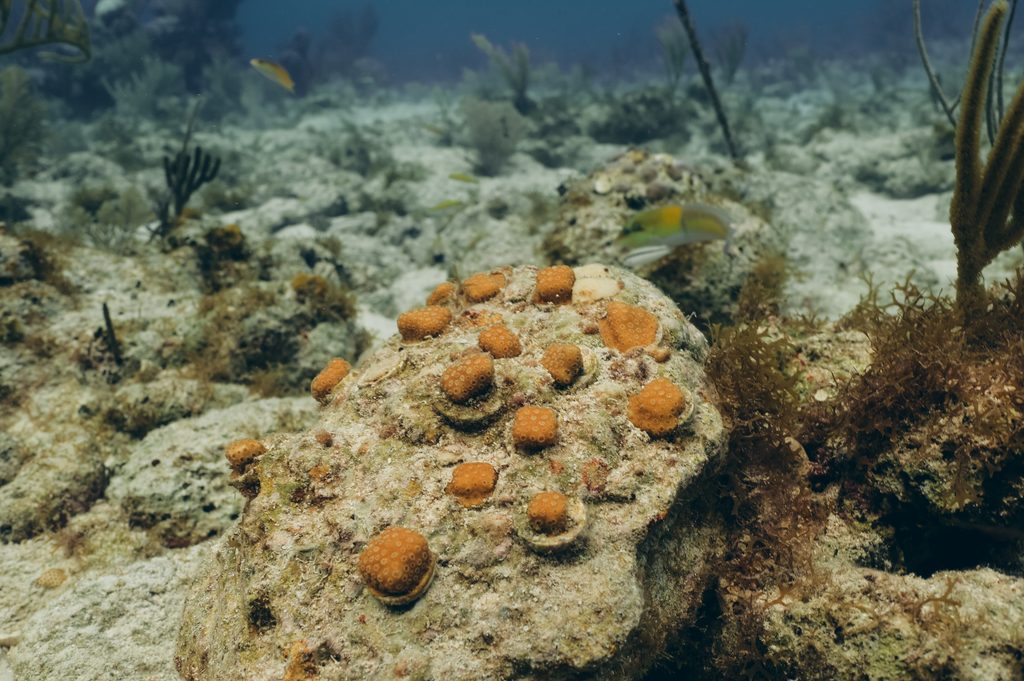
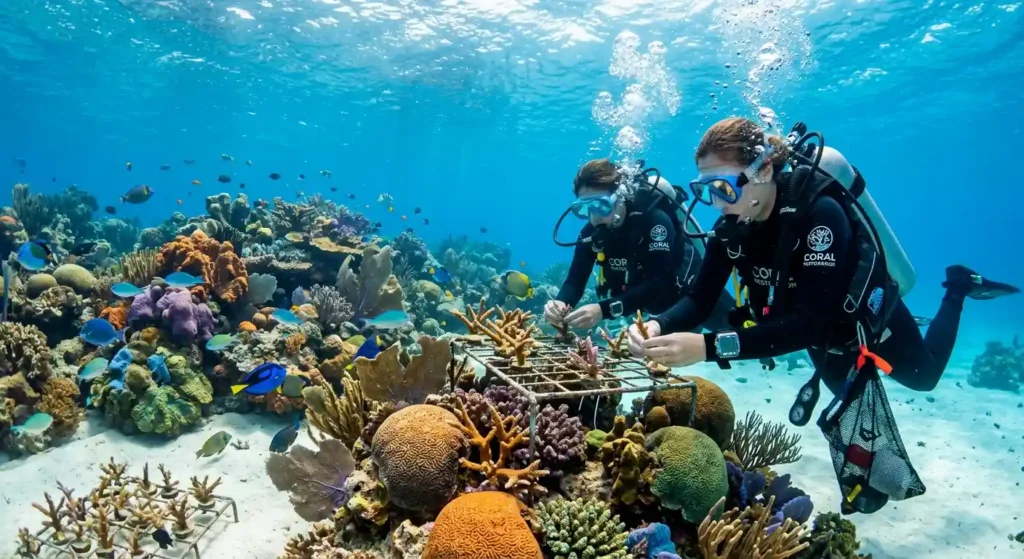
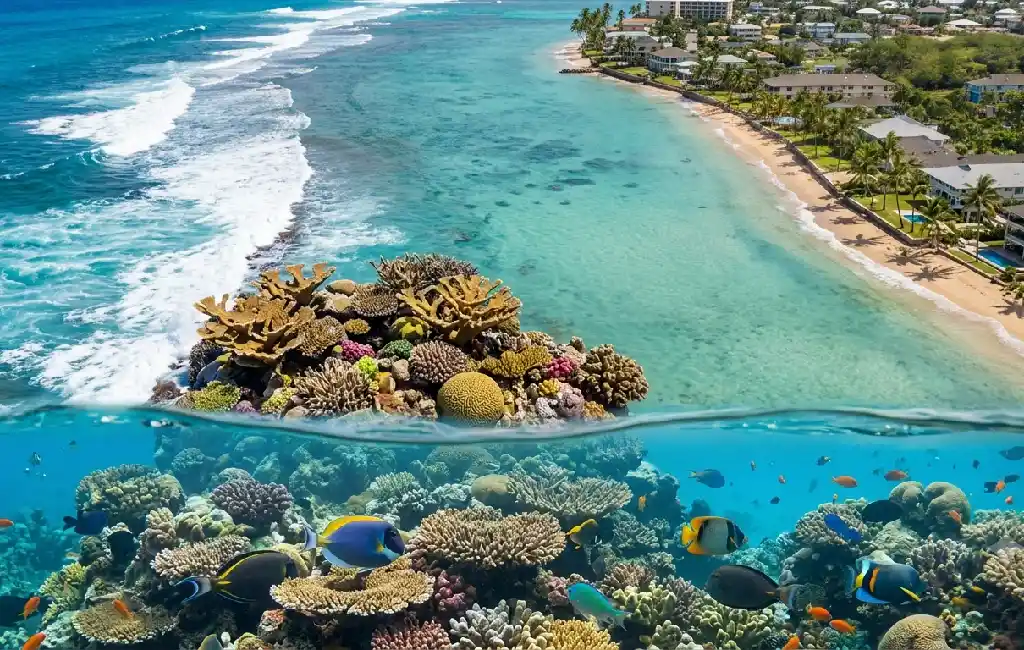
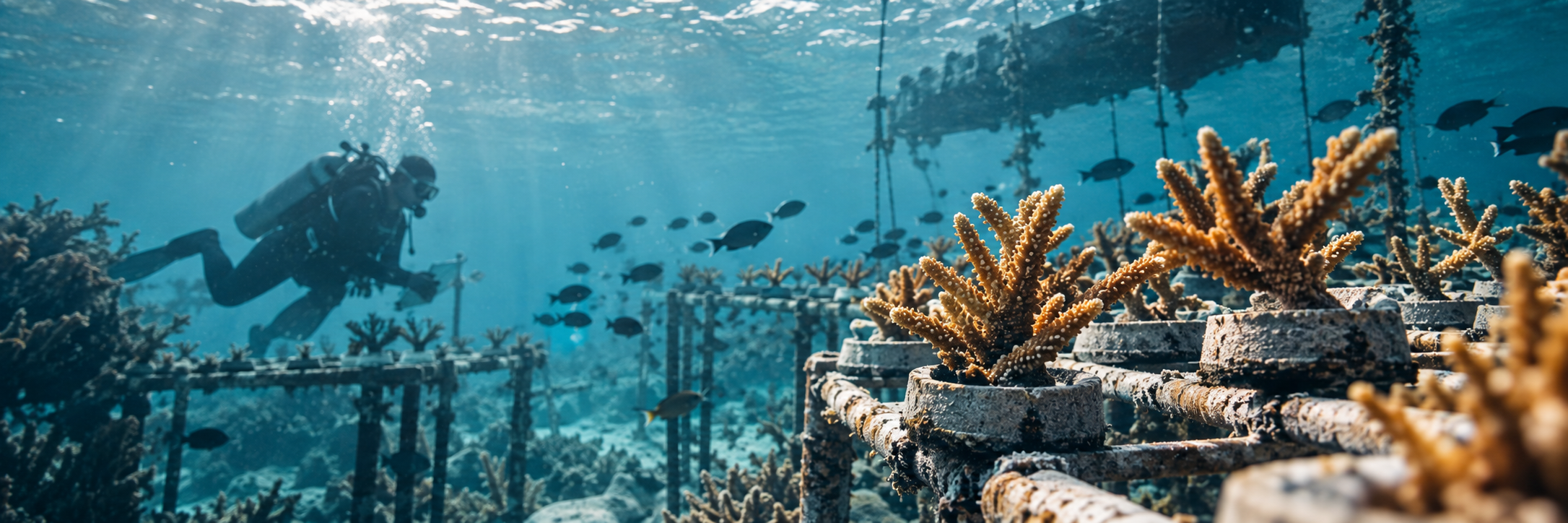
Every instrument described above needs the same thing to work: a real, measurable project on the other end of the money. A blue bond’s proceeds have to fund something specific. A debt-for-nature swap’s conservation trust fund has to disburse against defined outcomes. Reef restoration is exactly that kind of project, monitored coral growth across defined sites, tracked survival and outplant data, and species diversity that can be counted rather than estimated. Coral Vita’s land-based coral farms have grown more than 100,000 corals across 52 species, restoring reefs that protect coastal communities against storms, support the fisheries local economies depend on, and sustain the food security and water quality that healthy coastal ecosystems provide. That combination of scale and verifiable data is what makes a coastal restoration project bankable in the first place, whether the capital behind it eventually comes from a development bank, a blended finance vehicle, or a biodiversity credit, the specific instrument covered in more depth in a companion piece on this site.
To be precise about where Coral Vita stands today: this is not a claim that Coral Vita is currently party to a named blue bond, debt-for-nature swap, or biodiversity credit transaction. It is a claim that the kind of restoration work Coral Vita does is the exact category of project this entire financing architecture exists to fund.
What to Evaluate Before Committing Capital to a Conservation Project
A development bank, reinsurer, or impact fund weighing a conservation investment is really asking one question in several forms: will this outcome hold up under scrutiny. That means checking a short list before money moves. Monitoring rigor: is growth and survival data collected on a defined schedule, not estimated after the fact. Permanence: does the restored habitat persist long enough to justify the investment horizon. Local relevance: does the outcome serve the region generating the capital, echoing the local-to-local principle that governs high-integrity biodiversity credits. Legal clarity: are the underlying conservation agreements and environmental and social safeguards documented clearly enough that the project cannot quietly externalize costs elsewhere. None of this is unique to reef restoration. It is the diligence any credible finance solution in this space now expects.
Biological Diversity, Climate Change, and the Case for Acting Before 2030
Biodiversity finance and climate finance are not competing budgets, they are increasingly the same budget viewed from two angles. Target 19 calls for synergies between finance targeting the biodiversity and climate crises, and coastal ecosystems make that overlap concrete: a restored reef reduces wave energy and storm damage, the same outcome a climate adaptation investment is built to produce, while protecting the biological diversity a nature-positive economy depends on. The 2030 deadline attached to nearly every figure here, the USD 200 billion target, the 2025 milestone, the biodiversity strategies countries must update, is the same year the Global Biodiversity Framework set for halting and reversing nature loss. Financing decisions made in the next few years, not the next few decades, determine whether that goal is reachable.
About Coral Vita
Coral Vita is a mission-driven company dedicated to restoring our world’s dying and damaged reefs. Using land-based farming techniques, Coral Vita grows diverse and resilient corals in months instead of the decades reefs take in the wild. These corals are then transplanted into threatened reefs, helping to preserve ocean biodiversity while protecting coastal communities that depend on healthy reefs for protection, food, and income.
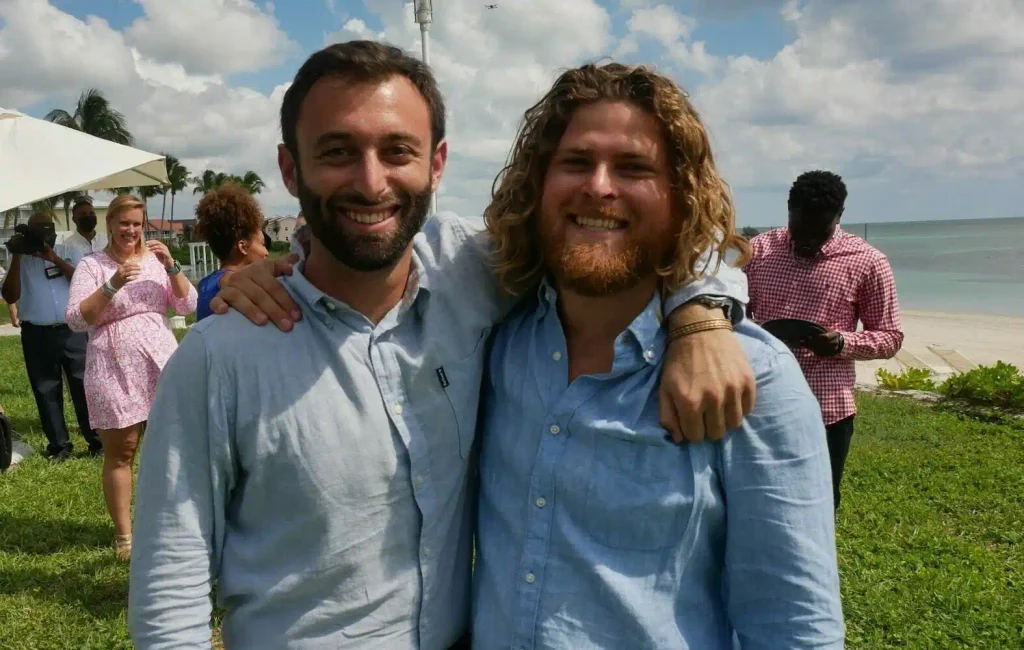
Founded by environmental entrepreneurs Sam Teicher and Gator Halpern, Coral Vita’s high-tech coral farms incorporate breakthrough methods to restore reefs in the most effective way possible. In 2021, the company was recognized as the inaugural winner of Prince William’s Revive Our Oceans Earthshot Prize Winner for their pioneering work in coral restoration.
To learn more about Coral Vita’s work or to get involved in coral reef conservation efforts, visit their website at www.coralvita.co or contact them directly through their Contact Us page.
FAQ
What is biodiversity finance?
Biodiversity finance is the practice of mobilizing public and private financial resources to support biodiversity conservation and reverse biodiversity loss, coordinated globally through initiatives like UNDP’s BIOFIN.
How is biodiversity finance different from a biodiversity credit?
Biodiversity finance is the umbrella category, covering bonds, debt swaps, and blended finance. A biodiversity credit is one specific instrument inside it, a certified unit of measured conservation outcome.
What is Target 19 of the Global Biodiversity Framework?
Target 19 commits the world to mobilizing at least USD 200 billion a year by 2030 for biodiversity, from domestic, international, public, and private sources combined.
How much money does biodiversity finance need to mobilize by 2030?
At least USD 200 billion a year under Target 19, against an estimated USD 700 billion annual financing gap that still needs to close to meet 2030 goals.