Biodiversity net gain went from a planning footnote in England to a global compliance expectation in under three years. For maritime construction, dredging, and port work it is the hardest requirement to satisfy, because the tools built for it were designed on land. Coral reef restoration closes that gap.
Key Takeaways
- Biodiversity net gain is mandatory in England for most developments since 12 February 2024 and requires a 10 percent increase in biodiversity value.
- The intertidal zone is measured under a terrestrial metric, which the British Ports Association warns can make mitigation costs disproportionate to a project’s actual footprint.
- Marine Net Gain is still in consultation, leaving a gap for ports and dredgers that must demonstrate net gain now.
- IFC Performance Standard 6 applies no net loss and net gain requirements to marine projects directly.
- Coral reef restoration delivers measurable biodiversity gain in the coastal and marine environments that net gain frameworks handle worst.
What Biodiversity Net Gain Actually Requires
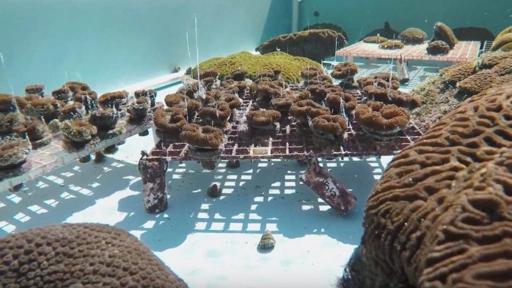
Biodiversity net gain (BNG) is a statutory planning condition, not a voluntary goal. In England it became mandatory on 12 February 2024 under Schedule 7A of the Town and Country Planning Act 1990, inserted by the Environment Act 2021.1 Most qualifying developments must deliver at least a 10 percent increase in biodiversity value against the pre-development baseline.
The Environment Act 2021 and the 10 Percent Minimum
The Environment Act 2021 set the target and the statutory biodiversity metric.2 Major developments were the first to be caught, with small sites following in April 2024. The obligation is a pre-commencement condition: a biodiversity gain plan must be approved before any work starts.
How Biodiversity Units Are Calculated
The statutory biodiversity metric converts habitat into biodiversity units. It scores area, condition, distinctiveness, and connectivity, then produces standardised biodiversity units. A project’s post-development units must exceed its baseline units by at least 10 percent.
This is how you calculate biodiversity net gain for a development site. The same metric applies to major developments and, from November 2026, to nationally significant infrastructure projects.
Onsite, Offsite, and Statutory Biodiversity Credits
Developers have three routes to meet biodiversity net gain: enhance habitats on site, buy off site biodiversity gains, or buy statutory biodiversity credits as a last resort. The metric sums the value of all three, and the total must beat the baseline. Most projects combine on site gains with registered off site units.
Off site habitat creation compensates for losses that cannot be avoided, and registered gains appear on the biodiversity gain sites register. Buying statutory biodiversity credits is the option of last resort, priced high on purpose.
Biodiversity Net Gain Regulations and Local Planning Authorities
Local planning authorities review the biodiversity gain plan before work can begin. The plan must show the baseline, the post-development value, and how the 10 percent objective is met. For smaller schemes, the small sites metric replaces the full statutory biodiversity metric.3
Biodiversity net gain policy now feeds into local plans and local nature recovery strategies across England. It is shaping how development and land management are assessed in the natural environment.
The Biodiversity Gain Plan and Exemptions
A biodiversity gain plan is submitted with the application and approved before commencement. Not every development is caught. Householder applications are exempt, and so are developments that impact less than 25 square metres of habitat under the de minimis rule.
From August 2026, developments of 0.2 hectares or below and temporary developments permitted for five years or less are also exempt. Those exemptions fall away if the work touches priority habitat and biodiversity value drops.³ Irreplaceable habitats need a separate assessment.
Where the Standard Framework Breaks Down on the Coast
The Intertidal Metric Problem
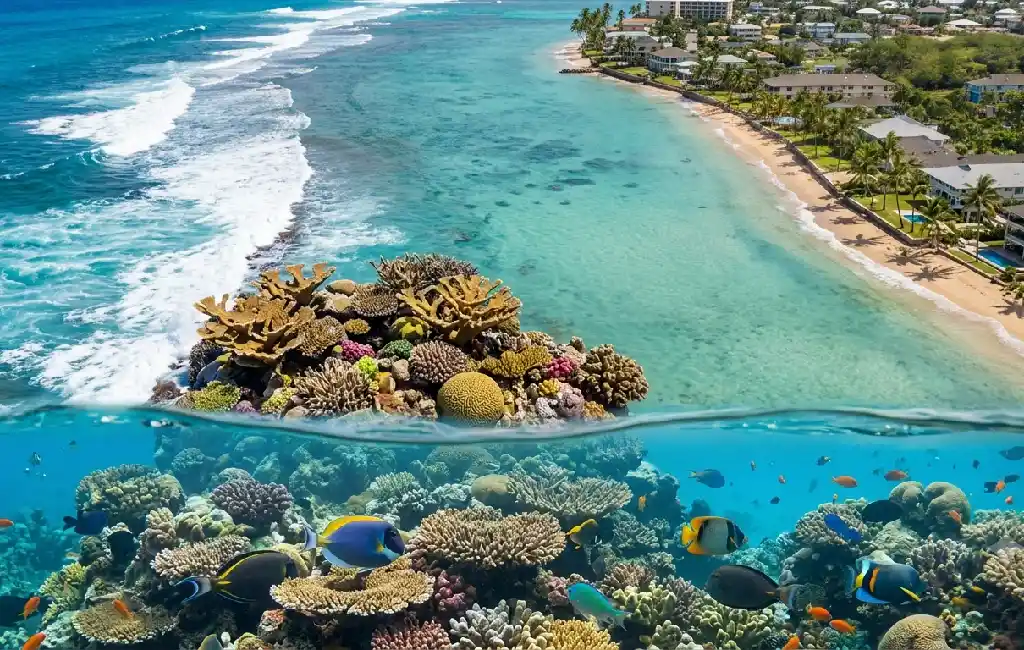
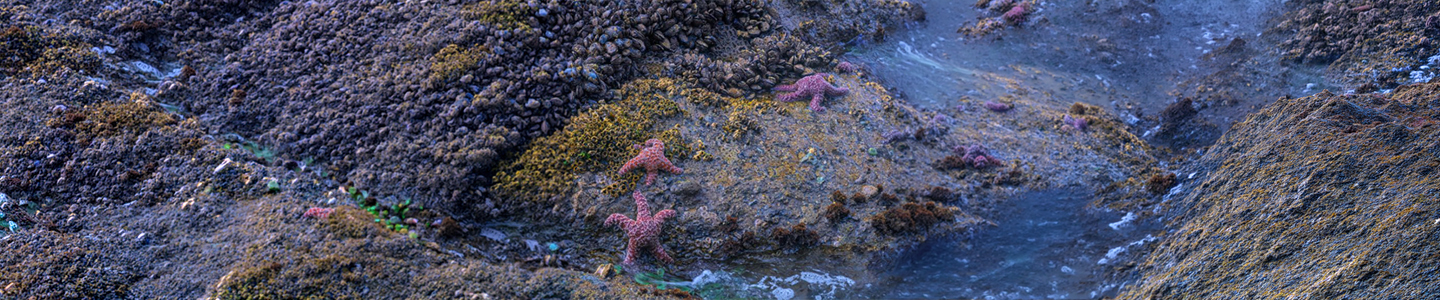
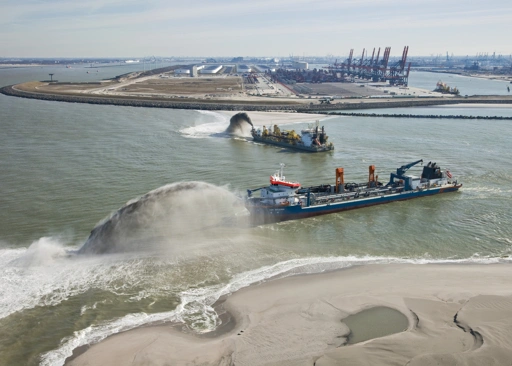
The intertidal zone, the strip of shoreline between high and low tide, is classified as terrestrial under the current metric even though it functions as a marine ecosystem.4 The British Ports Association warned that applying the terrestrial metric to ports and coastal sites can inflate mitigation costs far beyond a project’s actual footprint, and called the approach unworkable for ports if left unchanged.
Why Habitat Creation Built for Hedgerows Does Not Translate
Most habitat creation and biodiversity offsetting in the BNG market is built around grassland, hedgerows, and woodland, and measured in biodiversity units designed for land. A shoreline is dynamic, tidal, and connected to the open sea. Habitat value there does not sit still the way a meadow does.
Wildlife corridors and connectivity matter differently in the water. The result is a framework that measures a coastline with tools made for a field.
Marine Net Gain Is Coming, But It Is Not Here Yet
What Biodiversity Net Gain (BNG) Means for Ports Today
Marine Net Gain is a separate policy track Defra is developing for the subtidal marine environment. It is still in consultation and is not a settled mandatory requirement the way terrestrial biodiversity net gain is.5 The government intends to make Marine Net Gain mandatory below the mean low water mark, but further legislation and a full impact assessment come first.6
The Gap This Creates
Ports, dredgers, and coastal developers face real pressure to demonstrate biodiversity net gain without a purpose-built marine framework to deliver it through. That pressure is growing. Nationally significant infrastructure projects will be caught by the same 10 percent objective from November 2026, when biodiversity net gain regulations apply to them.7
In the meantime, biodiversity net gain (BNG) for ports is the test case. Environmental net gain is the wider ambition, and the EU Nature Restoration Law is pushing the same direction across the continent.
Biodiversity Net Gain Legislation: The Global Version
Outside the UK, the same net gain logic already exists in project finance under a different name. IFC Performance Standard 6 requires no net loss, and net gain for habitats of high biodiversity value, on any project financed by a development bank.8
It applies to marine and coastal projects directly, unlike the England terrestrial metric. A dredging or port project financed internationally is likely already answering to this standard even where biodiversity net gain (BNG) is not the exact term used.
Biodiversity Conservation and the Mitigation Hierarchy
The mitigation hierarchy is the backbone of every net gain framework. It asks a developer to avoid harm first, then minimise, then restore, and only then offset. BNG requirements push projects to work through that order before reaching for credits or off site units.
In the intertidal and subtidal environment, avoidance and minimisation are easier to plan than restoration. That is where reef restoration fits.
Delivering Biodiversity Net Gain in a Marine Environment
How Reef Restoration Delivers Measurable Biodiversity Value
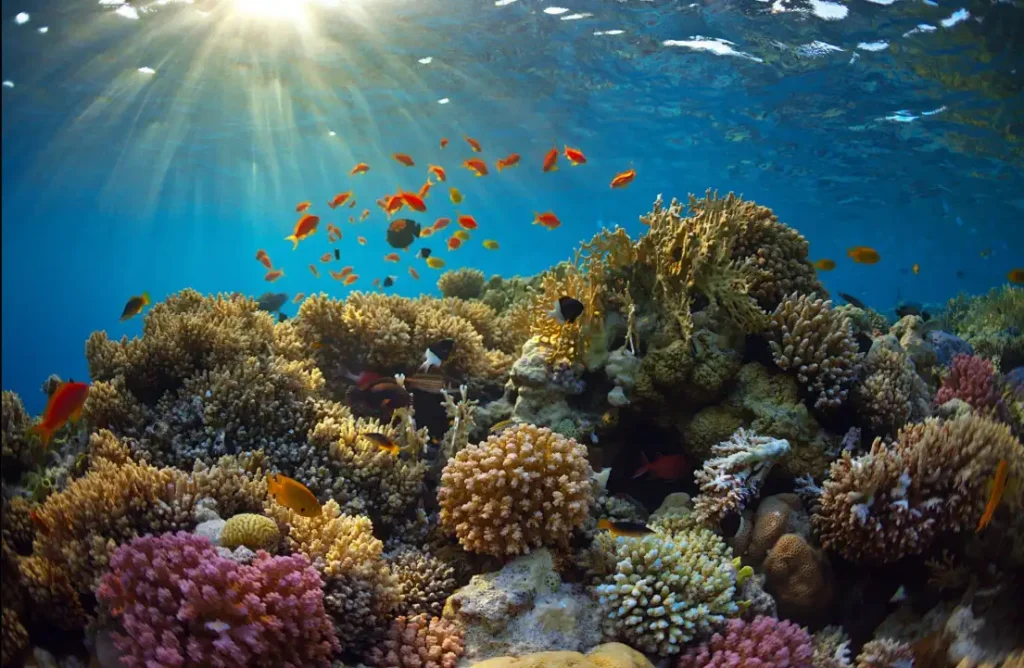
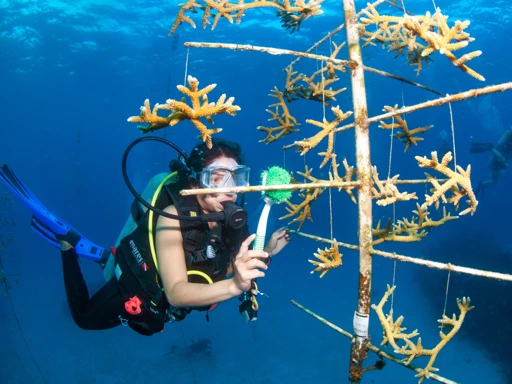
Coral reef restoration produces measurable biodiversity value in the one environment the mainstream BNG industry cannot easily serve. It is not a CSR gesture. It is habitat creation that can be quantified, monitored, and reported. Healthy reefs support water purification and flood management, which is exactly the kind of ecosystem service net gain frameworks are designed to protect.
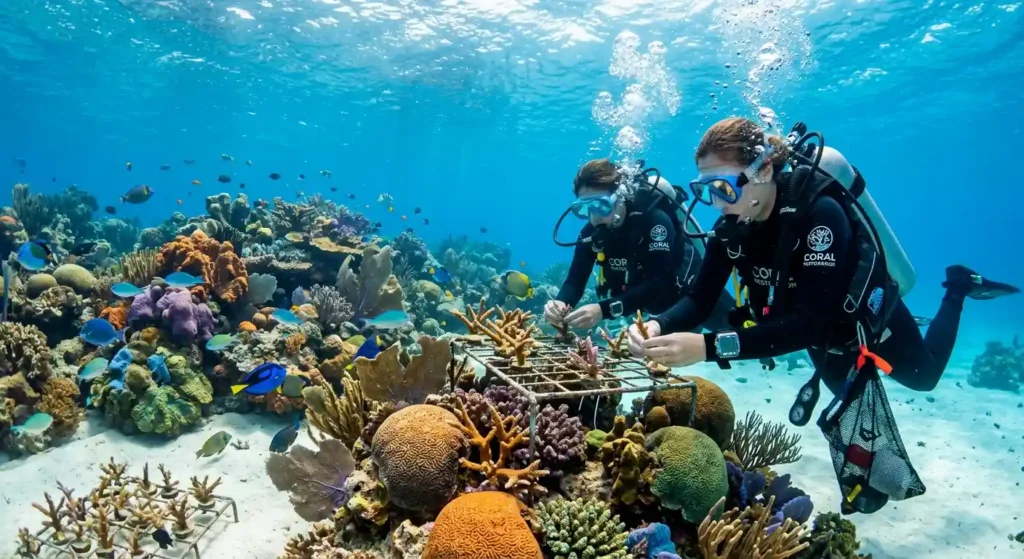
Achieving Biodiversity Net Gain with Modular Coral Farms
Coral Vita grows diverse, resilient corals on land in months instead of the decades they take in nature. The farm deploys to the development or relocation site, layering restoration on top of mitigation. With 100,000+ corals grown across 52 species and a 2021 Prince William’s Earthshot Prize, the model is built for scale.
For ports and dredgers, this means mitigation and restoration happen in one footprint. It is a purpose-built coral restoration company for the coastal environment.
What to Ask a Restoration Partner Before You Rely on It for a Compliance Filing
Monitoring Data and Biodiversity Units
Ask how habitat value is measured and reported. A credible partner can show baseline surveys, growth data, and a monitoring plan that tracks measurable improvements over time. BNG requires habitats to be maintained for a minimum of 30 years.
Local Planning Authorities and Permitting Track Record
Ask about permitting and track record. Local planning authorities and marine regulators need to see that the partner has delivered in the relevant jurisdiction before. Ask about legal agreements and planning obligations, and who holds the responsible body for ongoing management.
Conservation Covenants and Long-Term Maintenance
Biodiversity net gain requires habitats to be maintained for a minimum of 30 years. Conservation covenants and legal agreements secure that commitment. Ask who holds the covenant and what the monitoring schedule looks like. Long-term, sustainable habitat restoration plans are what separate a real offset from a planting exercise.
Conclusion
Biodiversity net gain (BNG) is becoming table stakes across every framework a coastal or maritime project answers to: England’s terrestrial system, IFC-financed projects, and eventually Marine Net Gain. The standard tools were never designed for a coastline. Reef restoration is a purpose-built way to deliver measurable gain in the one environment net gain frameworks handle worst.
About Coral Vita
Coral Vita is a mission-driven company dedicated to restoring our world’s dying and damaged reefs. Using land-based farming techniques, Coral Vita grows diverse and resilient corals in months instead of the decades reefs take in the wild. These corals are then transplanted into threatened reefs, helping to preserve ocean biodiversity while protecting coastal communities that depend on healthy reefs for protection, food, and income.
Founded by environmental entrepreneurs Sam Teicher and Gator Halpern, Coral Vita’s high-tech coral farms incorporate breakthrough methods to restore reefs in the most effective way possible. In 2021, the company was recognized as the inaugural winner of Prince William’s Revive Our Oceans Earthshot Prize Winner for their pioneering work in coral restoration.
To learn more about Coral Vita’s work or to get involved in coral reef conservation efforts, visit their website at www.coralvita.co or contact them directly through their Contact Us page.
FAQ
What is biodiversity net gain?
Biodiversity net gain is a legal requirement in England for most developments to leave nature in a measurably better state. It means at least a 10 percent increase in biodiversity value against the baseline.
Does BNG apply to marine and coastal projects?
Terrestrial biodiversity net gain covers onshore and intertidal development down to the mean low water mark. The intertidal metric is controversial for ports, and Marine Net Gain is still in development.
What is Marine Net Gain and is it mandatory?
Marine Net Gain is a Defra policy under consultation for the subtidal environment. It is not mandatory yet. The government intends to introduce it below the mean low water mark.
How does IFC Performance Standard 6 relate to biodiversity net gain?
IFC PS6 requires no net loss and net gain for habitats of high biodiversity value on financed projects. It applies to marine work directly and often governs internationally financed projects.
References
- https://www.gov.uk/guidance/biodiversity-net-gain ↩︎
- https://www.legislation.gov.uk/ukpga/2021/30/schedule/14/enacted ↩︎
- https://www.gov.uk/guidance/biodiversity-net-gain-exempt-developments ↩︎
- https://www.britishports.org.uk/new-approach-needed-to-delivering-net-gain-on-englands-foreshore/ ↩︎
- https://consult.defra.gov.uk/defra-net-gain-consultation-team/consultation-on-the-principles-of-marine-net-gain/ ↩︎
- https://www.gov.uk/government/consultations/consultation-on-the-principles-of-marine-net-gain/outcome/government-response ↩︎
- https://www.gov.uk/guidance/biodiversity-net-gain-nationally-significant-infrastructure-projects ↩︎
- https://www.ifc.org/en/insights-reports/2012/ifc-performance-standard-6 ↩︎