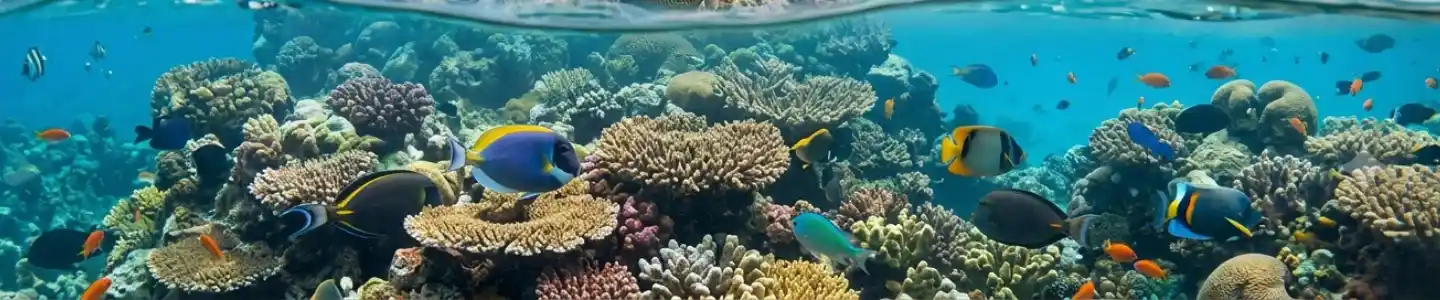
Coral reef coastal protection is the reduction of waves, storm surge and flooding by the physical structure of a reef. Reefs break waves offshore, so less energy reaches the shoreline. The USGS estimates that U.S. coral reefs provide flood protection to more than 18,000 people and $1.8 billion in coastal infrastructure and economic activity every year.1 Globally, a 2018 study found that annual expected flood damages would more than double without reefs.2 That makes a reef a form of natural infrastructure, one that coastal owners, insurers and governments can value, protect and, in some places, insure.
Key Takeaways
- Reefs reduce the wave energy that reaches a shoreline, and the reef crest does most of that work.
- USGS modeling puts the flood protection from U.S. reefs at $1.8 billion a year in coastal infrastructure and economic activity.
- A 2018 global study found that without reefs, annual expected flood damages would rise 118 percent, and reefs avert more than $4 billion in damages a year.
- Parametric insurance policies in Quintana Roo, Mexico and Hawaii pay out after storms to fund reef repair.
- Protection depends on reef structure, so a reef that has lost its coral protects less. Restoring structure is a way to rebuild it.
Reefs protect coasts by breaking waves before they reach the shore
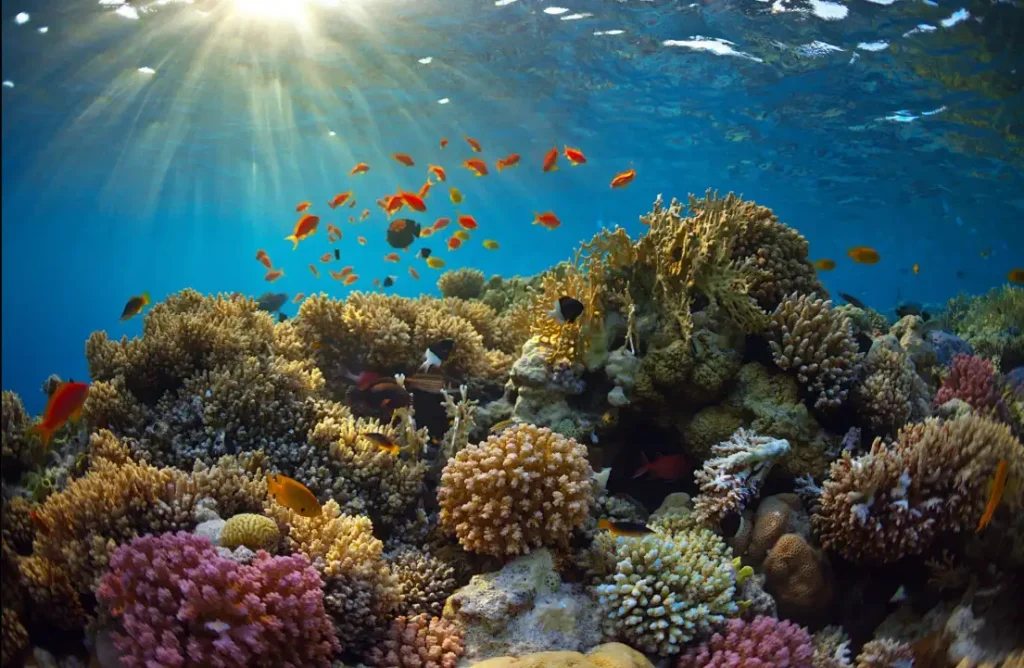
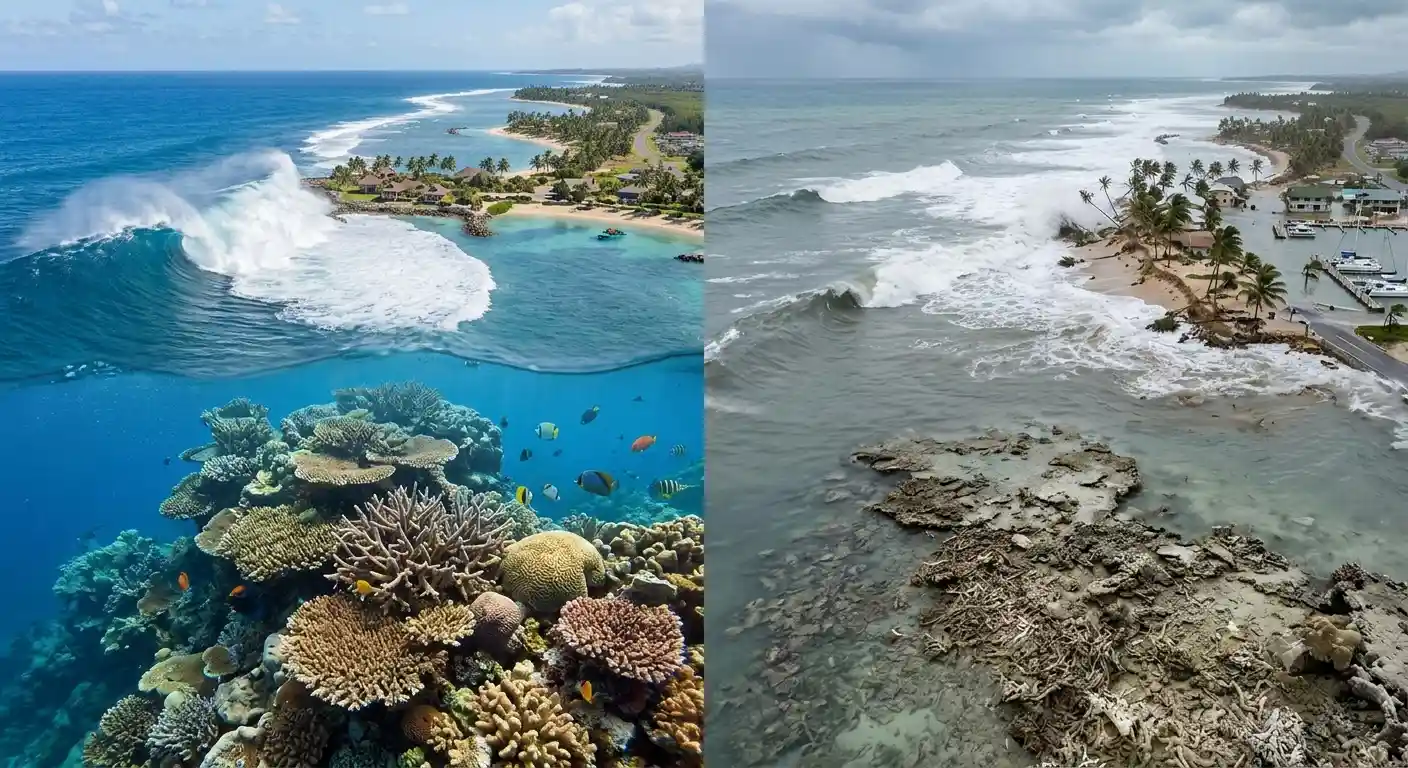
A reef is a wall of calcium carbonate built over thousands of years. It sits in shallow water, some distance from the beach, and waves that hit it lose energy by breaking over its crest and dragging across its rough surface. NOAA describes the reef structure as a buffer that protects shorelines from waves, storms and floods, and notes that when reefs are damaged, coastal communities are more exposed.3
Researchers have put numbers on this. A widely cited 2014 analysis found that reefs reduce wave energy by 97 percent on average, and that the reef crest accounts for about 86 percent of that reduction. The same work estimated that at least 100 million people may benefit from reef-based risk reduction or bear the costs of hazards if reefs degrade.4 Our piece on nature-based solutions puts reefs in the wider context of natural defenses, so here the focus is on what the protection is worth.
The mechanism is physical, so the protection depends on structure: the height of the reef, the roughness of its surface and the water depth over it. A reef that is alive builds and repairs that structure. A reef that dies can stay in place for a while as a skeleton, but it erodes over time. That is why coral loss is a coastal risk and not only a biodiversity issue. Our explainer on how coral reefs are formed covers how they build.
U.S. reefs provide $1.8 billion a year in flood protection, and the value is concentrated in a few places
In 2019, a USGS team led by Curt Storlazzi modeled flood risk across Hawaii, Florida, American Samoa, Guam, the Commonwealth of the Northern Mariana Islands, Puerto Rico and the U.S. Virgin Islands. The models covered more than 3,100 kilometers of shoreline at a 10 meter resolution. The team, which included researchers from The Nature Conservancy, UC Santa Cruz and Deltares, found that reefs provide flood protection to more than 18,000 residents and $1.8 billion in coastal infrastructure and economic activity each year.
The value was not spread evenly. Hawaii accounted for $836 million, Florida for $675 million and Puerto Rico for $183 million. For a single 50-year storm, the model put more than $1.6 billion of property protected off Miami and Fort Lauderdale and more than $435 million off Honolulu.
These figures are modeled estimates of avoided damage, not payments anyone receives. They are still the best public numbers for a U.S. coastal owner who wants to know what a reef does for a stretch of shoreline. If you own or insure property behind a reef in these regions, the reef is already part of your risk profile.
Globally, reefs more than halve annual flood damages in the places that have them
A 2018 study in Nature Communications asked the same question for the world’s tropical coasts. It covered about 71,000 kilometers of reef-fronted coastline and compared flood damages with and without reefs. The results were large. Without reefs, annual expected damages would rise 118 percent, so reefs reduce them by more than $4 billion a year. Without reefs, flooded land would increase by 69 percent, and 81 percent more people would be flooded each year.
For rarer, larger storms, the effect is bigger in dollar terms. In a 100-year storm, damages without reefs would rise by about 90 percent to $272 billion, which means reefs avert roughly $130 billion. For a 25-year event, reefs reduce flooding for 1.7 million people and for more than 8,700 square kilometers of land, avoiding $36 billion in damage to built capital.
The countries with the most to lose are not only small islands. In annual terms, the largest beneficiaries were Indonesia (639million),thePhilippines(590 million), Malaysia (452million),Mexico(452 million) and Cuba ($401 million).
Reef value estimates vary widely with what is counted. Our overview of the economic impact of coral reef loss covers tourism and fisheries too, and anyone quoting a single headline figure should check its source and scope.
Damaged reefs leave a shoreline exposed, and the loss is already happening
Protection has to be there before a storm to count. The Caribbean shows what the loss looks like. Elkhorn coral, a branching species that built reefs across the region over roughly 5,000 years, provided shoreline protection from large waves and storms when it was abundant. NOAA reports that elkhorn has declined 97 percent since the 1980s because of white band disease and now makes up less than 3 percent of its former abundance. Heat waves in 2023 and 2024 killed 89 to 100 percent of known wild and restored elkhorn colonies in the Florida Keys, and the species is listed as threatened under the Endangered Species Act.5
Not every coast loses protection at the same rate. A shallow crest close to shore does more of the wave-breaking than a deep reef far from it. That is why the first step for a coastal owner is to find out what reef sits in front of their shoreline and in what condition. Our pages on coastal adaptation and climate resilience explain how that assessment fits into a wider plan, and our piece on living shorelines covers how reefs sit alongside mangroves and seagrass.
Reef insurance turns protection into a payout that funds repair
If a reef protects a coast, an insurance policy can be written on the reef. The model that has emerged is parametric: the policy pays a set amount when a measured trigger, such as wind speed within a defined area, is reached, without waiting for a damage assessment.
The best-known example is in Quintana Roo, Mexico. Swiss Re developed the cover with The Nature Conservancy and the State of Quintana Roo, and the Coastal Zone Management Trust took out the policy, which is triggered by wind speed. After Hurricane Delta in 2020, it paid out USD 850,000, which was used to repair the reef through a team known as the Reef Brigades.6
Hawaii followed. The Nature Conservancy bought a parametric policy with Willis Towers Watson, launched as a concept in 2022, with coverage from Munich Re. It was renewed with expanded coverage in 2024 and 2025. In August 2026, Hurricane Lala became the first storm to trigger it, with sustained winds of 65 knots inside the covered area. The policy has a minimum payout of $200,000, and the funds go to damage assessment and reef repair, decided with the Hawaii Emergency Reef Restoration Network.7
Three things about these policies matter for buyers. They pay fast, because the trigger is an event and not a claim. In these two cases the payout goes to reef repair. And they cover storm damage, not the slower losses from heat or disease. They are a complement to restoration, not a replacement. Our piece on conservation finance explains the broader set of tools.
What coastal owners, insurers and governments can do about reef protection
Start by mapping the reef in front of your assets and checking its condition. Ask how much of the shoreline’s wave protection depends on it, and whether your exposure appears in your risk models. Then look at what keeps that reef healthy: water quality, fishing pressure, anchoring and runoff. These are within the control of coastal managers and landowners, and they matter at least as much as planting new coral.
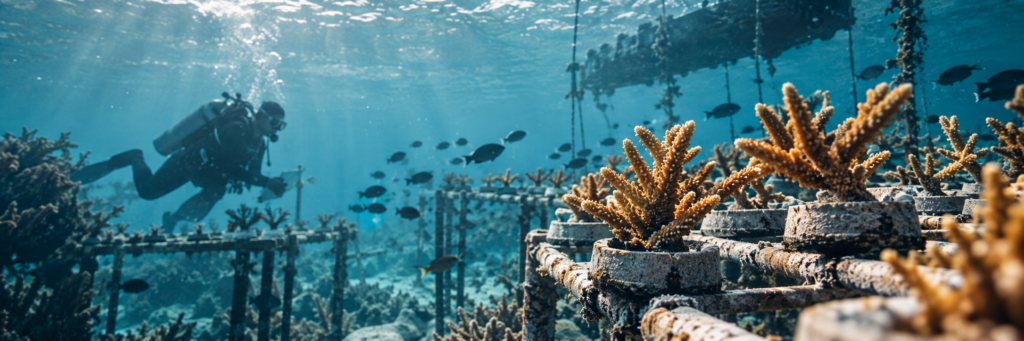
Where a reef has already lost structure, restoration is one way to rebuild it. Growing corals in a nursery, whether on land or in the ocean, and planting them on degraded reef puts living, skeleton-building coral back where the protection was lost. It takes time, and a restored reef will not protect a shoreline on a fixed schedule. How much protection comes back depends on the structure that is rebuilt, the site and how the reef fares in the next heat season. Our guide to coral reef restoration covers the methods, and our page on corporate funding for reef restoration explains how companies and insurers can finance it. If you want to talk through a specific coastline, see our services.
Frequently asked questions
How do coral reefs protect coastlines?
Reefs break waves offshore so less energy reaches the shore. Their structure absorbs and scatters wave energy, which lowers wave height, storm surge and flooding. NOAA notes that damaged reefs leave coastal communities more exposed to waves, storms and floods.
How much flood protection do coral reefs provide?
USGS modeling estimates U.S. reefs protect more than 18,000 residents and $1.8 billion in coastal infrastructure and economic activity each year. A 2018 global study found reefs reduce annual expected flood damages by more than $4 billion.
Can you insure a coral reef?
Yes. Parametric policies in Quintana Roo, Mexico and Hawaii pay out when a storm reaches a set wind speed. The money funds reef assessment and repair. Quintana Roo’s policy paid USD 850,000 after Hurricane Delta in 2020.
Does a dead or damaged reef still protect the coast?
It protects less. Reef structure breaks waves, and structure erodes after coral dies. Damaged reefs leave communities more exposed to waves, storms and floods, according to NOAA. Restoring living coral rebuilds structure over time, but not on a fixed schedule.
About Coral Vita
Coral Vita is a mission-driven company dedicated to restoring our world’s dying and damaged reefs. Using innovative land-based farming techniques, Coral Vita grows diverse and resilient corals in months instead of the decades they take in nature. These corals are then transplanted into threatened reefs, helping to preserve ocean biodiversity while protecting coastal communities that depend on healthy reefs for protection, food, and income.
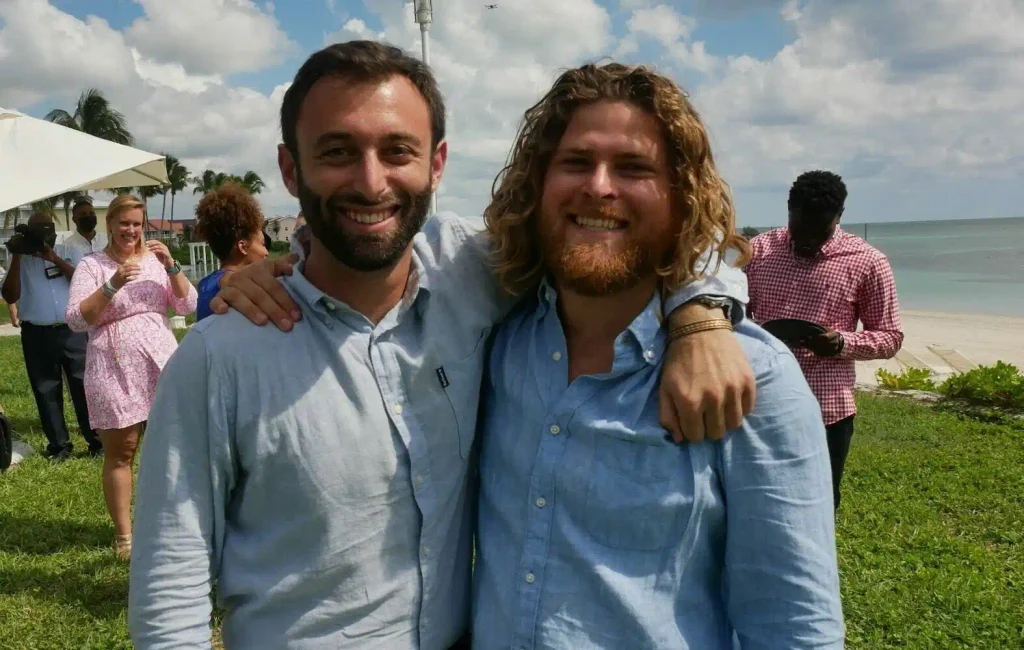
Founded by environmental entrepreneurs Sam Teicher and Gator Halpern, Coral Vita’s high-tech coral farms incorporate breakthrough methods to restore reefs in the most effective way possible. In 2021, the company was recognized as the inaugural winner of Prince William’s Revive Our Oceans Earthshot Prize Winner for their pioneering work in coral restoration.
To learn more about Coral Vita’s work or to get involved in coral reef conservation efforts, visit their website at www.coralvita.co or contact them directly through their Contact Us page.
References
- https://www.usgs.gov/news/national-news-release/coral-reef-barriers-provide-flood-protection-more-18000-people-and-18 ↩︎
- https://pmc.ncbi.nlm.nih.gov/articles/PMC5997709 ↩︎
- https://oceanservice.noaa.gov/facts/coral_protect.html ↩︎
- https://pubs.usgs.gov/publication/70121533 ↩︎
- https://www.fisheries.noaa.gov/species/elkhorn-coral ↩︎
- https://www.swissre.com/our-business/public-sector-solutions/case-studies/mexico-windstorm-cover.html ↩︎
- https://www.artemis.bm/news/hurricane-lala-triggers-hawaiis-parametric-coral-reef-insurance/ ↩︎