The Red Sea holds some of the world’s most heat-tolerant coral reefs, especially in the north and in the Gulf of Aqaba, while reefs in its center and south have already bleached badly. Egypt, Israel, Jordan, Saudi Arabia, Yemen, Eritrea, Sudan and Djibouti share its coastline, and on the Saudi side new coastal development is arriving at reefs that are both unusually tolerant and under growing local pressure. Coral Vita is active in Saudi Arabia and the United Arab Emirates, so I follow this region closely. I will say what the studies show, what is still uncertain, and where I am only passing on someone else’s claim.
The Short Version
- Northern Red Sea corals can withstand a jump of up to 10.8 degrees Fahrenheit in laboratory settings, against 1.8 to 3.6 degrees for most corals. Whether that holds in the wild is not settled.
- In summer 2021 the Gulf of Aqaba had its hottest marine heat wave on record, peaking at 31°C and staying above the local summer maximum for 34 days. It did not induce bleaching in the species studied.
- The center and south are not a refuge. In a 59-reef study, coral cover in several reefs fell from more than 40 percent to under 5 percent two years after the 2015 to 2016 bleaching.
- Saudi developers and research institutions have made large coral commitments, including a 30 percent net conservation gain target by 2040 and a land-based nursery designed to produce up to 360,000 corals a year. These are their claims, and results are still to come.
- A refuge does not protect a reef from dredging, runoff or a poorly sited marina. Protection and restoration both matter.
Where the Red Sea’s coral reefs are and how they formed
The Red Sea began as a rift roughly 30 million years ago. A salinity spike during the Pleistocene appears to have killed most corals in the northern half of the sea, so most corals there are likely recent arrivals from about 10,000 years ago, according to the Florida Museum.1 The sea still holds a great deal of life. As much as 14 percent of its corals, fishes and mollusks are found nowhere else.
Reefs run along the coasts of all the countries on its shores and sit on offshore banks. Egypt’s reefs are the best known to divers. On the Saudi side, the country’s 2024 nomination to UNESCO’s Tentative List, “Coral Reefs of the Gulf of Aqaba and the Red Sea in the Kingdom of Saudi Arabia,” says the nominated area is home to over 265 species of coral and some 800 species of fish.2 Those numbers describe the nominated Saudi area, not the whole sea, and I would not quote them as a total for the Red Sea. For how the Red Sea compares with other regions, see our overview of coral reef locations.
Why northern Red Sea corals tolerate heat: the thermal barrier hypothesis
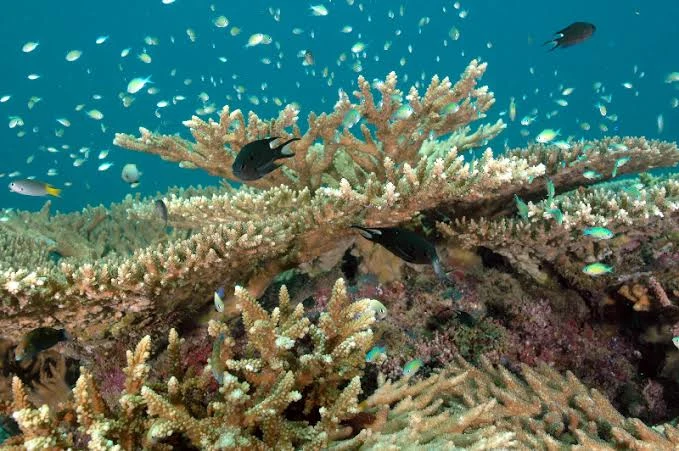
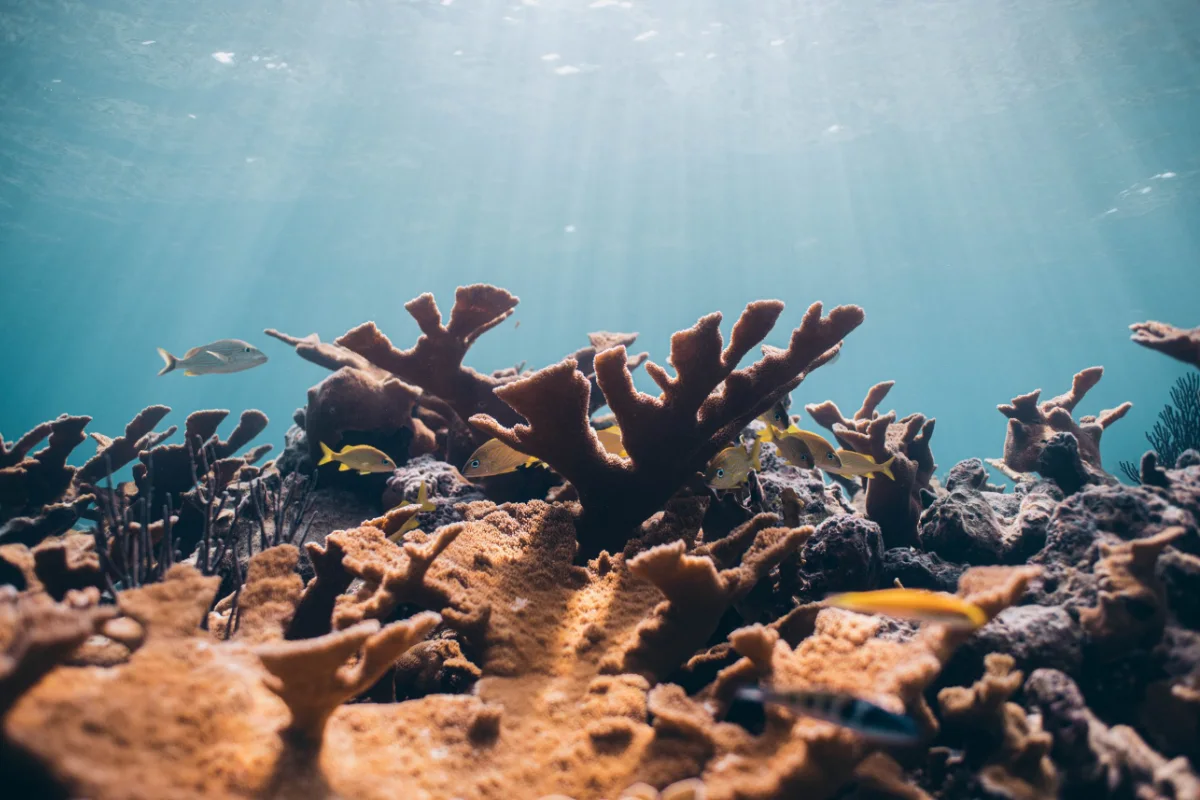
The Florida Museum reports that northern Red Sea corals “can withstand a jump of up to 10.8 F under laboratory settings,” against 1.8 to 3.6 degrees for most corals, and adds that it is not settled whether this holds in the wild. The leading explanation comes from Fine, Gildor and Genin (2013, Global Change Biology 19: 3640 to 3647). They propose that “millennia of natural selection in the form of a thermal barrier at the southernmost end of the Red Sea have selected coral genotypes that are less susceptible to thermal stress,” and predict that this delays bleaching in the Gulf of Aqaba “by at least a century.”3 In plain terms, corals that colonized the north had to survive passing through the hottest part of the sea first.
Field evidence points the same way. In summer 2021 the Gulf of Aqaba had its hottest marine heat wave on record, with sea surface temperature peaking “at 31°C and persisting above the local summer maximum for 34 days.” The heat wave “was not fatal to either species and did not induce bleaching,” according to Kochman-Gino and Fine (2023, Frontiers in Marine Science).4 The study covered two species, so I would treat it as strong evidence for those corals and not a promise for every reef in the north.
I use “heat-tolerant corals” here and avoid the “super coral” headlines. The studies attribute the tolerance to evolutionary history and measured responses, and the careful version is the useful one for anyone planning restoration.
Not all of the Red Sea is a refuge: bleaching in the center and south
The south is a different story. Fine and colleagues (2019, Regional Studies in Marine Science 25: 100498) write that southern reefs “live near or above their maximum temperature tolerance,” that northern reefs are a refuge “at least for the coming decades,” and that there is “increasing pressure on reefs from coastal development.”5
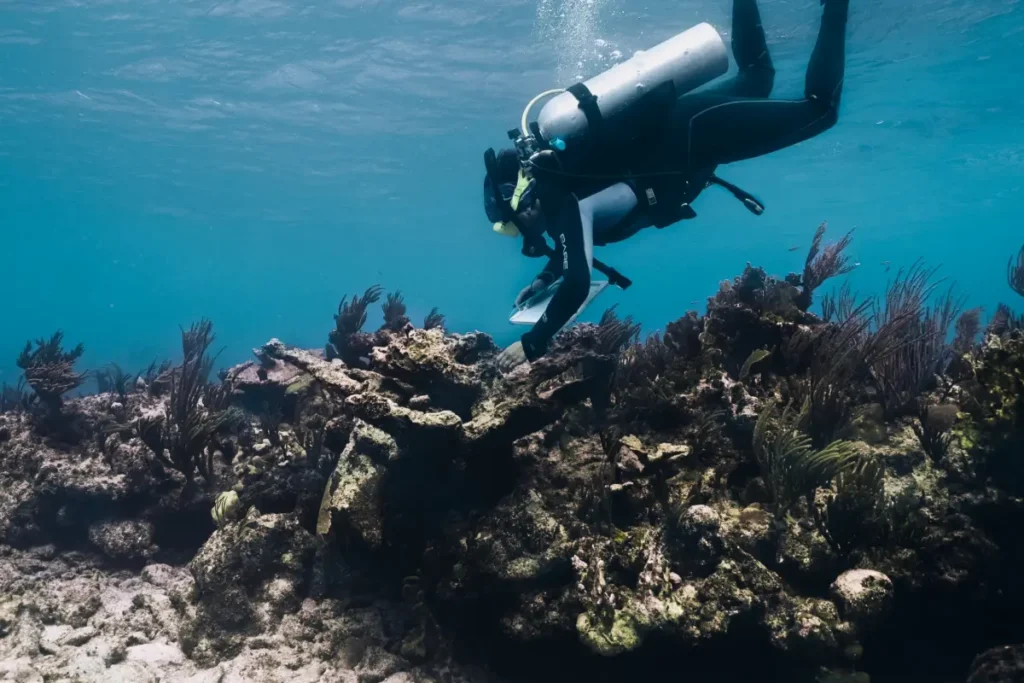
The 2015 to 2016 bleaching shows what that looks like. A study of 59 reefs surveyed from 2014 to 2019 found that coral cover in several reefs fell from more than 40 percent to under 5 percent two years after bleaching. The south was hit first, and branching corals declined most (Gonzalez and colleagues, 2024).6 Heat struck again in August 2023, when almost 1,000 fish washed ashore along a 60-kilometer stretch of coastline north of Thuwal, from at least 54 species, linked to an extreme marine heat wave (Tietbohl and colleagues, 2025, Science of the Total Environment).7
Baseline matters too. Surveys from 2006 to 2009 at the Farasan Islands, Ras Al-Qasabah, Al Wajh, Yanbu and the Farasan Banks found coral cover averaged about 20 percent, often over 50 percent in shallow water, while 15 to 36 percent of reefs showed damage and had under 5 percent live cover (Bruckner and Dempsey, 2015).8 Those surveys came before the 2015 to 2016 bleaching, so the reefs have been through more since. Our guide to coral bleaching explains the mechanism behind these events.
Development on the Saudi coast and what developers have committed to
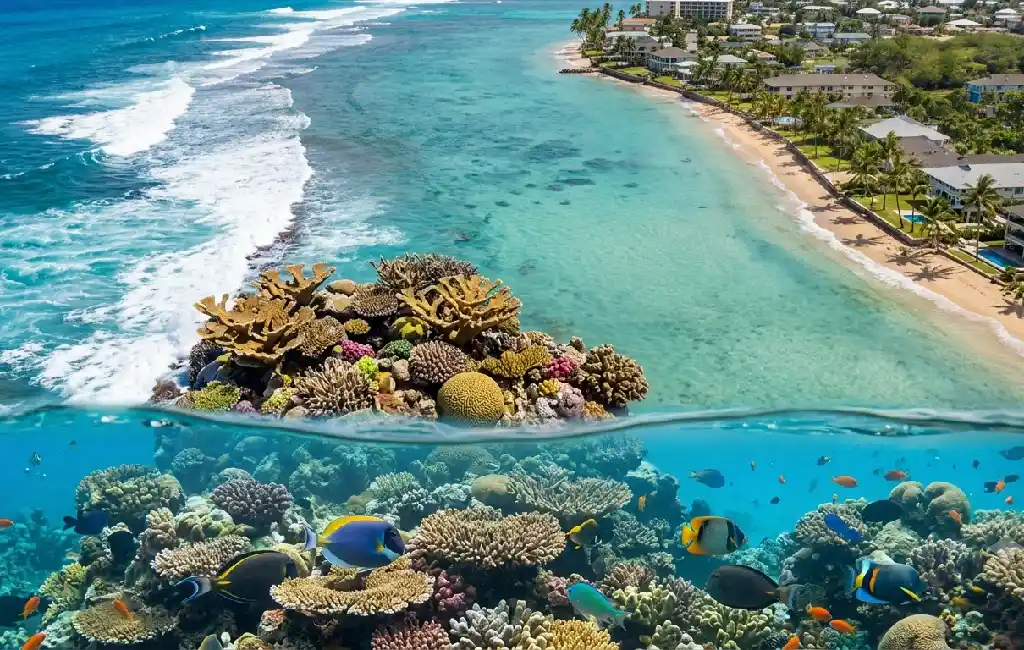
The Saudi Red Sea coast is being developed fast, and the reefs sit directly in the path. Red Sea Global, a Saudi coastal developer, announced a “Coral Commitment” at COP28 on 7 December 2023. It includes a letter of intent with CORDAP, the G20-launched coral research platform, monitoring of “some 300 reef sites,” and floating nurseries with a self-reported “97% success rate.”9 Its headline target is a 30 percent net conservation gain across its destinations by 2040, measured with a model it published in March 2026.10 11
I would read all of that as a developer’s statement of intent. The 97 percent figure is self-reported, and the 30 percent target will be judged on what the monitoring shows over the next decade. Commitments like these are a version of the corporate goals we cover in our guide to nature positive, which also explains how to judge whether such a target is credible.
Who is restoring reef on the Saudi Red Sea coast
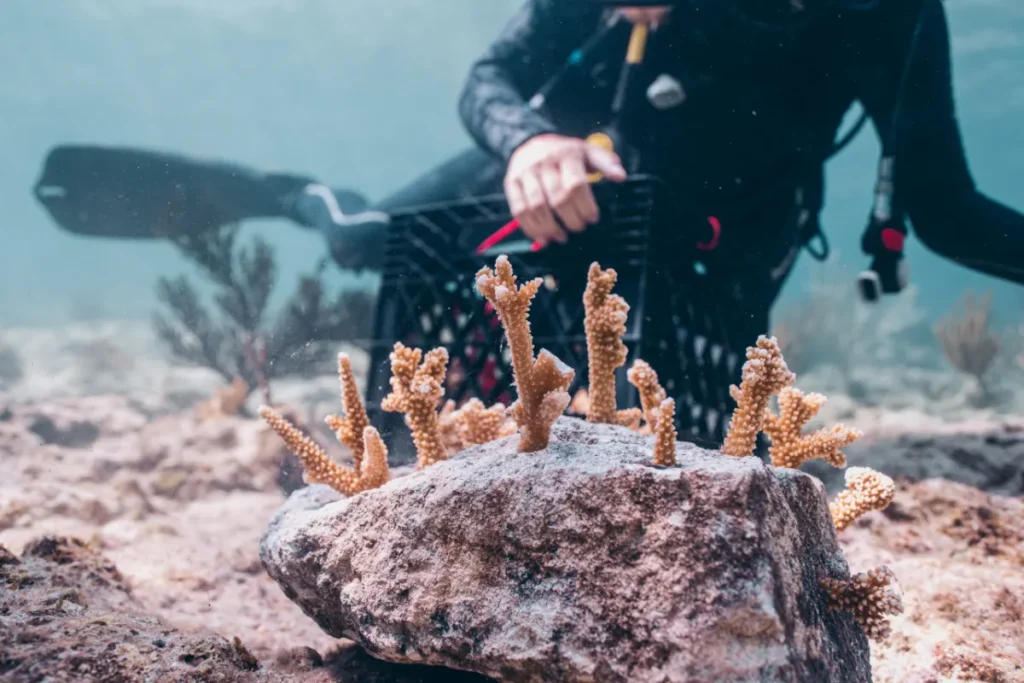
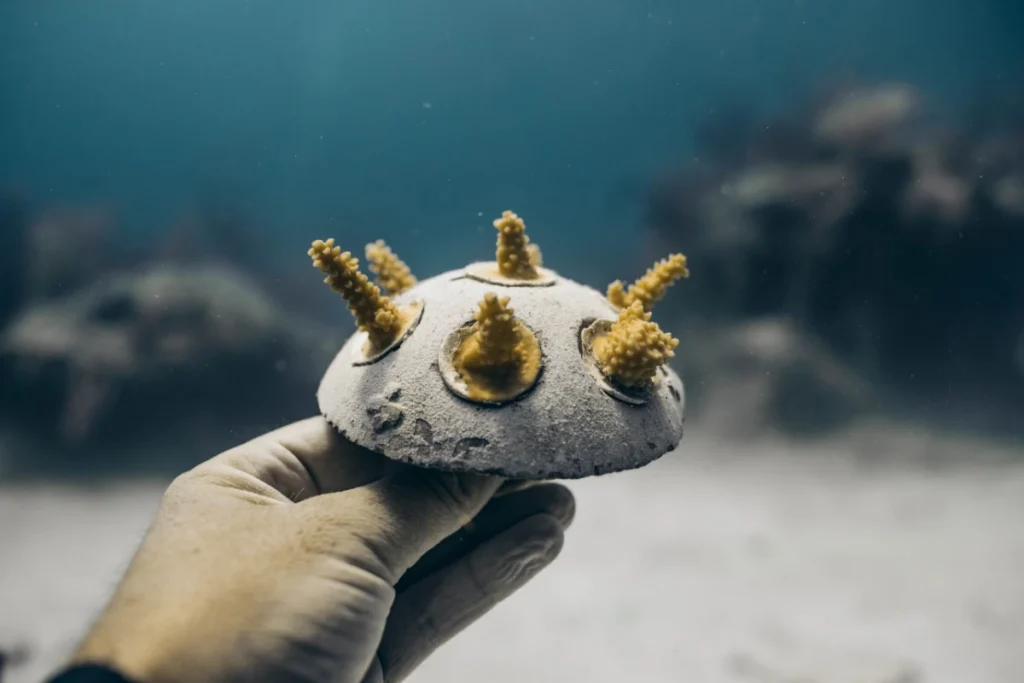
The largest program I know of is the KAUST Coral Restoration Initiative, unveiled on 25 April 2024. Its first nursery has a production capacity of 40,000 corals a year, it sits within a 100 hectare site that is to receive 2 million coral fragments, and KAUST describes it as the largest coral restoration project in the world.12 In November 2026 KAUST announced a land-based nursery and research campus that it says is now growing corals at scale, designed to produce up to 360,000 corals a year, with more than two million corals to be placed across 100 hectares of reef at Shushah Island by 2030.13 Earlier plans called for a second facility producing 400,000 corals a year by December 2025, and the November 2026 announcement gives a single capacity figure, so I would quote the current number and attribute it.
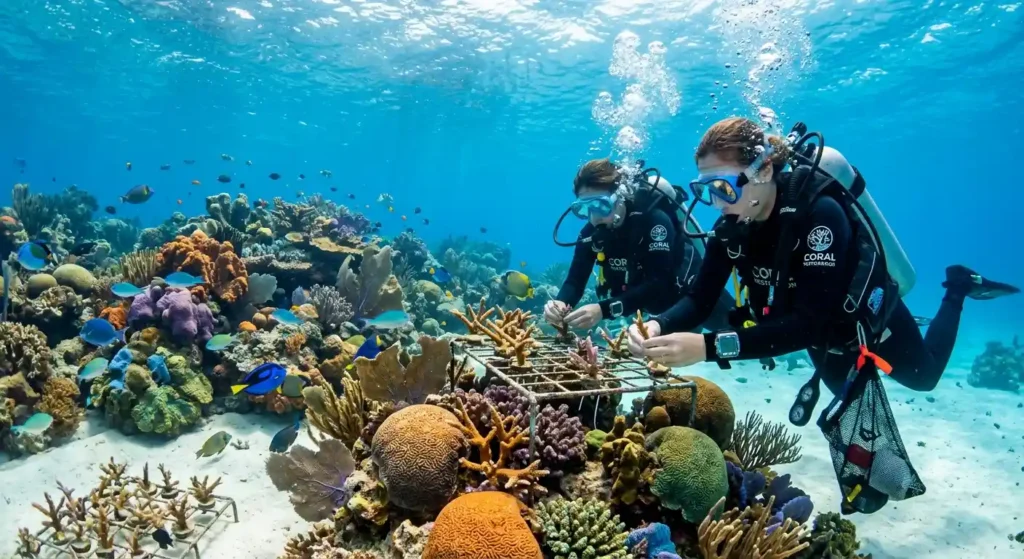
I am describing KAUST’s program and Red Sea Global’s commitments from their own announcements, as regional context. Coral Vita is active in Saudi Arabia, and I will say more about our work on the Red Sea coast when there is something public to point to. [VERIFY: Sam to confirm what can be said publicly about Coral Vita’s Saudi location, partners and timeline before this section is finalized.] Our UAE work is on the Arabian Gulf, which is a different sea with different heat conditions, and I do not want the two merged.
What I will say in general terms is that heat-tolerant northern Red Sea corals are of real interest to restoration programs, and land-based farms are one way to grow and study them under controlled conditions. Our guide to coral reef restoration explains how that works, and our services page describes what we offer to developers and governments working on the coast.
What a refuge is worth, and what it still needs
“At least for the coming decades” is a careful phrase, and I take the caution seriously. A refuge buys time. It does not remove the other pressures on a reef, and I would not count on heat tolerance to protect a reef from a dredge, a badly sited marina or runoff from a new resort. The 2006 to 2009 baseline already showed damage on 15 to 36 percent of surveyed reefs before the bleaching events.
That leaves two jobs that run side by side. One is protection: keeping the healthiest reefs intact through tools such as marine protected areas and careful siting of coastal projects. The other is restoration where reef has already been lost. If you are planning a project on the Saudi Red Sea coast, the first question is which reef can be avoided, and the second is what can be restored.
About Coral Vita
Coral Vita is a mission-driven company dedicated to restoring our world’s dying and damaged reefs. Using innovative land-based farming techniques, Coral Vita grows diverse and resilient corals in months instead of the decades they take in nature. These corals are then transplanted into threatened reefs, helping to preserve ocean biodiversity while protecting coastal communities that depend on healthy reefs for protection, food, and income.
Founded by environmental entrepreneurs Sam Teicher and Gator Halpern, Coral Vita’s high-tech coral farms incorporate breakthrough methods to restore reefs in the most effective way possible. In 2021, the company was recognized as the inaugural winner of Prince William’s Revive Our Oceans Earthshot Prize Winner for their pioneering work in coral restoration.
To learn more about Coral Vita’s work or to get involved in coral reef conservation efforts, visit their website at www.coralvita.co or contact them directly through their Contact Us page.
Frequently asked questions
Is there a coral reef in the Red Sea?
Yes. Reefs run along its coasts and sit on offshore banks. The northern Red Sea and the Gulf of Aqaba hold some of the world’s most heat-tolerant corals, while central and southern reefs have bleached badly.
Why is the Red Sea so special?
Its northern corals show unusual heat tolerance, and as much as 14 percent of its corals, fishes and mollusks are found nowhere else, according to the Florida Museum.
Are Red Sea corals resistant to bleaching?
Northern corals have shown unusual tolerance, including no bleaching in the species studied during the Gulf of Aqaba’s record 2021 heat wave. Central and southern reefs have bleached badly, and cover fell below 5 percent in several.
Which countries have Red Sea coral reefs?
Egypt, Israel, Jordan, Saudi Arabia, Yemen, Eritrea, Sudan and Djibouti border the Red Sea and Gulf of Aqaba. Reefs run along much of that coastline.
References
- https://www.floridamuseum.ufl.edu/science/a-natural-history-of-the-red-sea-and-the-uncertain-future-of-its-corals/ ↩︎
- https://whc.unesco.org/en/tentativelists/6701/ ↩︎
- https://cris.huji.ac.il/en/publications/a-coral-reef-refuge-in-the-red-sea/ ↩︎
- https://www.frontiersin.org/articles/10.3389/fmars.2023.1215567 ↩︎
- https://cris.huji.ac.il/en/publications/coral-reefs-of-the-red-sea-challenges-and-potential-solutions/ ↩︎
- https://bemlab.kaust.edu.sa/publications/differential-spatio-temporal-responses-of-red-sea-coral-reef-benthic-communities-to-a-mass-bleaching-event ↩︎
- https://discovery.kaust.edu.sa/en/article/25713/mass-fish-deaths-linked-to-extreme-marine-heatwave-in-red-sea/ ↩︎
- https://www.livingoceansfoundation.org/publication/the-status-threats-and-resilience-of-reef-building-corals-of-the-saudi-arabian-red-sea ↩︎
- https://esgmena.com/red-sea-global-announces-coral-commitment-at-cop28/ ↩︎
- https://www.cbnme.com/news/rsg-strengthens-role-as-a-leader-in-regenerative-tourism/ ↩︎
- https://www.sustainablefirst.com/sustainable-news/red-sea-global-rsg-publishes-its-science-based-model-for-achieving-net-conservation-gains/ ↩︎
- https://www.kaust.edu.sa/news/worlds-largest-coral-restoration-project-unveiled-in-the-red-sea ↩︎
- https://www.kaust.edu.sa/news/kaust-unveils-landmark-coral-facility-on-the-red-sea-advancing-saudi-scientific-expertise-and-marine-conservation ↩︎