Coral reef insurance is a parametric policy that pays a pre-agreed sum when a storm of a set strength passes over an insured reef, so repair can start within days. Three programs are live. Quintana Roo, Mexico, was the first. The Mesoamerican Reef program covers sites in four countries. Hawaii is the first in the United States, and its policy paid out for the first time in August 2026. All three insure against storms, not bleaching, and all three found the same thing: money repairs a reef only if trained people and coral stock are ready to use it. This is general information, not insurance advice.
The Short Version
- Parametric insurance pays when a predefined event, such as wind speed inside a set area, meets or exceeds a trigger, instead of paying for actual loss.
- Three reef policies exist: Quintana Roo, Mexico (first bought in 2019), the Mesoamerican Reef program (2021) and Hawaii (announced in November 2022).
- They have paid. Hurricane Delta triggered almost 800,000 in Mexicoin 2020, Hurricane Lisa triggered US 175,000 in Belize in 2022, and Hawaii paid $200,000 after Hurricane Lala and $300,000 after Hurricane Lowell in 2026.
- They cover storms only. The Hawaii policy is not triggered by bleaching, and swells and vessel groundings are not covered. Honolulu Civil Beat reported that the first payout was about half of the premiums paid over four years.
- A payout helps only if reef brigades, coral stock, permits and a named recipient are ready before the storm.
What parametric insurance is, and how it differs from ordinary cover
Ordinary property insurance pays for what you lost, after an adjuster agrees on the amount. Parametric insurance pays when something measurable happens. Swiss Re says it “covers the probability of a predefined event happening instead of indemnifying actual loss incurred” and is “triggered if pre-defined event parameters are met or exceeded.” The index that sets the trigger has to be “objective (ie. independently verifiable), transparent, and consistent.”
The trade-off is basis risk. Swiss Re defines it as “the risk that the trigger index does not perfectly correlate with the underlying risk exposure,” and says it “can never be completely eliminated.”1 For a reef, that means a storm can damage coral without crossing the trigger, or cross the trigger while the reef is mostly fine. The benefit is speed. Swiss Re’s pages describe payouts in anything from days to about four weeks, and the reef cases below give real numbers.2
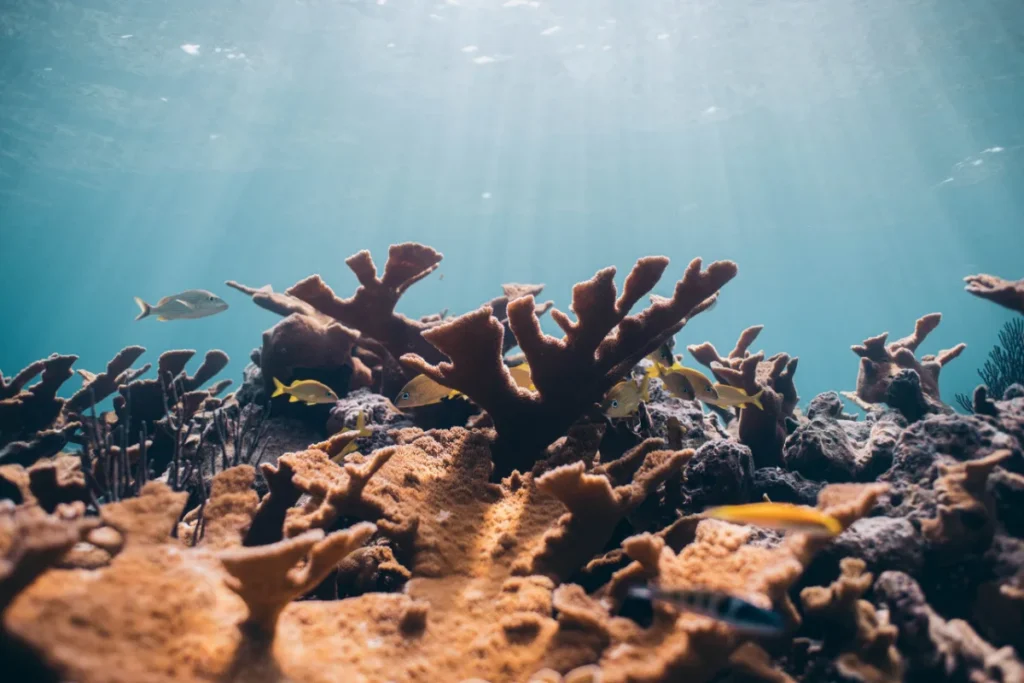
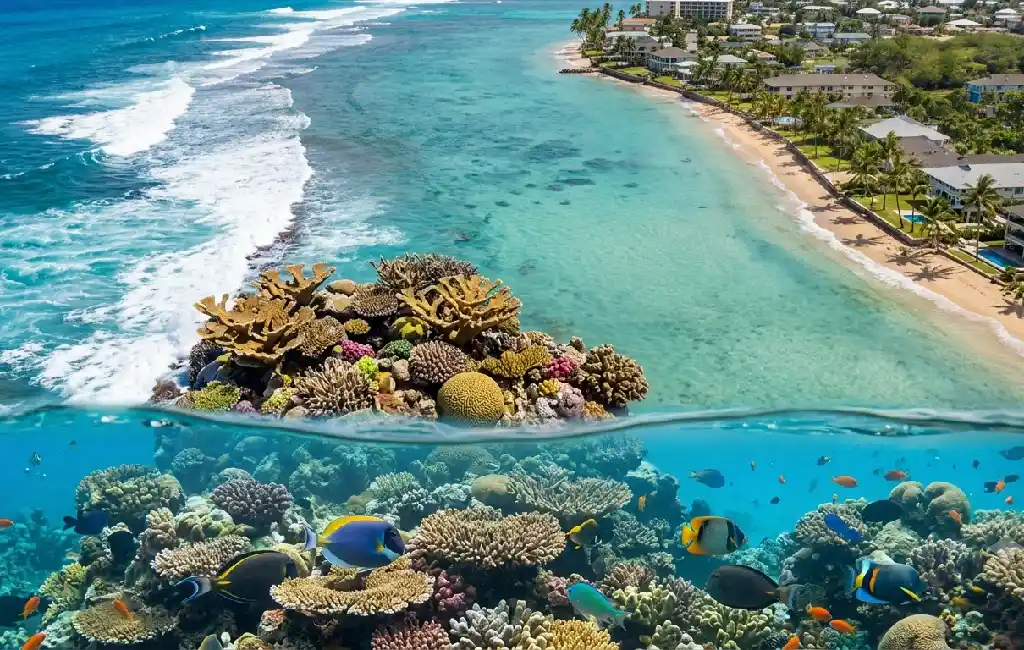
Insuring a reef treats it as natural infrastructure, the way a city insures a seawall or a pier. The logic is that a healthy reef reduces storm damage on the coast behind it, and when a hurricane damages the reef, the protection drops until it is repaired. Our piece on coral reef coastal protection covers what that protection is worth, and our guide to conservation finance covers where insurance fits among the other ways money reaches reefs.
How the three coral reef insurance policies are built
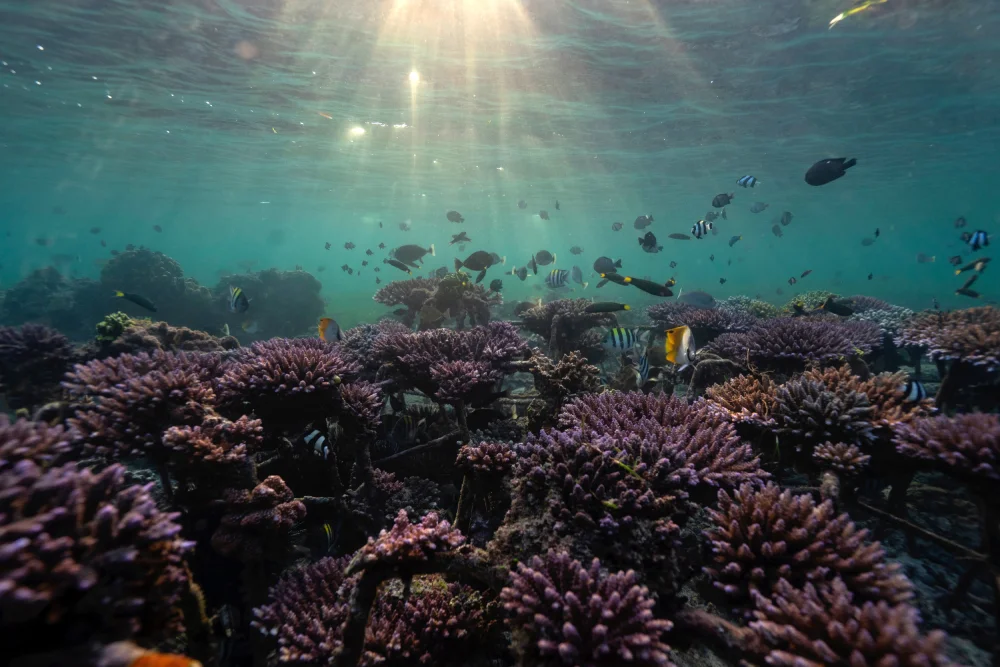
Quintana Roo came first. The Coastal Zone Management Trust, established in November 2018, buys the cover on behalf of the state government. The policy was bought in 2019 and renewed in 2020, covers 160 kilometers of coast, and has an annual aggregate limit of about USD 3.8 million. The trigger is wind speed above 100 knots inside a defined polygon, with 40 percent of the limit paid from 100 knots and 80 percent from 130 knots.3 4
The Mesoamerican Reef Insurance Programme launched in 2021, set up by the MAR Fund and the broker WTW. It covers seven reef sites across Mexico, Belize, Guatemala and Honduras, is underwritten by AXA Climate and Munich Re, and had its first policy financed by the InsuResilience Solutions Fund.5 6 It expanded to 11 sites at the 2023 renewal, when the trigger was refined so that payouts are “informed by response capacity, rather than ideal response for reef damage.”7
Hawaii is the first reef policy in the United States. The Nature Conservancy announced it on 20 November 2022, arranged with WTW and written by a Munich Re company. It pays up to a maximum of $2 million, with a trigger of 50 knots sufficiently close to the reefs, and was funded by the Bank of America Charitable Foundation and the Howden Group Foundation.8
| Quintana Roo, Mexico | Mesoamerican Reef | Hawaii | |
| First cover | 2019 | 2021 | Announced November 2022 |
| Who is behind it | A state coastal zone trust | The MAR Fund, with WTW | The Nature Conservancy, with WTW |
| Trigger | Wind above 100 knots in a defined polygon | Storm strength at covered sites | 50 knots close enough to the reefs |
| Limit | About USD 3.8 million a year | Not found | Up to $2 million |
| Paid so far | Almost $800,000 (Hurricane Delta, 2020) | US$175,000 (Hurricane Lisa, 2022) | $200,000 (Lala) and $300,000 (Lowell), 2026 |
What the payouts have funded: Hurricanes Delta, Lisa, Lala and Lowell
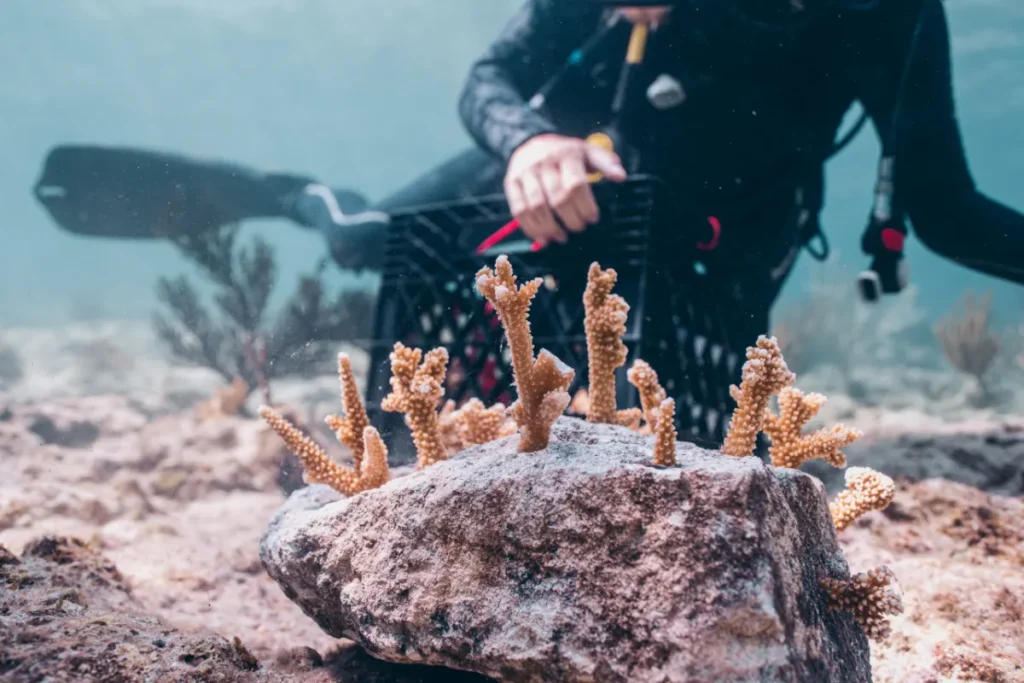
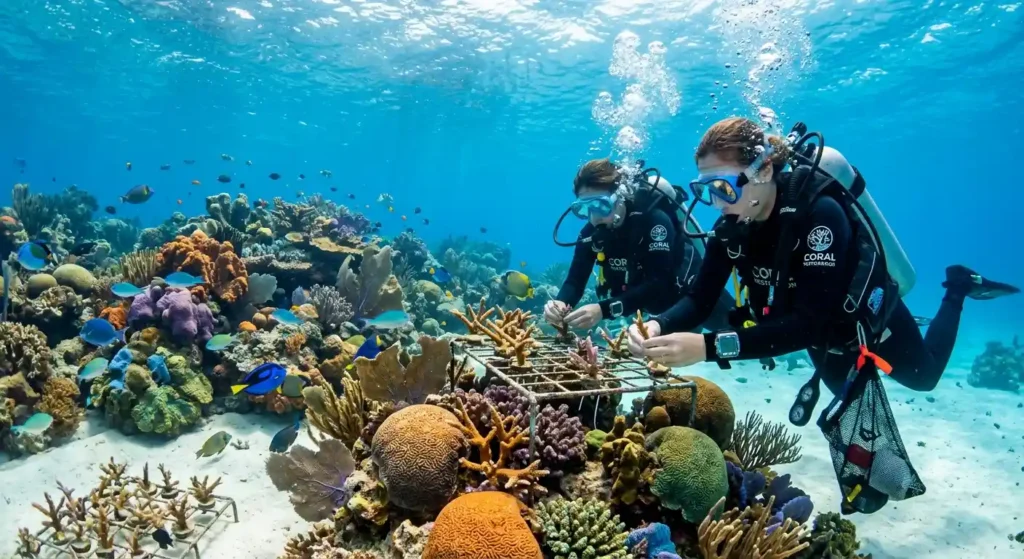
Hurricane Delta struck Quintana Roo on 7 October 2020. The Nature Conservancy, which developed the policy, puts the payout at “almost $800,000.” Nearly 80 reef brigade members “stabilized 1,200 large coral colonies” and “rescued and transplanted almost 9,000 broken coral fragments” in the first 11 days. The Conservancy’s primer says response is most effective up to 60 days after a storm, which is why the speed of the payout matters.
Hurricane Lisa triggered the Mesoamerican Reef policy on 2 November 2022 at Turneffe Atoll, Belize, with winds of 70 knots. The payout was US$175,000, expected to reach the MAR Fund’s Emergency Fund within 14 days.
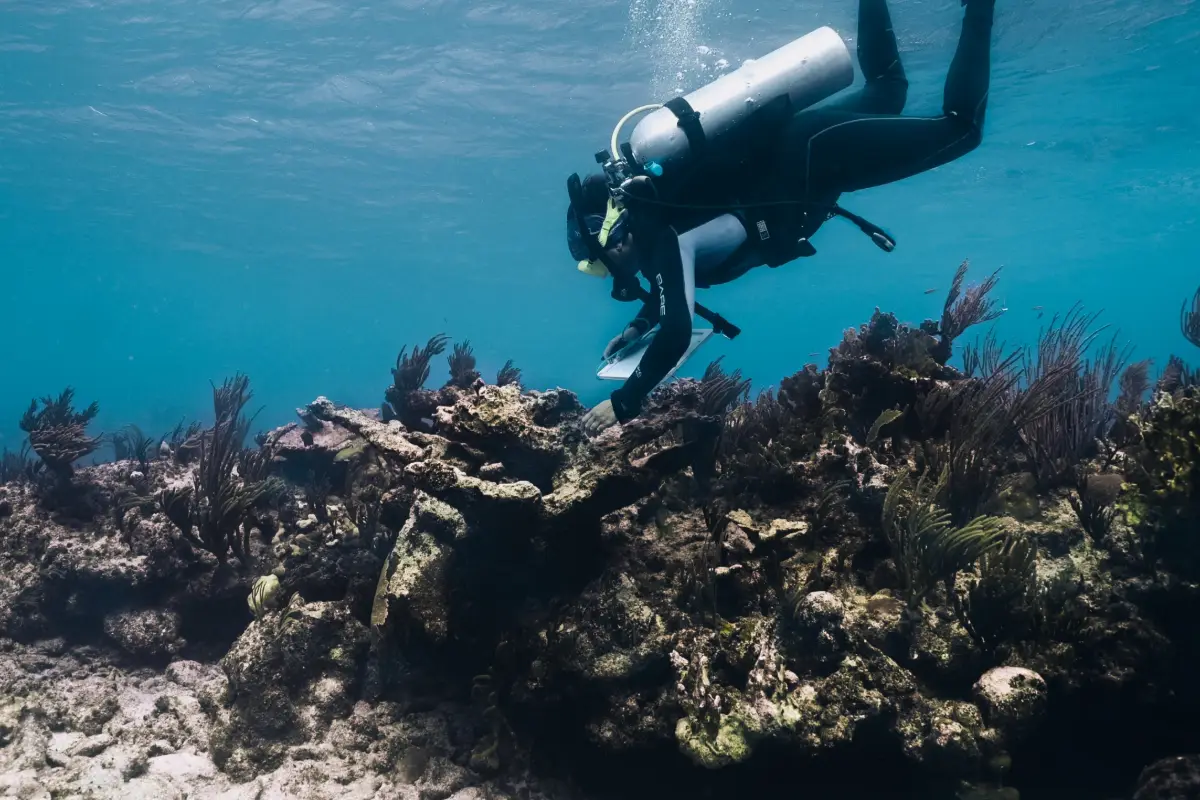
In Hawaii, Hurricane Lala brought sustained winds of 65 knots inside the covered area and triggered the policy for the first time. The payout was $200,000, the policy minimum, paid on 21 August 2026.9 Hurricane Lowell, a Category 2 storm on 7 September, triggered a second payout of $300,000. The money goes to damage assessment and reef repair, decided with the Hawaii Emergency Reef Restoration Network.10 Reef damage assessments come first because nobody knows where to put coral until someone has swum the reef.
What coral reef insurance does not cover
These policies are narrow, and I would rather say so plainly than let a headline do it for me.
All three are triggered by wind or storm strength, so heat is not covered. The UNEP FI case study on the Mesoamerican program says future work will look at cover for bleaching and runoff, which confirms that current policies are storm-only. Bleaching is the larger threat to most reefs, and we cover it in our piece on coral bleaching.
The Hawaii program has drawn criticism, and some of it is fair. Honolulu Civil Beat reported that the $200,000 for Lala was “only about half of the $432,000 the nonprofit has paid in premiums over the last four years,” that it is “probably not enough to cover all the work,” that the policy is not triggered by bleaching, and that swells and vessel groundings are not covered.11 The second payout changes the arithmetic. The two 2026 payouts together, $500,000, are more than the $432,000 in premiums Civil Beat reported, though that figure runs only to August and I did not find later premium numbers.
Premium amounts for the Quintana Roo and Mesoamerican programs are not public in the sources I found, so I cannot compare cost to payout for them. And basis risk is always present. A storm that passes just outside the polygon pays nothing, however much coral it breaks.
What has to be ready before the storm: response capacity
All three programs ran into the same limit. A check does not repair a reef. Trained divers, coral stock, permits and a named recipient for the money do. The Mesoamerican trigger was redesigned around exactly this point, so that payouts are informed by response capacity and not by an ideal response to reef damage.
So I would ask four things of any reef insurance plan. Who spends the payout, and have they done the work before? Where will the coral come from? Which permits are needed to move and attach coral, and are they in place? And what happens in the first 60 days, when response matters most?
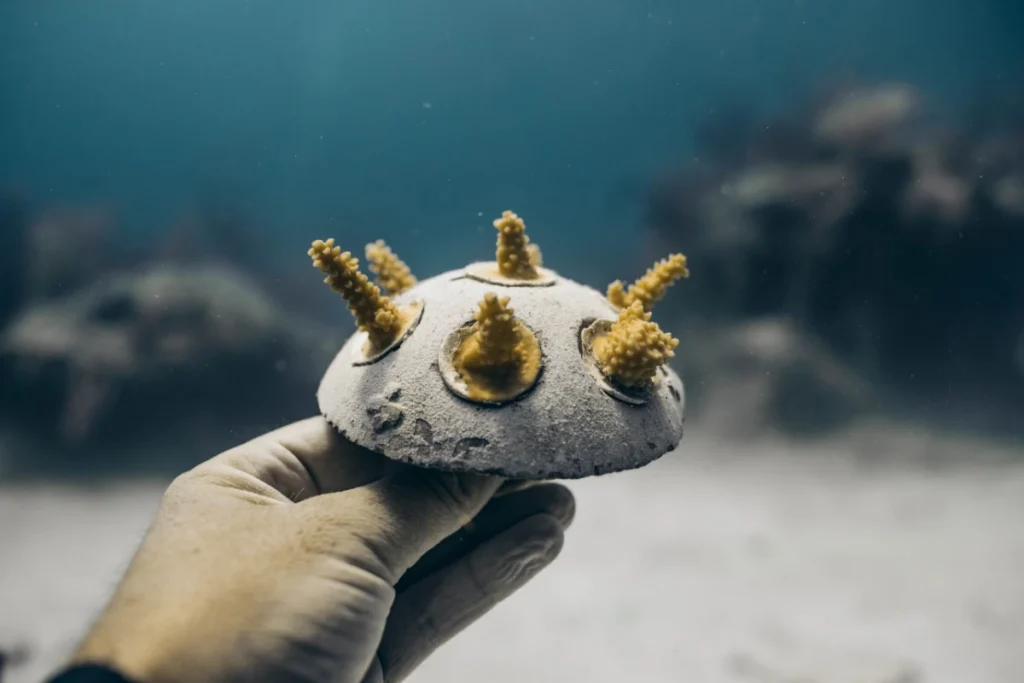
Coral stock is the piece I know best. Coral held in a land-based nursery is not out on the reef when the storm arrives, which is one reason I think nurseries belong in a response plan. A land-based farm can still be damaged by a storm, so it needs its own plan. Our guide to coral reef restoration explains how that stock gets from the farm to the reef.
Who should look at coral reef insurance, and what to ask
Resort groups, port and coastal property owners, public coastal trusts and conservation finance teams are the natural audience. The case gets stronger where tourism or coastal property depends on a reef, and our piece on the economic impact of coral reef loss sets out what is at stake.
Before you commit, ask five things. What is the trigger, and where is the polygon drawn? Who holds the policy and who receives the payout? What does the premium cost against the expected payout? What is the response plan, and who has rehearsed it? And what is explicitly not covered?
Coral Vita is not an insurer, a broker or a party to any of these policies. We work on the response side, growing coral and restoring reef, described on our services page. If you are building a reef insurance program and want to talk about what a response plan needs, send us the site and the storm exposure.
About Coral Vita
Coral Vita is a mission-driven company dedicated to restoring our world’s dying and damaged reefs. Using innovative land-based farming techniques, Coral Vita grows diverse and resilient corals in months instead of the decades they take in nature. These corals are then transplanted into threatened reefs, helping to preserve ocean biodiversity while protecting coastal communities that depend on healthy reefs for protection, food, and income.
Founded by environmental entrepreneurs Sam Teicher and Gator Halpern, Coral Vita’s high-tech coral farms incorporate breakthrough methods to restore reefs in the most effective way possible. In 2021, the company was recognized as the inaugural winner of Prince William’s Revive Our Oceans Earthshot Prize Winner for their pioneering work in coral restoration.
To learn more about Coral Vita’s work or to get involved in coral reef conservation efforts, visit their website at www.coralvita.co or contact them directly through their Contact Us page.
Frequently asked questions
What is parametric insurance?
Parametric insurance pays a pre-agreed sum when a measurable event, such as a wind speed inside a set area, meets or exceeds a trigger. It does not pay for assessed loss, so payouts can be fast.
Can you insure a coral reef?
Yes, in a limited way. Policies in Quintana Roo, the Mesoamerican Reef region and Hawaii pay when a storm of set strength crosses a defined area. The money funds reef assessment and repair.
Has reef insurance ever paid out?
Yes. Hurricane Delta triggered almost 800,000inQuintanaRooin2020,andLisatriggeredUS175,000 in Belize in 2022. Hawaii paid $200,000 after Hurricane Lala and $300,000 after Hurricane Lowell in 2026.
Does reef insurance cover coral bleaching?
No. The current policies are triggered by storms. The Hawaii policy is not triggered by bleaching, and a UNEP FI case study says cover for bleaching and runoff is future work.
References
- https://corporatesolutions.swissre.com/en/japan/insights/knowledge/parametric-solutions-srij/what-is-parametric.html ↩︎
- https://corporatesolutions.swissre.com/insights/knowledge/10_myths_about_parametric_insurance.html ↩︎
- https://www.nature.org/content/dam/tnc/nature/en/documents/Reef_insurance_primer.pdf ↩︎
- https://insurancenewsnet.com/oarticle/nature-conservancy-worlds-first-coral-reef-insurance-policy-triggered-by-hurricane-delta ↩︎
- https://www.wtwco.com/en-US/News/2022/11/hurricane-lisa-triggers-first-pay-out-of-mesoamerican-reef-insurance-programme-to-finance ↩︎
- https://www.unepfi.org/wordpress/wp-content/uploads/2023/06/UNEP-FI-Case-study_Financing-Reef-Resilience-Extreme-Climate-Events.pdf ↩︎
- https://www.artemis.bm/news/parametric-mesoamerican-reef-cover-expands-again-with-refined-parametric-trigger ↩︎
- https://www.nature.org/en-us/newsroom/first-ever-us-coral-reef-insurance-policy/ ↩︎
- https://www.nature.org/en-us/newsroom/hi-reef-insurance-triggered/ ↩︎
- https://www.civilbeat.org/2026/08/lala-triggers-nations-first-coral-insurance-payment/ ↩︎
- https://www.nature.org/en-us/newsroom/hi-reef-insurance-lowell/ ↩︎