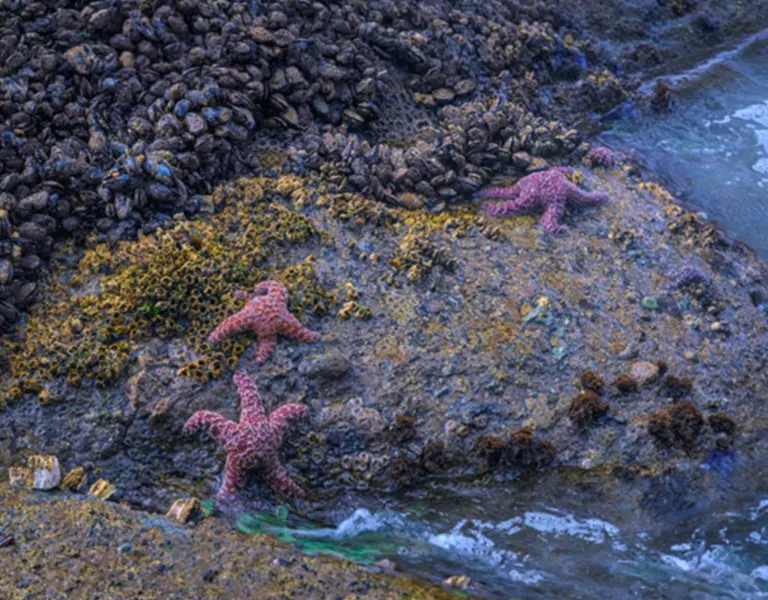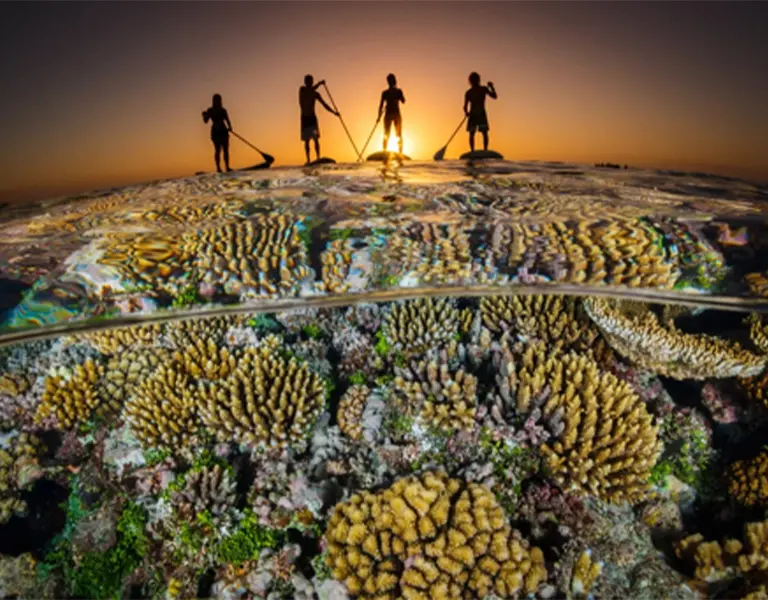
Introduction
Coral reefs cover about 0.2% of the seafloor, yet they support at least a quarter of all marine species and underpin the food, income, and coastal safety of hundreds of millions of people.1 The Global Coral Reef Monitoring Network puts the annual value of the goods and services reefs provide at roughly $2.7 trillion, including $36 billion in reef tourism alone.
That trillion-dollar headline needs a caveat, and it is one most articles skip. Estimates of what reefs are worth range from tens of billions to nearly $10 trillion a year depending on the method used, and the gap between them is not a rounding error. Counting only the money that actually changes hands in reef tourism, reef fisheries, and avoided storm damage produces a defensible floor of roughly $150 billion a year. Counting the full economic worth of every service reefs provide, including ones no one pays for directly, produces the trillion-dollar figures. Both numbers are real. They answer different questions.
What is not in dispute is the direction of travel. Live coral cover has roughly halved since the 1950s, and the money attached to it is going the same way.2 Here we look at what reef loss costs across tourism, fisheries, coastal protection, and pharmaceutical research, and why the case for protecting reefs is now an economic argument as much as an environmental one.
How Much Coral Reef Have We Lost?
Before the dollar figures make sense, the scale of the loss has to be clear.
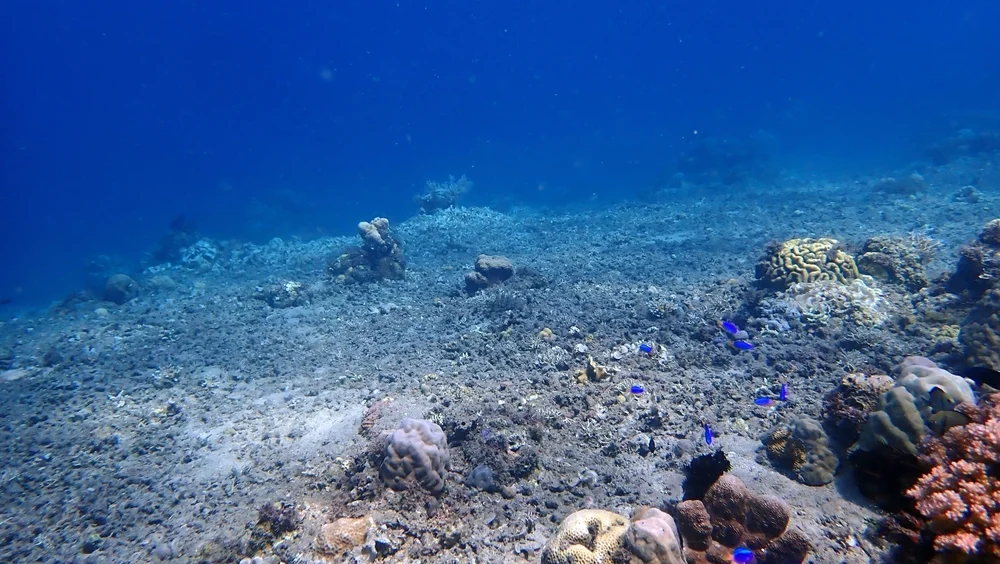
Coral reefs are not disappearing all at once. They are thinning. Reef degradation means the steady replacement of living coral cover with algae, rubble, and bare rock, along with the collapse of the fish populations and reef structure that depend on it. A degraded reef is often still there. It just no longer does the work reefs do.
The numbers behind that decline:
- Live coral cover has roughly halved since the 1950s
- The world lost about 14% of its remaining coral between 2009 and 2018, more coral than currently lives on all of Australia’s reefs3
- The fourth global bleaching event, running from 2023 into 2025, affected 84% of the world’s reef area, the most extensive on record
- Without action to hold warming near 1.5°C, most projections put the majority of reefs at risk by mid-century
The causes are stacked rather than singular. Warming water drives bleaching, while threats to coral reefs closer to shore, including nutrient and sediment runoff from agriculture, marine pollution, overfishing, and destructive fishing, weaken reefs before the heat arrives. Disease has become a compounding factor. In the Caribbean, stony coral tissue loss disease has moved through reef systems faster than most managers can respond.
Here is why that matters to anyone who does not dive: reef loss is not a wildlife story with an economic footnote. Reef degradation could cost around $500 billion a year by 2100. Coastal economies are already paying part of that bill.
What Coral Reefs Are Worth Globally
Search for what coral reefs are worth and you will get $30 billion, $375 billion, $2.7 trillion, and $9.9 trillion. All four are published estimates. The spread comes from method, not from anyone being wrong.
Bottom-up estimates ($30 billion to $150 billion a year) count observed economic activity: reef tourism receipts, the landed value of reef fish, the storm damage reefs demonstrably prevent. Spalding and colleagues mapped global reef tourism this way and arrived at roughly $36 billion a year.4 These figures are conservative and defensible because they track real transactions.
Top-down estimates ($2.7 trillion to $9.9 trillion a year) apply an average value per unit of reef area across every reef on the planet, capturing services no one invoices for, such as biodiversity and nutrient cycling.5 The $2.7 trillion figure cited by GCRMN and UNEP comes from this approach. It is worth noting that the authors of the reef tourism study called the trillion-dollar extrapolation implausibly high given how geographically concentrated reef tourism actually is.
Adding up the sectors where reef loss produces measurable, traceable economic damage gives a working floor of $150+ billion a year. That is the figure used throughout this analysis. It almost certainly understates the true worth of reefs. It has the advantage of being defensible line by line, which matters when the audience is a finance ministry rather than a conservation conference.
The Economic Cost of Coral Bleaching Events
Bleaching is the mechanism that converts warming water into economic loss, and it does so faster than any other reef threat.
When water stays too warm for too long, corals expel the algae living in their tissue and turn white. Coral bleaching is not automatically fatal, but bleached reefs stop growing, become vulnerable to disease, and lose the fish and colour that visitors pay to see. The economic damage starts before any coral dies.
What bleaching costs:
- Tourist numbers on the Great Barrier Reef fell 10% to 20% following major bleaching events, with losses running past $1 billion
- The U.S. Geological Survey found that a single bleaching event can raise flood risk and expected economic losses by 25% to 30%
- Fish biomass falls sharply as bleached reef structure erodes, cutting catches for fisheries that depend on it
- Reef degradation driven by climate change could reach roughly $500 billion a year in costs by 2100
The reputational damage runs ahead of the ecological damage. Tourism operators report that the perception of a bleached reef is enough to send visitors elsewhere, even when the reef they would have visited is still in good condition. A bleaching event makes headlines globally and bookings fall regionally, which means the economic hit lands on operators whose reefs may be perfectly healthy.
That gap between perception and condition is why bleaching costs are so hard for destinations to manage, and why waiting for reefs to recover on their own is a poor financial strategy.
Economic Impacts of Coral Reef Loss by Sector
1. Tourism Revenue Decline
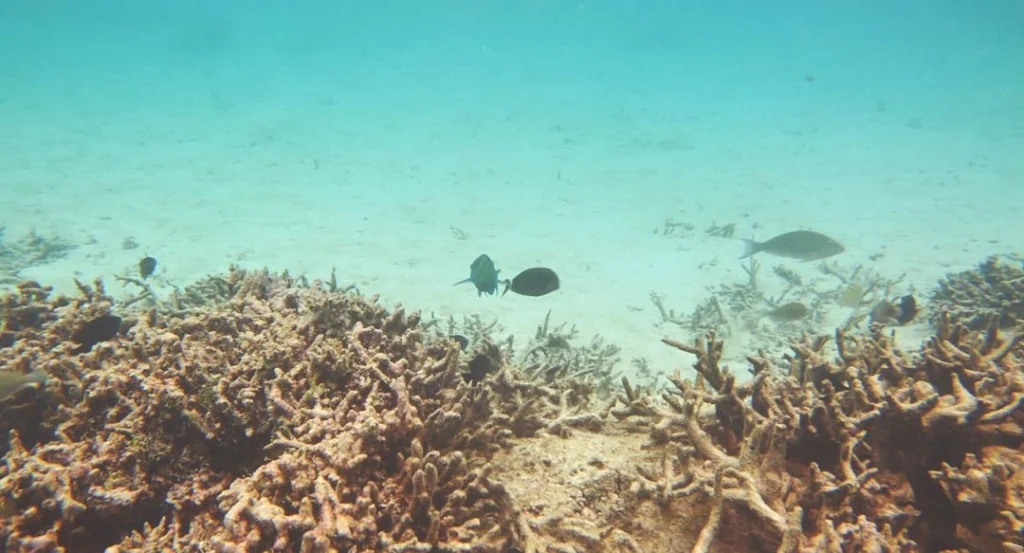
Reef tourism draws millions of visitors a year, supporting coastal economies through snorkelling, diving, boat tours, and beach recreation. This reef-dependent eco-tourism is often the largest single earner in reef economies.
Economic Value
- Global tourism value directly attributed to coral reefs runs to roughly $36 billion a year
- Reef-based tourism supports over 1 million jobs worldwide6
- In many island economies, reef tourism accounts for a majority of foreign exchange earnings
Impact of Reef Loss
- Severely degraded reefs see an 80% to 90% drop in visitation7
- Job losses cascade through the tourism supply chain, from operators to hotels to transport
- Property values in reef-adjacent destinations fall by up to 30%8
- Destinations lose repeat visitors, who are the cheapest to attract and the first to notice decline
How Much the Great Barrier Reef Generates from Tourism
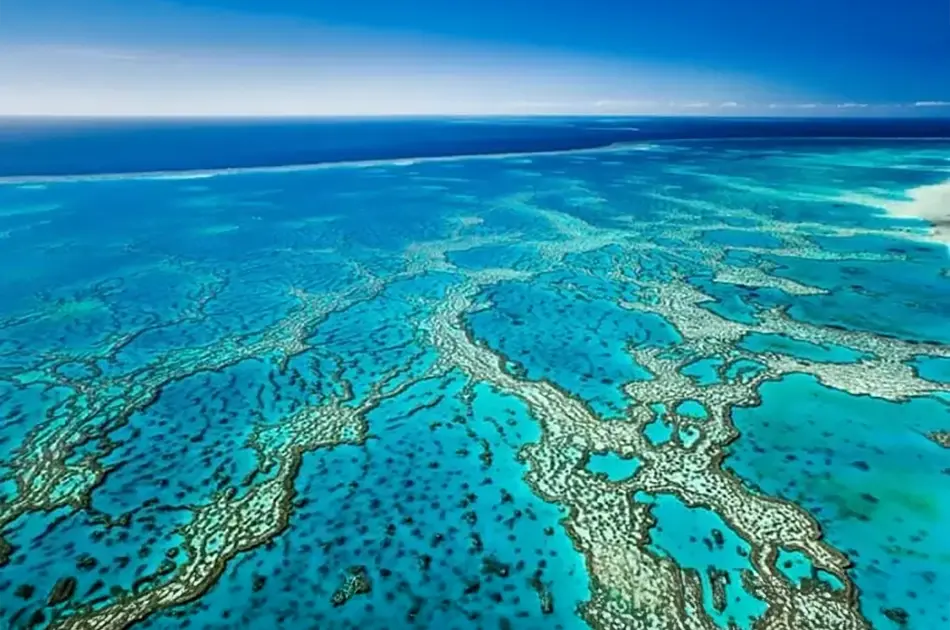
Australia’s Great Barrier Reef is the most closely measured reef economy on earth, which makes it the clearest test case for what reef loss costs.
Deloitte Access Economics valued the Reef at $95 billion in total economic, social, and cultural terms in its 2025 assessment, up from $56 billion in 2017.9 Its findings:
- The Reef contributes $9 billion a year to Australia’s economy
- It supports around 77,000 full-time jobs, which would make it Australia’s fifth-largest employer if it were a single company
- Tourism generates $7.9 billion annually, close to 90% of the Reef’s economic value
- Holding warming below 2°C and scaling restoration could add more than $124 billion in economic opportunity over 50 years
Note the direction of those numbers. The Reef’s measured value rose 69% in eight years while its ecological condition declined, which tells you the earlier figures were undercounting rather than that the Reef got healthier. The economic exposure was always larger than the 2017 accounting showed.
Between 2023 and 2025, the Reef went through the most widespread bleaching on record along with the rest of the world’s reefs. The financial question for Australia is no longer whether reef decline has a cost. It is who absorbs $9 billion a year and 77,000 jobs if the decline continues.
2. Fisheries Decline and Food Security
Coral reefs are breeding grounds, nurseries, and habitat for roughly 25% of all marine species,10 including many commercially fished ones. These coral reef ecosystems supply protein and income across the tropics.
How Many People Depend on Coral Reefs for Food
Around 500 million people depend on reef fisheries for food security and income, with a further 200 million or so relying on reef tourism, coastal protection, and other reef services.11 Roughly 6 million small-scale fishers work reef fisheries across developing countries.12
For many of them there is no substitute. Reef fish are the protein source, and the fishery is the job. When a reef fails, both go at once.
Economic Value
- Global reef fisheries are valued at $6.8 billion a year
- Reef fisheries are concentrated in countries with the fewest alternatives and the least capacity to import protein
Impact of Reef Loss
- Fish biomass drops by 60% to 80% as reefs degrade
- Species diversity falls 20% to 40%, hitting commercially fished species hardest
- Catches and incomes decline in communities with limited alternative work
- Overfishing accelerates the cycle, since fewer herbivorous fish means more algae and less coral recovery
Case Study: Caribbean Reef Fisheries
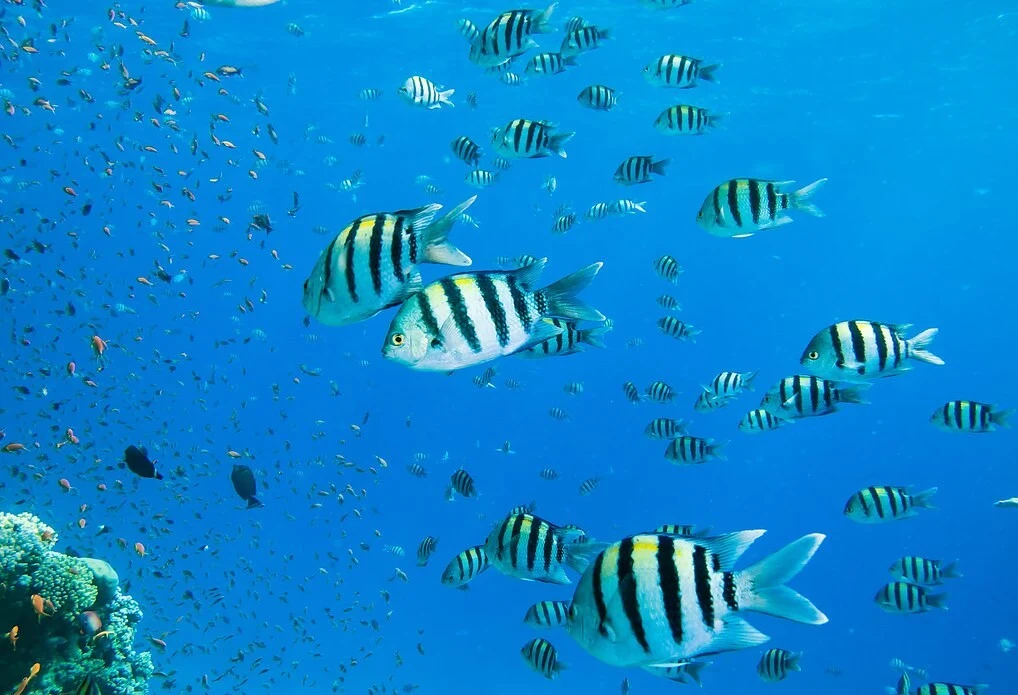
Caribbean fisheries production has fallen by over 40% in three decades as reef degradation spread across the region. Annual losses are estimated at $310 million. Communities built on reef fishing face rising unemployment and food insecurity as the fishery stops supporting the people who depend on it.
3. Coastal Protection Loss and Infrastructure Damage
Healthy reefs work as natural breakwaters, absorbing up to 97% of wave energy before it reaches shore.13 That barrier protects coastal communities from storms, erosion, and flooding.
Economic Value
- Coral reefs prevent an estimated $94 billion in coastal damage annually14
- Over 100 million people benefit from reef coastal protection
- Replacing reefs with artificial coastal defences would cost more than $2 trillion globally
Impact of Reef Loss
- Coastal erosion rates rise 30% to 70% as reef barriers degrade
- Storm surge reaches 50% to 100% further inland
- Flooding grows more frequent and more severe
- Infrastructure damage costs rise by billions annually
- Insurance premiums in reef-adjacent areas climb
- Artificial defences become necessary, at far higher cost than reef protection
Case Study: Flood Protection in South Florida
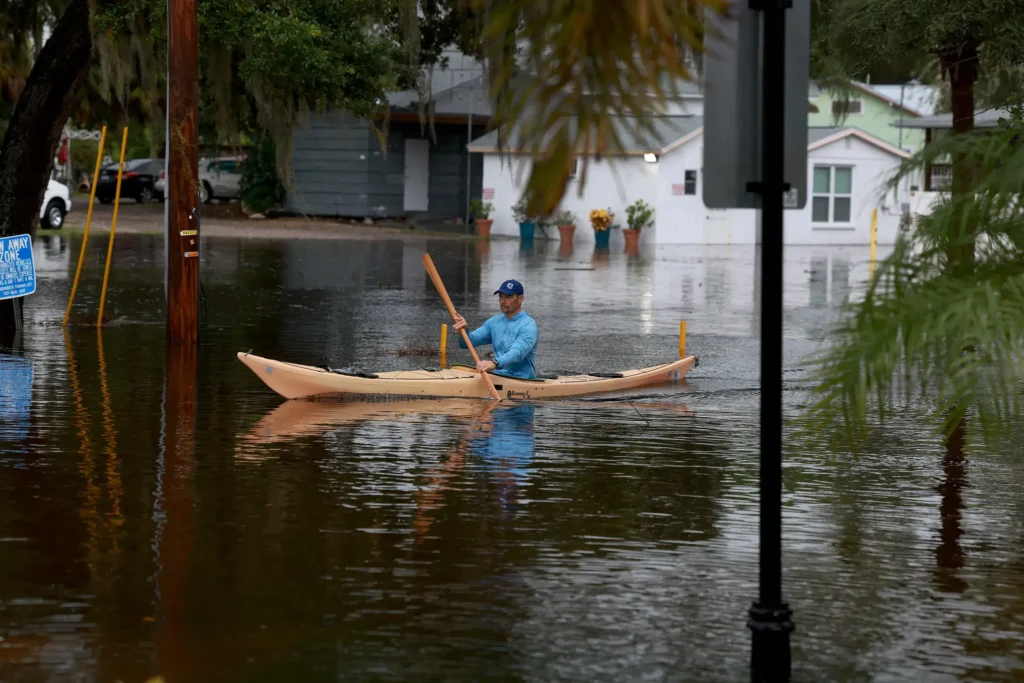
Florida reefs cut wave energy by over 90% during storms. A U.S. Geological Survey study found a single bleaching event can raise flood risk and expected losses by 25% to 30%. In South Florida, losing reef protection could add $1.6 billion in damage during a 100-year storm. Property markets already price this in: real estate behind healthy reefs commands 16% higher prices than comparable property behind degraded reefs.
4. Loss of Other Ecosystem Services
Beyond tourism, fisheries, and coastal protection, reefs provide services that support economic activity in ways that rarely appear on a balance sheet until they stop.
Economic Value
- Water filtration and waste assimilation worth an estimated $3.9 billion annually15
- Sand production for tourism beaches valued at $2.1 billion a year
- Carbon sequestration contributing to climate regulation
- Biodiversity support for connected marine ecosystems
Impact of Reef Loss
- Water quality declines, requiring treatment infrastructure
- Beaches erode, requiring sand replenishment
- Carbon sequestration capacity falls
- Biodiversity losses cascade into adjacent ecosystems
Case Study: Water Quality in the Caribbean
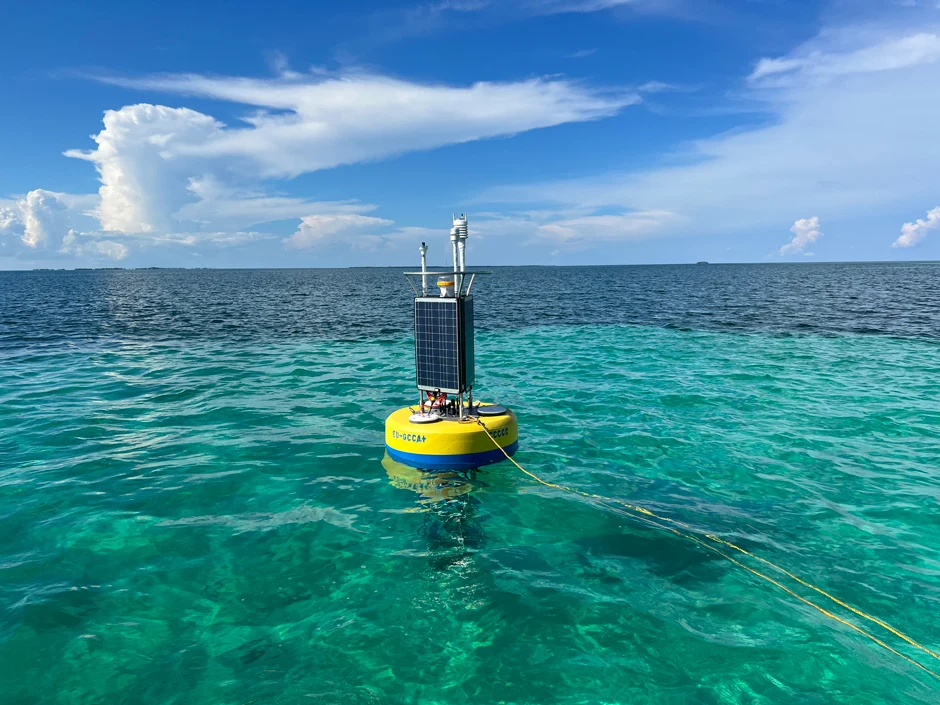
Caribbean reef degradation has cut water filtration capacity and worsened nearshore water quality. Tourism destinations have built water treatment facilities costing $25 million to $50 million per location, while beaches erode fast enough to need sand replenishment at $5 million to $10 million per mile of coastline. Those costs land directly on tourism operators and coastal governments.
5. Pharmaceutical and Biotechnology Losses
Reef ecosystems hold some of the richest marine biodiversity on the planet, and with it compounds of interest to pharmaceutical and biotechnology research. These biodiversity hotspots contain species whose medical potential has barely been examined.
Economic Value
- Marine biotechnology market valued at $6.4 billion annually16
- Over 25% of new marine-derived compounds originate from reef organisms17
- Reef-derived compounds underpin treatments worth $3 billion to $5 billion annually18
Impact of Reef Loss
- Fewer new bioactive compounds discovered
- Lost treatments and cures that were never found
- Fewer sustainable industrial applications developed
- Economic potential that never materialises
Case Study: Marine Pharmaceuticals
Compounds from reef organisms produced AZT (HIV treatment), Prialt (chronic pain), and Halaven (breast cancer).¹⁸ Together these treatments are worth over $3 billion a year. Scientists estimate that reef biodiversity loss could eliminate 50% to 70% of potential new marine medicines. The loss here is unusual because it is invisible: no one can name the drug that will not be discovered.
6. Cascading Effects on Local and National Economies
Reef loss does not stay in the sectors where it starts. It moves through government revenue, social services, and regional stability.
Economic Value
- Combined annual net benefits from coral reefs estimated at $29.8 billion worldwide19
- Total asset value calculated at nearly $800 billion over 50 years
- Economic base for coastal communities across more than 100 countries
Impact of Reef Loss
- Tax revenue falls as tourism and fisheries decline
- Social service costs rise as livelihoods disappear
- Coastal populations migrate
- Inequality widens, since reef-dependent communities are often already the poorest
- Development options narrow in affected regions
Case Study: Indonesia’s Reef-Dependent Economy
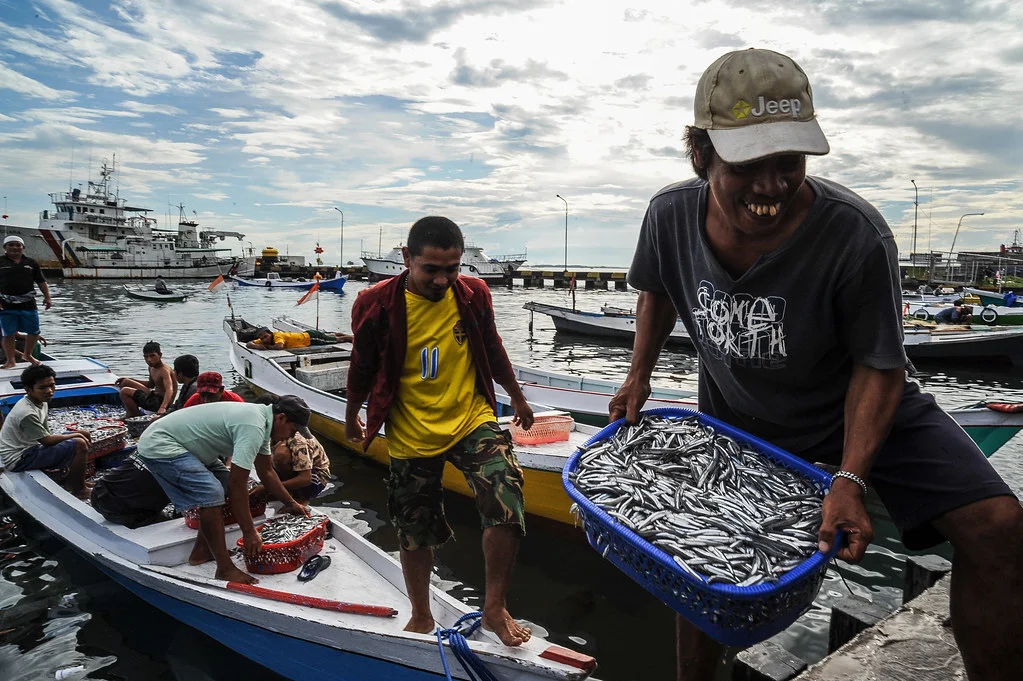
Indonesia holds the world’s most extensive reef system, and reef-related industries contribute over $3 billion a year to the national economy while supporting more than 1 million jobs. Continued degradation could cut those revenues by up to 75% in regions with few alternative livelihoods. Government analysis indicates that maintaining reef health delivers economic benefits 15 to 20 times greater than what conservation costs.
Economic Risk and Insurance Implications
Reef loss changes the risk profile of entire coastlines, and the financial sector has started to price it.
Current Impacts
- Insurance premiums in reef-adjacent areas have risen 30% to 45% in high-risk regions
- Property devaluation of 15% to 25% where reef protection has badly degraded
- Higher capital requirements for coastal development projects
- Reef insurance products now worth $100 million+ annually
Future Projections
- Parts of some coastlines may become uninsurable by 2035 to 2040
- An estimated $350 billion in additional property risk exposure by 2050
- Public disaster recovery costs rising 50% to 80%
- Development constrained in vulnerable coastal regions
Case Study: Mexico’s Reef Insurance Initiative
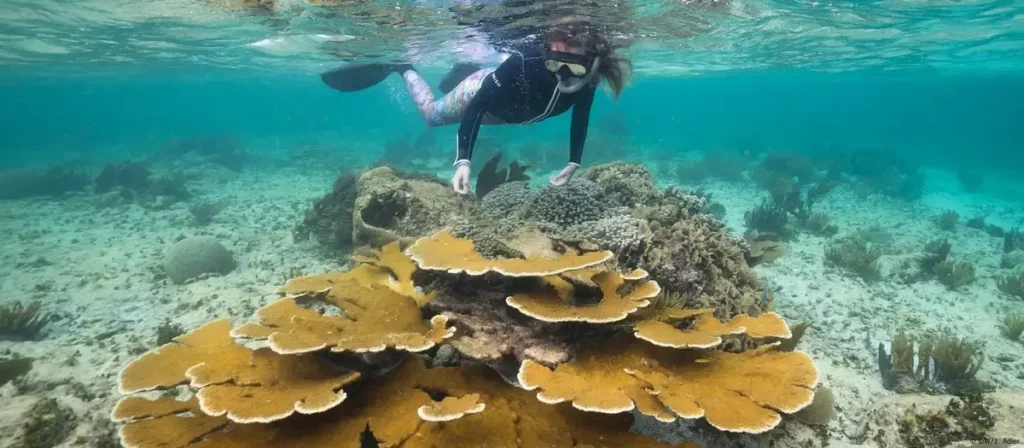
Quintana Roo, Mexico, established the world’s first reef insurance policy to cover hurricane damage. When triggered, it releases immediate funds for reef repair, on the logic that fast response prevents further degradation and protects the reef’s economic value. The policy treats the reef as infrastructure, because for that coastline it is.
Economic Impact Summary
| Economic Sector | Annual Global Value | Projected Losses by 2050 | Communities Affected | Jobs Impacted |
| Tourism | $36+ billion | $15-20 billion | 850+ coastal destinations | 1+ million |
| Fisheries | $6.8 billion | $3-4 billion | 500+ million people | 6+ million fishers |
| Coastal Protection | $94 billion (damage prevented) | $32-41 billion (additional damage) | 100+ million coastal residents | Indirect impact on all coastal industries |
| Ecosystem Services | $6+ billion | $2-3 billion | Global impact | Indirect impacts across sectors |
| Pharmaceuticals | $3-5 billion | $5-7 billion (unrealised potential) | Global healthcare systems | Research and development sector |
| Total Economic Impact | $150+ billion annually | $55-75 billion annually | 700+ million people | 8+ million direct jobs |
These totals count measurable economic activity only. Top-down valuations that include non-market services put the annual figure far higher, at $2.7 trillion or above.
The Economic Case for Coral Reef Restoration
The case for reef restoration no longer rests on environmental argument alone. With $150+ billion in annual value at stake, projected losses of $55 billion to $75 billion a year by 2050, and a possible $500 billion annual cost by 2100, reef decline is a line item in the accounts of every coastal economy.
The return is what makes the case. Every dollar put into reef conservation returns $5 to $15 through sustained tourism, fisheries, and coastal protection. Few infrastructure investments perform that well. Deloitte’s own modelling of the Great Barrier Reef found that climate action plus restoration at scale could add more than $124 billion in economic opportunity over 50 years, which is roughly 14 times the Reef’s current annual contribution.
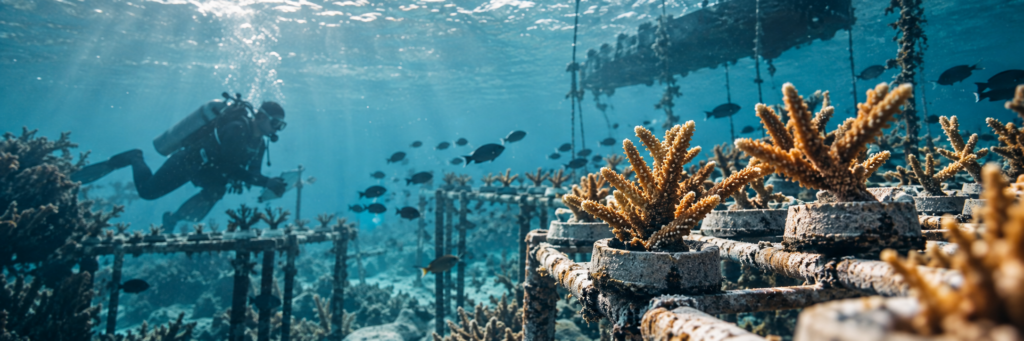
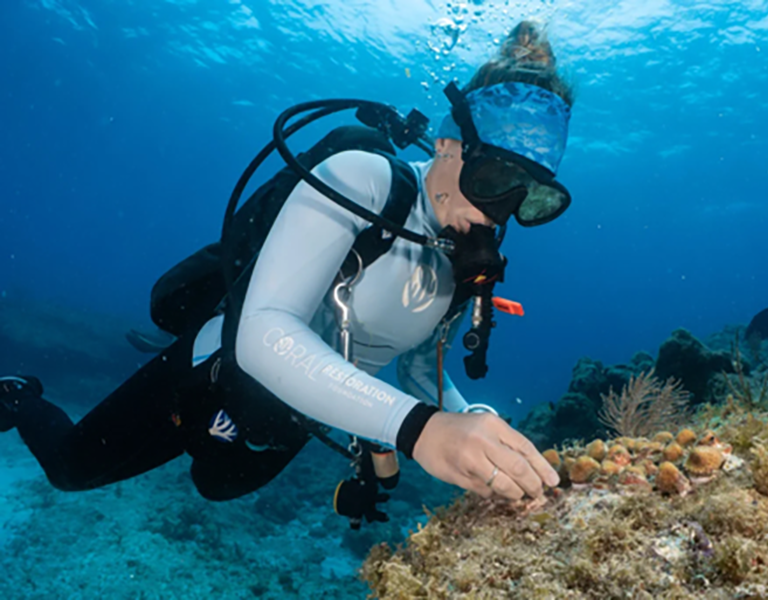
Coral Vita’s model demonstrates how restoration and commercial return can work together. Its land-based coral farms grow diverse, resilient corals in months instead of the decades reefs take in the wild, producing restoration at a pace that matches the rate of loss. The for-profit approach turns conservation from a philanthropic activity into a business that creates jobs, attracts investment, and generates revenue while repairing reef systems.
This is the restoration economy in practice. Rather than treating conservation and economic development as opposing forces, the model aligns them: reef-dependent businesses and governments invest in the natural infrastructure their revenue already depends on. A hotel operator paying for reef restoration is not making a donation. They are maintaining an asset.
As warming continues and pressure on reef systems builds, pricing reefs accurately becomes the precondition for protecting them. Commercial coral farming is one of the few tools that can operate at the speed the problem demands. For policymakers, businesses, and coastal communities, the economic case and the environmental case now point the same direction.
About Coral Vita
Coral Vita is a mission-driven company dedicated to restoring our world’s dying and damaged reefs. Using land-based farming techniques, Coral Vita grows diverse and resilient corals in months instead of the decades reefs take in the wild. These corals are then transplanted into threatened reefs, helping to preserve ocean biodiversity while protecting coastal communities that depend on healthy reefs for protection, food, and income.
Founded by environmental entrepreneurs Sam Teicher and Gator Halpern, Coral Vita’s high-tech coral farms incorporate breakthrough methods to restore reefs in the most effective way possible. In 2021, the company was recognized as the inaugural winner of Prince William’s Revive Our Oceans Earthshot Prize Winner for their pioneering work in coral restoration.
To learn more about Coral Vita’s work or to get involved in coral reef conservation efforts, visit their website at www.coralvita.co or contact them directly through their Contact Us page.
Frequently Asked Questions
How much money do coral reefs generate globally each year?
Reefs generate at least $150 billion a year in measurable value from tourism, fisheries, and coastal protection. Estimates including non-market services reach $2.7 trillion. Both figures are published; they measure different things.
How much does the Great Barrier Reef make from tourism?
Great Barrier Reef tourism generates $7.9 billion a year, close to 90% of the Reef’s economic value. Deloitte Access Economics valued the Reef at $95 billion overall in 2025, supporting around 77,000 full-time jobs.
What is the economic impact of coral bleaching?
Bleaching cuts reef tourism visitation by 10% to 20% and can raise coastal flood losses by 25% to 30% from a single event. Reef degradation could cost roughly $500 billion a year by 2100.
How many people depend economically on coral reefs?
Around 500 million people depend directly on reef fisheries for food and income. A further 200 million or so rely on reef tourism, coastal protection, and other reef benefits.
Which industries are most affected by coral reef degradation?
Tourism loses revenue first. Fisheries follow as stocks decline. Coastal real estate, insurance, and biotechnology research all carry exposure, since each depends on reef structure or reef biodiversity remaining intact.
What is the return on investment for coral reef conservation?
Every dollar invested in reef conservation returns $5 to $15 through sustained tourism, fisheries, and coastal protection. Well-managed marine protected areas typically recover their costs within five years.
What economic tools are being developed to protect coral reef assets?
Reef insurance policies, blue bonds, conservation-funding tourism fees, and carbon credit programmes all monetise reef services. These market mechanisms create funding streams while putting a price on reefs as infrastructure.
References
- Global Coral Reef Monitoring Network. (2021). Status of Coral Reefs of the World: 2020. https://gcrmn.net/2020-report/ ↩︎
- International Coral Reef Initiative. (2025). 84% of the world’s coral reefs impacted in the most intense global coral bleaching event ever. https://icriforum.org/4gbe-2025/ ↩︎
- Global Coral Reef Monitoring Network. (2021). Status of Coral Reefs of the World: 2020, Summary for Policymakers. https://gcrmn.net/wp-content/uploads/2022/05/Status-of-Coral-Reefs-of-the-World-2020-Summary-for-Policymakers.pdf ↩︎
- Spalding, M., Burke, L., Wood, S. A., Ashpole, J., Hutchison, J., & zu Ermgassen, P. (2017). Mapping the global value and distribution of coral reef tourism. Marine Policy, 82, 104-113. https://www.sciencedirect.com/science/article/pii/S0308597X17300635 ↩︎
- Reef Resilience Network. (2026). Value of Reefs. https://reefresilience.org/value-of-reefs/ ↩︎
- NOAA Office for Coastal Management. (2025). Fast Facts: Coral Reefs. https://coast.noaa.gov/states/fast-facts/coral-reefs.html ↩︎
- Brander, L. M., Rehdanz, K., Tol, R. S., & Van Beukering, P. J. (2012). The economic impact of ocean acidification on coral reefs. Climate Change Economics, 3(1), 1250002. https://www.worldscientific.com/doi/abs/10.1142/S2010007812500024 ↩︎
- Beck, M. W., Losada, I. J., Menéndez, P., Reguero, B. G., Díaz-Simal, P., & Fernández, F. (2018). The global flood protection savings provided by coral reefs. Nature Communications, 9(1), 2186. https://www.nature.com/articles/s41467-018-04568-z ↩︎
- Deloitte Access Economics. (2025). At What Cost? Safeguarding the Great Barrier Reef’s Role in Australia’s Economy. https://barrierreef.org/uploads/GBRValue-FullReport-Oct25.pdf ↩︎
- UN Environment Programme. (2025). Coral Reefs. https://www.unep.org/topics/ocean-seas-and-coasts/blue-ecosystems/coral-reefs ↩︎
- Spalding, M., Ravilious, C., & Green, E. P. (2001). World Atlas of Coral Reefs. University of California Press. https://www.ucpress.edu/book/9780520232549/world-atlas-of-coral-reefs ↩︎
- Reef Resilience Network. (2024). Importance of Reef Fisheries. https://reefresilience.org/management-strategies/coral-reef-fisheries-module/coral-reef-fisheries/importance-of-reef-fisheries/ ↩︎
- Ferrario, F., Beck, M. W., Storlazzi, C. D., Micheli, F., Shepard, C. C., & Airoldi, L. (2014). The effectiveness of coral reefs for coastal hazard risk reduction and adaptation. Nature Communications, 5(1), 3794. https://www.nature.com/articles/ncomms4794 ↩︎
- Costanza, R., d’Arge, R., De Groot, R., Farber, S., Grasso, M., Hannon, B., & Van Den Belt, M. (1997). The value of the world’s ecosystem services and natural capital. Nature, 387(6630), 253-260. https://www.nature.com/articles/387253a0 ↩︎
- Burke, L., Reytar, K., Spalding, M., & Perry, A. (2011). Reefs at Risk Revisited. World Resources Institute. https://www.wri.org/research/reefs-risk-revisited ↩︎
- Nature. (2020). Why a landmark treaty to stop ocean biopiracy could stymie research. Nature, 579(7798), 15-16. https://www.nature.com/articles/d41586-020-00912-w ↩︎
- Bruckner, A. W. (2022). Life-Saving Products from Coral Reefs. Issues in Science and Technology, 38(4), 29-35. https://issues.org/p_bruckner-coral-reefs-importance/ ↩︎
- Jiménez, P. C., Wilke, D. V., & Costa-Lotufo, L. V. (2018). Marine drugs for cancer: surfacing biotechnological innovations from the oceans. Clinics, 73, e482s. https://www.ncbi.nlm.nih.gov/pmc/articles/PMC6096976/ ↩︎
- US Environmental Protection Agency. (2025). Basic Information about Coral Reefs. https://www.epa.gov/coral-reefs/basic-information-about-coral-reefs ↩︎