Stony coral tissue loss disease is the most destructive coral disease ever recorded, and it is still on the move. Since it first appeared off Miami in 2014, stony coral tissue loss disease has turned living coral reef into bare skeleton across Florida and much of the Caribbean. This is the story of what the disease does, which corals it targets, and why the people fighting it still have real reasons for hope.
Key Takeaways
- Stony coral tissue loss disease was first reported near Miami in 2014 and has since spread through the Florida Reef Tract and across the wider Caribbean.1 2
- The disease is waterborne, moves fast, and can kill an entire colony within weeks, with mortality rates reaching 100% in the hardest-hit species.3
- More than 20 of Florida’s roughly 45 coral species are susceptible to stony coral tissue loss disease, and over half of Florida’s Coral Reef, some 96,000 acres, has been affected.² 4
- Field crews now treat active lesions with an amoxicillin paste called Base 2B that halts individual lesions with up to a 95% success rate.5
- Restoration groups, including land-based coral farms like Coral Vita, are growing disease-resistant corals and rebuilding the genetic diversity a healthy coral reef needs to recover.
What Stony Coral Tissue Loss Disease Actually Is
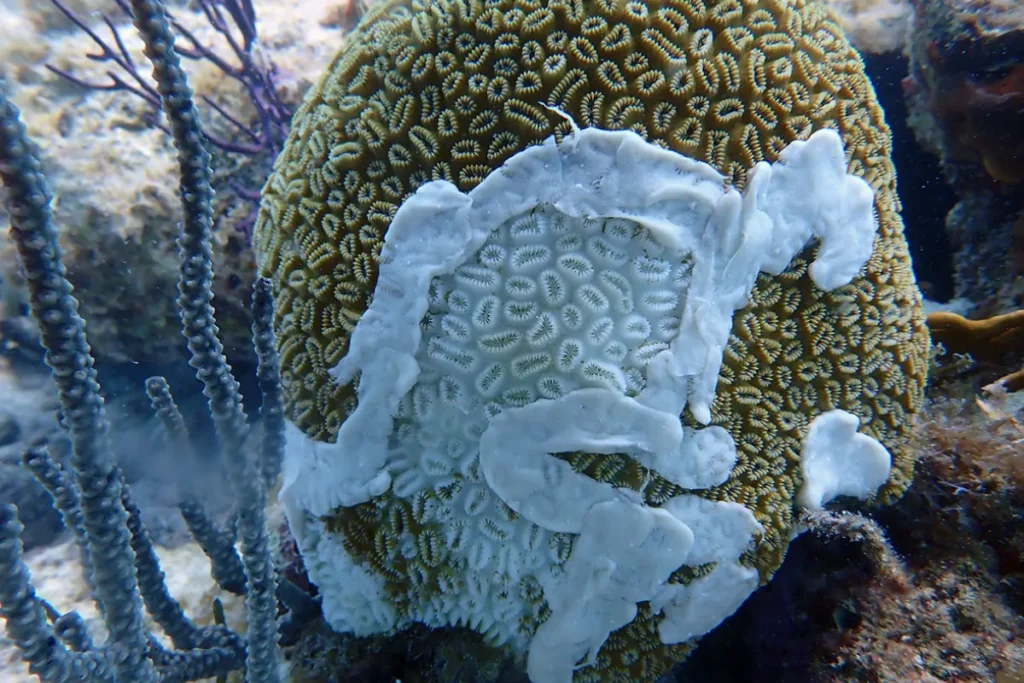
Stony coral tissue loss disease, often shortened to SCTLD, is a lethal infection that eats away the living tissue of hard, reef-building corals. It leaves behind clean white skeleton where soft tissue used to be. Scientists at the National Oceanic and Atmospheric Administration describe stony coral tissue loss disease as likely the deadliest coral disease outbreak in recorded history, because of its huge geographic range, its high mortality rates, and the sheer number of species it strikes.¹
The disease was first reported in 2014, and it has not slowed since.¹ Once a disease lesion appears on a colony, tissue loss can spread across the surface at a rate of five to 40 square centimeters per day until no living tissue remains.¹ A colony that looked healthy on one dive can be a bare skeleton by the next. That speed is what sets this deadly coral disease apart from the slower ailments reefs have carried for generations.
The cause of stony coral tissue loss disease is still not fully pinned down. The leading suspicion points to bacteria, since affected corals show clear shifts in their microbial communities and since antibiotics can stop the damage.³ Researchers continue to test whether a virus plays a role too. What is clear is that the pathogen travels through the water column, which makes stony coral tissue loss disease extraordinarily hard to contain.
How the Outbreak Began on Florida’s Coral Reef
The first outbreak-level signs of stony coral tissue loss disease showed up in late 2014 off Virginia Key, near Miami-Dade County.² Over the next year, the disease pushed both north and south along the Florida Reef Tract, and monitoring teams tracked it from Martin County all the way down to Key West.¹
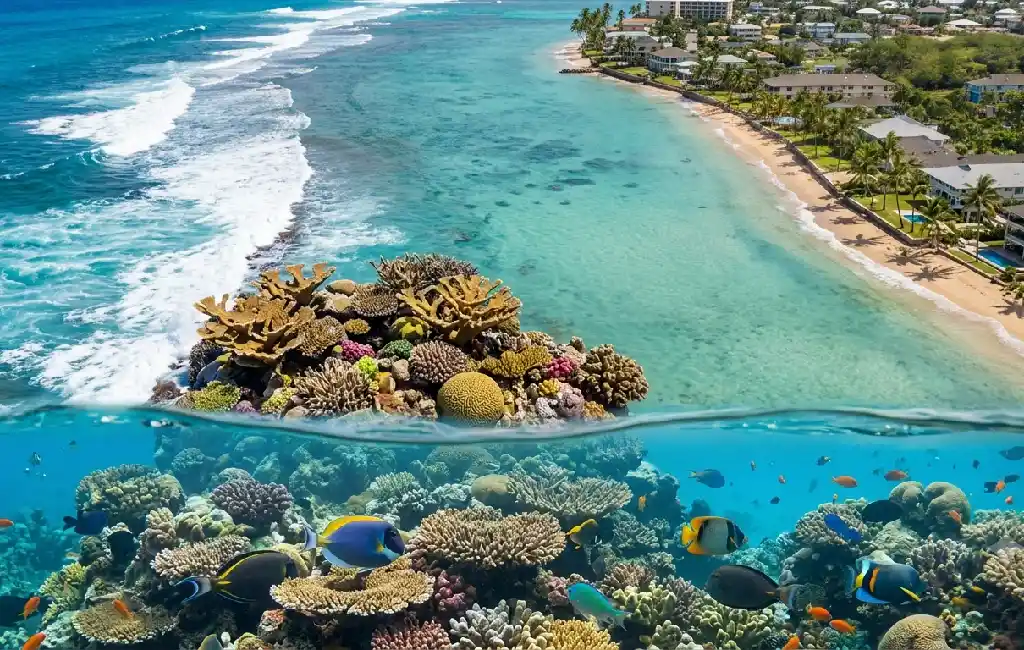
Florida’s Coral Reef is the only living barrier reef in the continental United States, and it took the first and heaviest blow. Within a few years, over half of Florida’s Coral Reef had been affected, an area of roughly 96,000 acres.⁴ The Florida Department of Environmental Protection, the Florida Fish and Wildlife Conservation Commission, and dozens of research and community partners have coordinated the response ever since.⁴
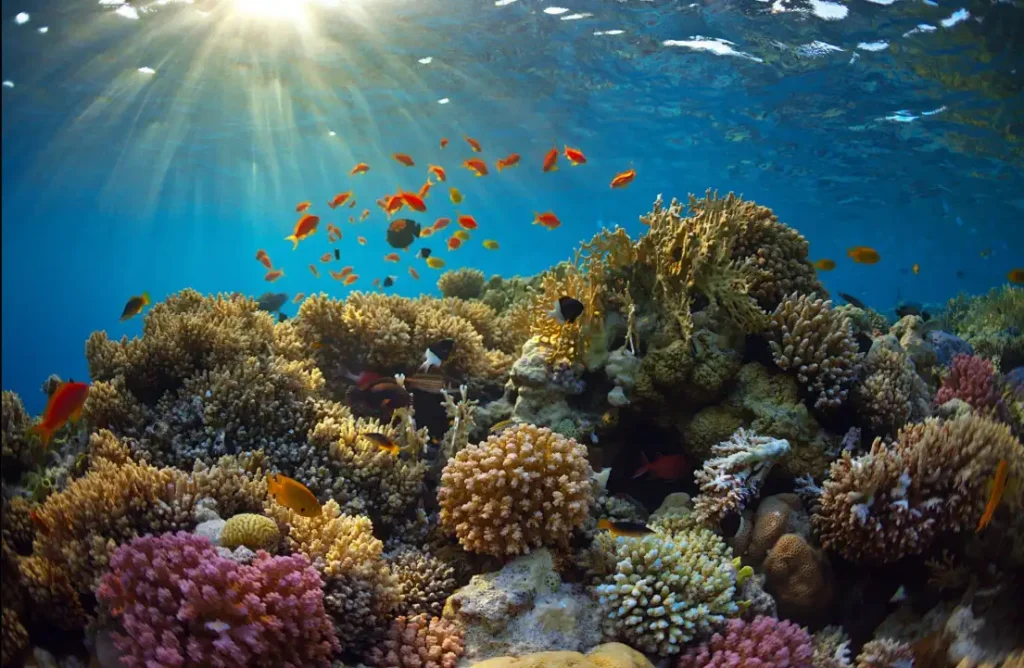
The reason the loss hit so hard comes down to which corals live there. This coral reef is built largely by massive, slow-growing corals that form the physical backbone of the reef. When those reef building corals die, the three-dimensional structure that shelters fish and buffers coastlines starts to erode, and that structure can take centuries to rebuild on its own. This is why stony coral tissue loss disease is so much more than a wildlife story, since healthy reefs protect coastal communities from storms and support the fishing and tourism economies that depend on them. Losing this coral reef would mean losing a natural seawall that shields South Florida from waves and flooding.
How Coral Tissue Loss Disease Moves From Colony to Colony
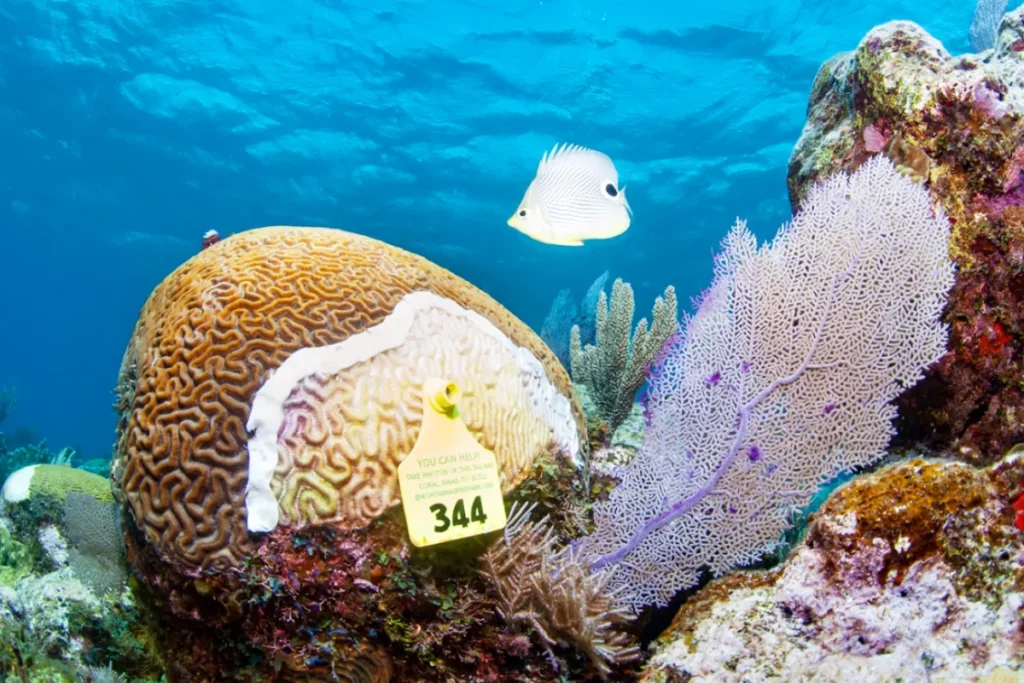
Coral tissue loss disease spreads in two ways that make it especially dangerous. First, it moves through seawater, so a healthy colony can catch it from a sick neighbor without any physical contact. Hydrodynamic models suggest stony coral tissue loss disease may drift between reefs on neutrally buoyant particles carried by ocean currents.¹ Second, it can hitch a ride on gear, boats, and dive equipment moving between sites, which is why decontamination protocols are now standard practice for anyone working in affected waters.
Once stony coral tissue loss disease reaches a new reef, disease transmission through the reef community can be swift. In a single Caribbean survey of more than 29,000 colonies between 2018 and early 2020, roughly 17% were already dead with signs of recent mortality, and another 10% were actively diseased.6 That kind of rapid spread is why researchers treat every new detection as an emergency.
Environmental factors shape how fast things go wrong. Poor water quality, warming seas, and bleaching stress all appear to influence disease progression, weakening corals before the infection even arrives. Clean water and healthy conditions give corals a better chance to hold the line, which is one more reason ocean pollution and warming matter to the fight against stony coral tissue loss disease. Restoration teams increasingly pair coral outplanting with work to improve local water quality, because a cleaner, healthier coral reef is also a more disease-resistant one.
What Diseased Corals Look Like Underwater
Spotting the disease early gives responders their best shot. On diseased corals, an SCTLD lesion shows up as a sharp band of bright white skeleton advancing across the colony, with living tissue on one side and bare skeleton on the other. These sctld lesions can start at the base, the edge, or the center of a colony, and they often appear as multiple spreading patches at once.¹
Because lesions can look different between individuals of the same species, trained divers learn to read subtle cues in the coral tissue itself. Catching a disease lesion while it is small is what makes intervention against stony coral tissue loss disease possible before an entire colony is lost.
Which Coral Species Are Most Vulnerable
Not every coral reacts the same way to stony coral tissue loss disease. Roughly half of the 45 stony coral species on Florida’s Coral Reef are susceptible, including five species already listed as threatened under the U.S. Endangered Species Act.² Across the wider Caribbean, more than 20 species have been confirmed affected, and some surveys put the number closer to 30.¹ ⁷
The pattern of who lives and who dies has reshaped reef communities. Fast-branching corals like Acropora cervicornis and Acropora palmata are largely spared, while the slower, boulder-shaped species that anchor the reef are hit hardest. This selective toll is steadily changing the mix of corals that define Caribbean coral reefs.
The most susceptible coral species are the brain and star corals that build reef structure. Highly susceptible species include the symmetrical brain coral, elliptical star coral, and pillar coral, along with maze corals in the Meandrina spp. group.7 These corals can develop lesions early and die within weeks.
Pillar coral shows just how severe the toll can be. Along Florida’s reef, the pillar coral Dendrogyra cylindrus lost more than 94% of its tissue and 93% of its colonies by the end of 2020, pushing the species toward functional extinction in Florida waters.⁶ Maze corals in the Meandrina group have faced disease prevalence just as punishing, and both are now priorities for coral rescue efforts.
Why Massive Corals Take Years to Lose
The massive corals, the boulder and mountain-shaped colonies, tell a slower but no less serious story. Species like the mountainous star coral and other massive corals often show later onset and slower progression than the brain corals, so death can play out over months or even years rather than weeks.
That slower timeline is both a loss and an opening. These massive corals can be centuries old, so losing them erases genetic history that cannot be quickly replaced. But their slower decline also gives responders a window to reach them with treatment before the coral colonies are gone. It is one of the few places where stony coral tissue loss disease gives anyone extra time.
Great Star Coral and the Reef’s Architects
Great star coral, known to scientists as Montastraea cavernosa, is one of the Caribbean’s essential reef architects, and it has been heavily affected by stony coral tissue loss disease. Because great star coral is common and long-lived, it has become a focus of both monitoring and treatment trials. Much of what researchers have learned about halting the disease comes from work on this single species.
When architects like these fall, the whole coral reef ecosystems around them feel it. Fish lose shelter, coastlines lose their natural breakwater, and the reef community that depends on structure begins to unravel. Protecting great star coral and its neighbors is really about protecting everything that lives among them.
A Roll Call of Coral Diseases, and Why This One Stands Apart
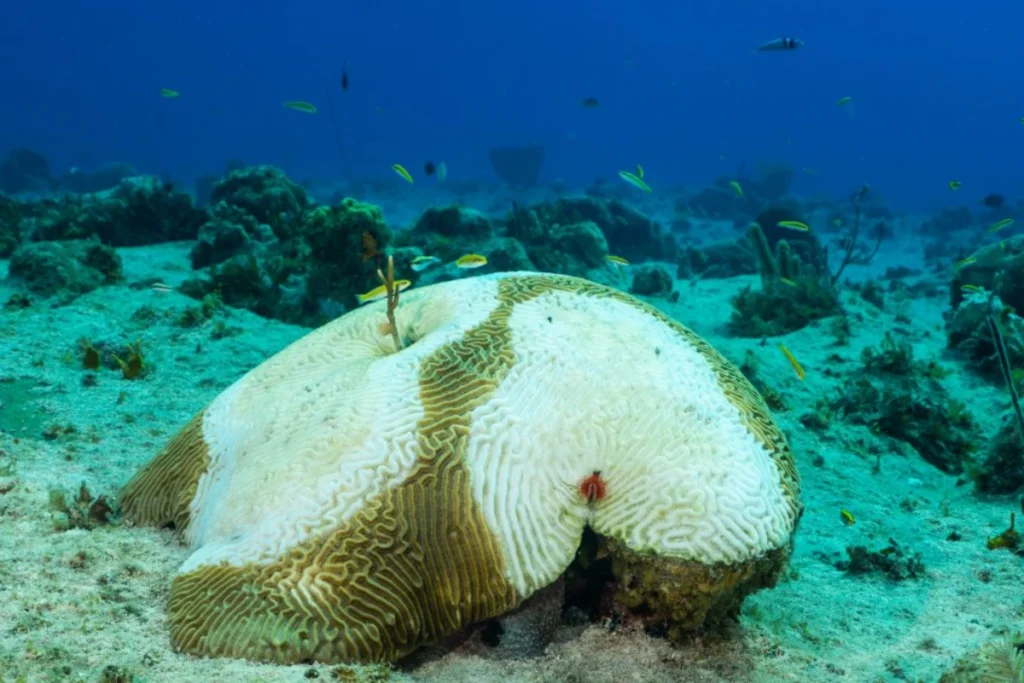
Reefs have always lived with coral diseases. White plague, black band disease, and others have come and gone for as long as people have studied corals. What makes stony coral tissue loss disease different from other threats to coral reefs is the combination of traits: a long duration, a wide range of susceptible coral species, high mortality rates, and a stubborn resistance to easy answers.
Most coral diseases burn out or stay local. Stony coral tissue loss disease has persisted for more than a decade and crossed hundreds of miles of open water. That persistence is why the response has grown into one of the largest coordinated coral rescue efforts ever mounted, spanning government agencies, universities, aquariums, and nonprofits. It has also made stony coral tissue loss disease a case study in how quickly a single pathogen can reshape an entire coral reef. For the coastal communities that ring the Caribbean, that shift is not abstract, since the corals dying on the reef are the same ones that feed families, draw visitors, and blunt the force of storms.
Disease Outbreaks Across the Caribbean and Beyond
From its Florida origin, stony coral tissue loss disease has produced new disease outbreaks across the region. Confirmed reports now stretch across many Caribbean countries and territories, including Jamaica, Mexico, the Dominican Republic, St. Maarten, and the US Virgin Islands.² Data from the US Virgin Islands show susceptible corals being replaced by fire coral, cyanobacteria, and macroalgae once the reef-builders die off.
In the Mexican Caribbean, one of the best-documented fronts outside Florida, the disease decimated coral populations and measurably changed how the reef functions.⁶ The count of affected Caribbean countries has kept climbing since 2014, and a regional dashboard maintained by reef scientists tracks each new detection as it appears.⁷ These disease outbreaks across Caribbean coral reefs make clear that stony coral tissue loss disease is a regional crisis, not a local one.
Dry Tortugas National Park and the Western Front
Dry Tortugas National Park, the remote cluster of reefs west of the Florida Keys, sits at the frontier of the outbreak. Its isolation once offered some protection, and monitoring around Dry Tortugas National Park has been a priority precisely because reef managers hoped to slow stony coral tissue loss disease before it reached these relatively healthy corals. Watching how the disease behaves at the western edge of the Florida Reef Tract helps scientists predict where it moves next.
Disease Intervention: Fighting Back on the Reef
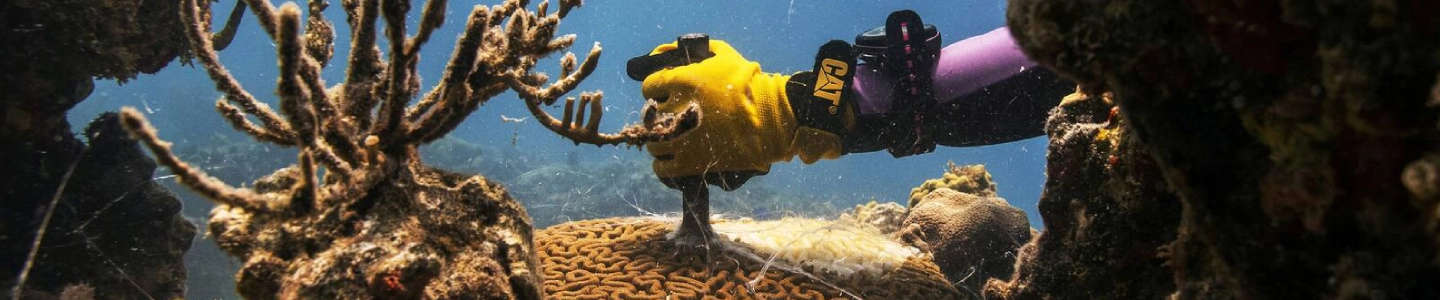
Here is where optimism earns its place. The fight against stony coral tissue loss disease has moved from guesswork to genuine, field-tested tools. The most widely used disease intervention pairs the antibiotic amoxicillin with a proprietary paste called Base 2B, developed with land based aquaria and pharmaceutical partners, that releases the medicine into an active lesion over roughly 72 hours.⁵
The results are real. In a controlled study on great star coral, the Base 2B plus amoxicillin treatment healed individual lesions with a 95% success rate.⁵ In the Florida Keys, thousands of treated corals have been tracked over multiple years, with strong long-term survival among colonies that received the paste. The treatment does not make a coral immune to stony coral tissue loss disease, so crews revisit treated corals to catch new lesions, but it buys priority corals precious time.
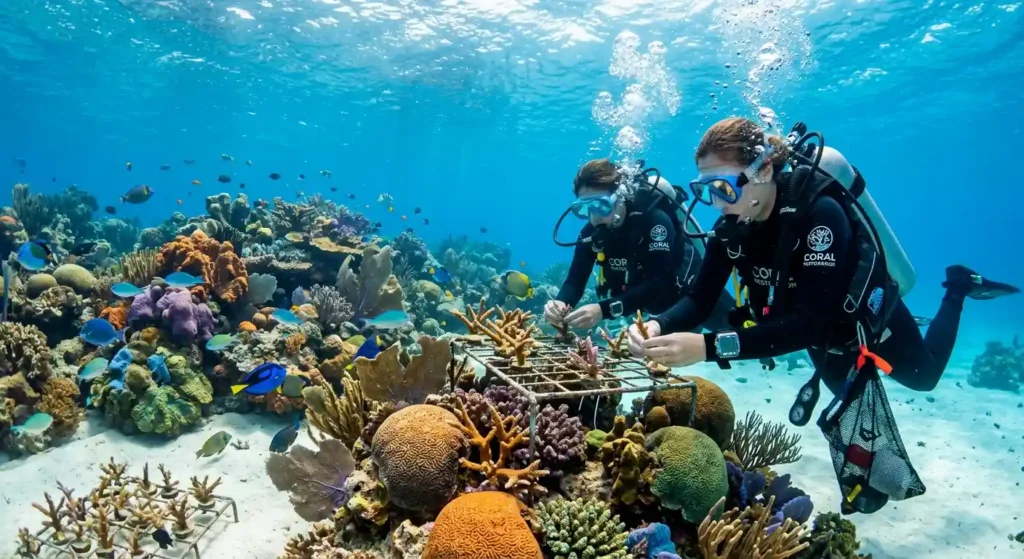
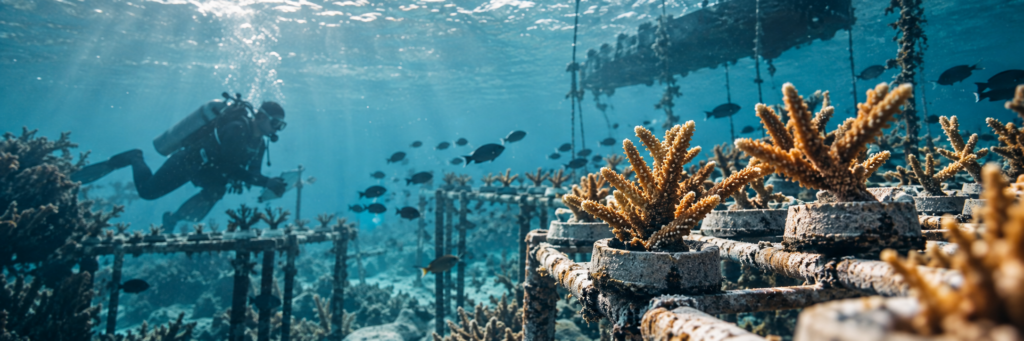
Treatment is only one front. Because stony coral tissue loss disease can drive down genetic diversity, responders have also rescued healthy corals from the disease’s path, holding them in land based aquaria as a living genetic bank. When conditions allow, those corals can seed future generations through both fragmentation and sexual reproduction, the coral spawning that keeps a population genetically strong. More than 100 research projects have been funded to push this work forward, from diagnostics to genetic rescue and effective treatment.
This is exactly the kind of work Coral Vita, a land-based coral restoration company, was built to accelerate. By farming diverse, resilient corals on land rather than only in the ocean, restoration teams can grow corals in months instead of the decades reefs take on their own, then return the strongest genotypes to the reef. Coral Vita has grown over 100,000 corals across 52 species in The Bahamas, Saudi Arabia, and the UAE, and rebuilding that kind of genetic diversity is one of the most powerful long-term defenses a coral reef has against the next wave of disease. Every resilient coral returned to the reef adds a little more structure, a little more shelter, and a little more of the genetic variety that helps a reef shrug off the next outbreak.
Turning Coral Tissue Loss Into a Turning Point
The honest picture is sobering. Stony coral tissue loss disease has done more damage, faster, than any coral disease before it, and it is still spreading. Pretending otherwise would not serve the reefs or the communities that rely on them. Yet the same decade that revealed the threat also produced treatments that work, rescue efforts that preserve coral tissue and genetics, and a global network of people refusing to give up.
Reefs are not doomed, and coral tissue loss is not the end of the story. Every colony treated, every resilient coral farmed and outplanted, every coral reef protected from pollution and overheating is a step toward recovery. The best defense against stony coral tissue loss disease is a healthier ocean and stronger corals, and both are within reach when science, restoration, and coastal communities pull in the same direction. That is the future a healthy coral reef still points toward.
About Coral Vita
Coral Vita is a mission-driven company dedicated to restoring our world’s dying and damaged reefs. Using innovative land-based farming techniques, Coral Vita grows diverse and resilient corals in months instead of the decades they take in nature. These corals are then transplanted into threatened reefs, helping to preserve ocean biodiversity while protecting coastal communities that depend on healthy reefs for protection, food, and income.
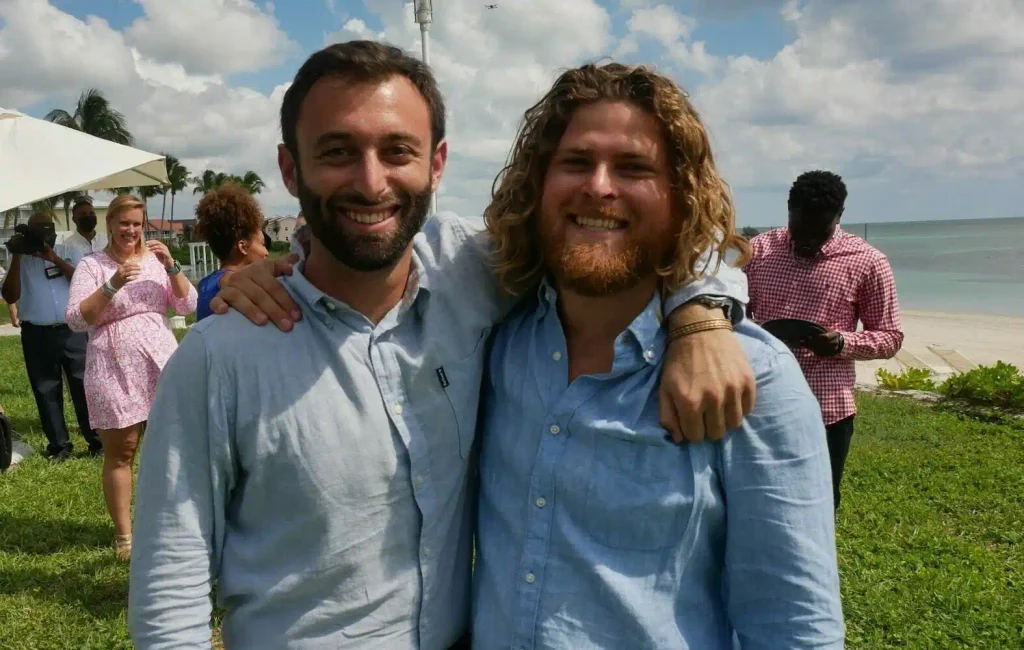
Founded by environmental entrepreneurs Sam Teicher and Gator Halpern, Coral Vita’s high-tech coral farms incorporate breakthrough methods to restore reefs in the most effective way possible. In 2021, the company was recognized as the inaugural winner of Prince’s William’s Revive Our Oceans Earthshot Prize Winner for their pioneering work in coral restoration.
To learn more about Coral Vita’s work or to get involved in coral reef conservation efforts, visit their website at www.coralvita.co or contact them directly through their Contact Us page.
Frequently Asked Questions
What is stony coral tissue loss disease?
Stony coral tissue loss disease is a highly lethal, waterborne coral disease first reported off Florida in 2014. It destroys the living tissue of hard corals, often killing an entire colony within weeks of infection.
What causes stony coral tissue loss disease?
The exact cause is still unknown, but evidence strongly points to bacteria, since affected corals show clear microbial shifts and antibiotic treatments halt the damage. Researchers are also studying whether a virus contributes.
Can stony coral tissue loss disease be treated?
Yes. Crews apply an amoxicillin paste called Base 2B directly to active lesions, halting individual lesions with up to a 95% success rate. Treatment does not prevent new lesions, so corals are monitored and retreated.
Which corals does stony coral tissue loss disease affect most?
It hits reef-building brain, star, and pillar corals hardest, while fast-branching corals are largely spared. More than 20 of Florida’s roughly 45 coral species are susceptible to the disease.
References
- https://cdhc.noaa.gov/coral-disease/characterized-diseases/stony-coral-tissue-loss-disease-sctld/ ↩︎
- https://floridadep.gov/rcp/coral/content/stony-coral-tissue-loss-disease-response ↩︎
- https://en.wikipedia.org/wiki/Stony_coral_tissue_loss_disease ↩︎
- https://southeastfloridareefs.net/coral-disease/ ↩︎
- https://www.nature.com/articles/s41598-021-86926-4 ↩︎
- https://pmc.ncbi.nlm.nih.gov/articles/PMC9184636/ ↩︎
- https://www.agrra.org/coral-disease-outbreak/ ↩︎