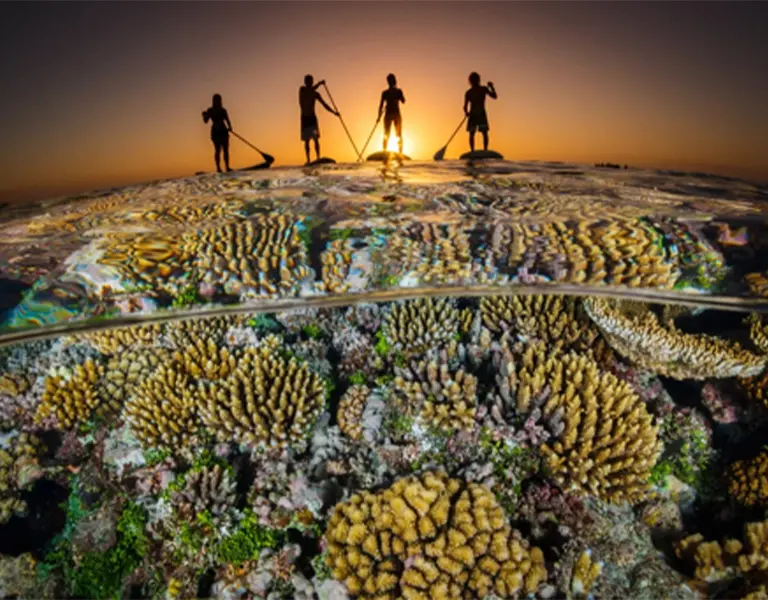
Some of the ocean’s greatest feats run on teamwork. The color, structure, and staggering abundance of a thriving reef all trace back to partnerships so close that neither side can survive alone. Understanding these alliances shows us why coral reefs are struggling and, just as importantly, why there is real reason for hope.
Key Takeaways
- Reefs run on partnership. Tiny coral animals and microscopic algae trade food, shelter, and waste in a deal that builds entire coral reef ecosystems.
- Though they cover less than 1% of the seafloor, coral reefs shelter roughly a quarter of all marine species and support the food and income of hundreds of millions of people.
- When ocean warming breaks the coral and algae bond, coral bleaching follows, stripping corals of up to 90% of their energy.
- Stronger partnerships make tougher reefs, which is why restoration teams are growing corals that hold onto their algae under stress.
- Coral Vita farms resilient corals on land in months rather than decades, giving damaged reefs a genuine path back.
Coral Reefs: The Rainforests of the Sea
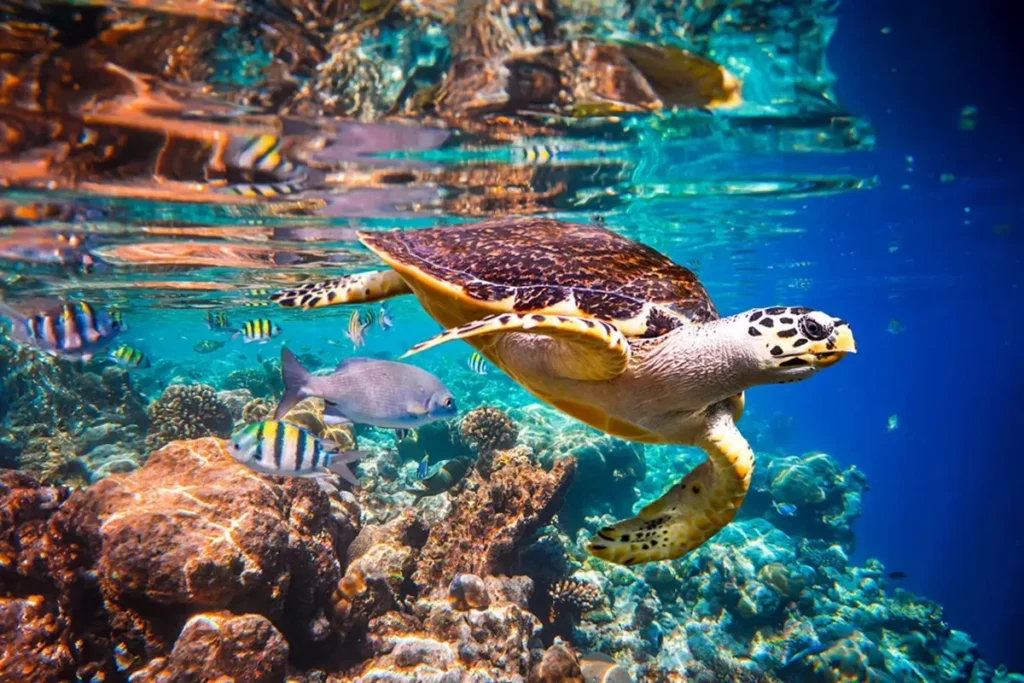
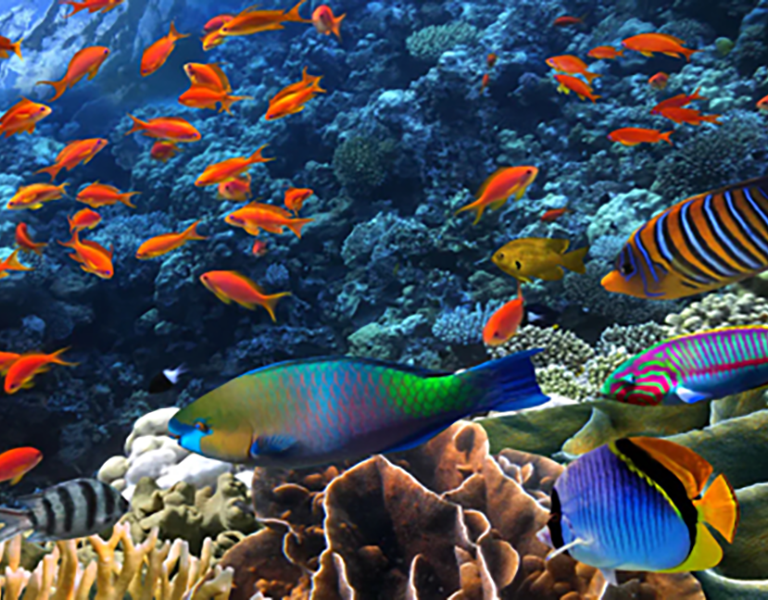
Coral reefs are the most diverse ecosystems in the ocean, and for good reason. Despite covering less than 1% of the seafloor, they provide habitat for roughly 25% of all marine species and generate an economic value estimated in the tens of billions of dollars each year.1 That abundance of life earns reefs their nickname, the rainforests of the sea. Few places on Earth concentrate as much life as coral reefs. In the Northwest Hawaiian Islands alone, reef habitats support more than 7,000 species of fishes, invertebrates, plants, birds, and marine mammals.2
The variety of corals themselves is just as striking, with more than 6,000 coral species known worldwide.3 The value of reefs reaches far beyond biology. Coral reefs protect coastlines from storms and erosion, feed communities, and draw tourists who bring hundreds of millions of dollars to local businesses.
More than half a billion people rely on coral reefs for food, work, and coastal protection, which is exactly why understanding what keeps reefs alive matters so much. To go deeper on their role, see our guide to why coral reefs are so important.
Inside Coral Reef Ecosystems: A City Built on Cooperation
Look closely and every coral reef ecosystem turns out to be a web of relationships. The foundation is a partnership between reef building corals and microscopic photosynthetic algae called zooxanthellae, a type of dinoflagellate that lives inside the coral tissues. These algal symbionts capture sunlight and, through photosynthesis, turn carbon dioxide and water into sugars. As much as 90% of that food is passed to the coral host.4
In return, corals give the algae a protected home and the raw materials for photosynthesis, and they help remove waste such as carbon dioxide.
This tight recycling loop is why healthy coral reefs can thrive in clear tropical waters that are otherwise nutrient-poor. It is also why most reef building corals grow in shallow, sunlit water, while deep sea corals live in colder, darker depths without zooxanthellae, feeding instead on plankton and drifting organic matter.² The relationship is so essential that biologists call it obligate: coral and zooxanthellae are, in practical terms, completely dependent on each other. This one partnership is the foundation on which coral reef ecosystems are built. You can meet the tiny architects behind it in our piece on coral polyps.
Symbiotic Relationships: Three Ways Ocean Species Live Together
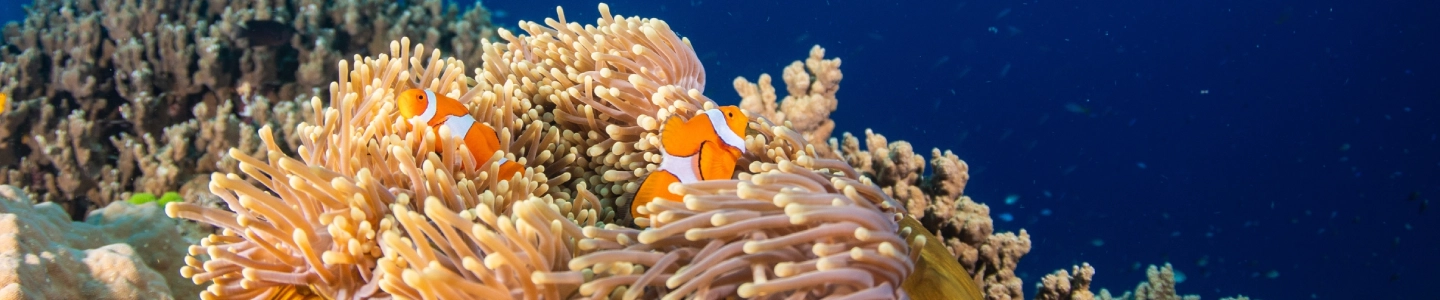
Symbiosis simply means two organisms living closely together, and reefs showcase all three main types of symbiotic relationships. In mutualism, both species benefit, as with coral and their algae, or the cleaner shrimp that pick parasites off larger fish and earn a meal for the service. In commensalism, one species gains while the other is unaffected, like a remora hitching a ride on a shark. In parasitism, one organism benefits at another’s expense.
These symbiotic relationships are not side stories. They are the operating system of coral reefs.
Beyond the famous coral and algae pairing, corals host a whole community of microbial symbionts, including bacteria that can boost the host’s resilience and offer backup nutrition if the main partnership falters.5 Coral reef ecosystems, in other words, are held together by cooperation at every scale, from visible cleaner shrimp stations down to invisible bacteria. For more real-world pairings, explore our examples of commensalism in the ocean.
Coral Bleaching: When the Partnership Breaks Down
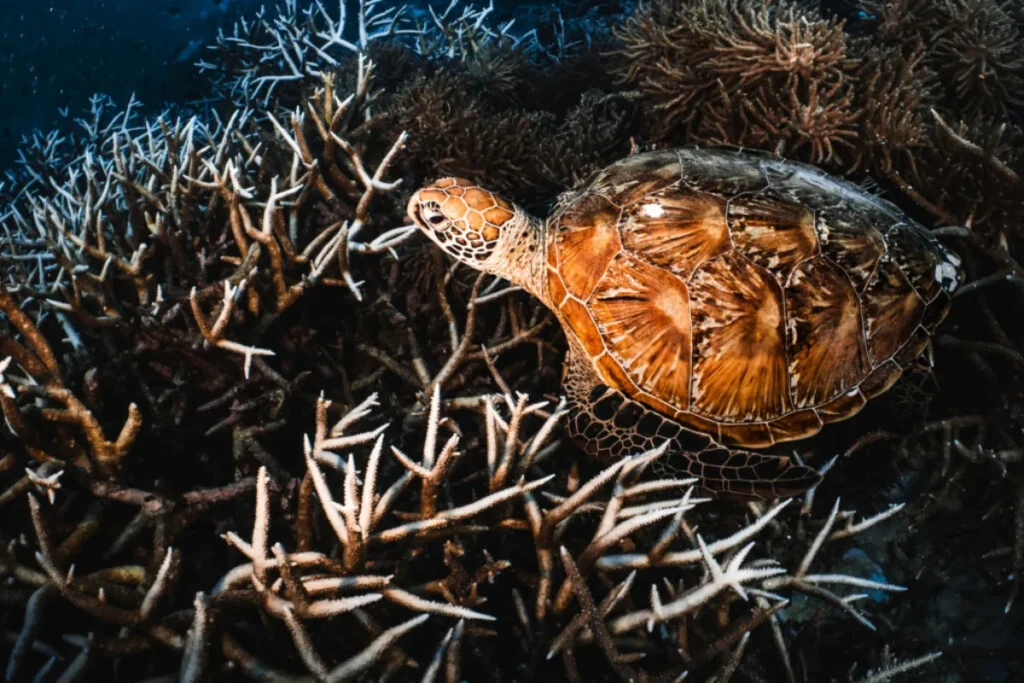
Symbiosis gives reefs their strength, but it also creates a vulnerability. When environmental stressors like ocean warming push sea temperatures just one or two degrees above the seasonal norm for too long, the coral and algae partnership breaks down. Stressed corals expel their zooxanthellae, and coral bleaching is the result. Without their algal symbionts, corals lose their main source of energy and grow far more vulnerable to disease and death.
The scale of recent coral bleaching is sobering. The fourth global bleaching event, running from early 2023 into 2025, exposed about 84% of the world’s coral reefs to bleaching-level heat stress, the most widespread on record. Earlier global events hit roughly a fifth of coral reefs in 1998 and about two-thirds during 2014 to 2017.6
The Great Barrier Reef has endured repeated mass bleaching over the past decade, and marine heatwaves can even flip normally helpful symbionts into pathogens. Coral bleaching does not always mean death, though. If conditions ease, corals can take their photosynthetic algae back in and recover, which is a large part of why restoring the partnership is such promising work. Our deep dives on coral bleaching and Great Barrier Reef bleaching cover the science in full.
Restoring Reefs by Restoring Their Bonds
Here is the hopeful part. Because the health of coral reefs depends on a partnership, strengthening that partnership is one of the most effective things we can do. Corals that hold onto their algae through heat are more likely to survive a warming ocean, and those are exactly the corals worth growing.
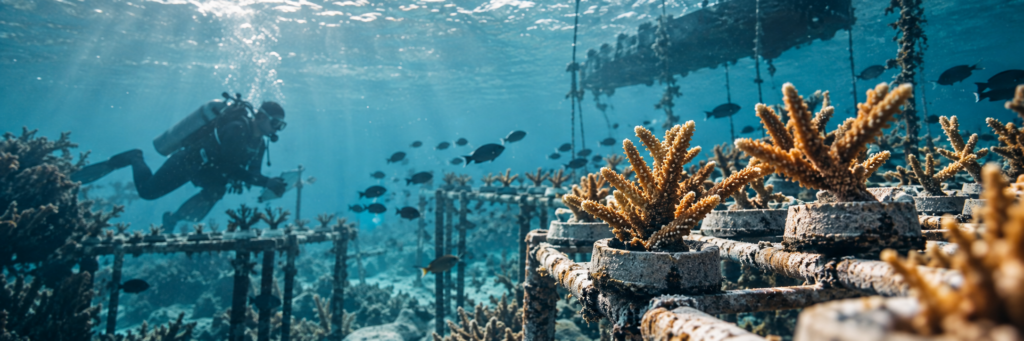
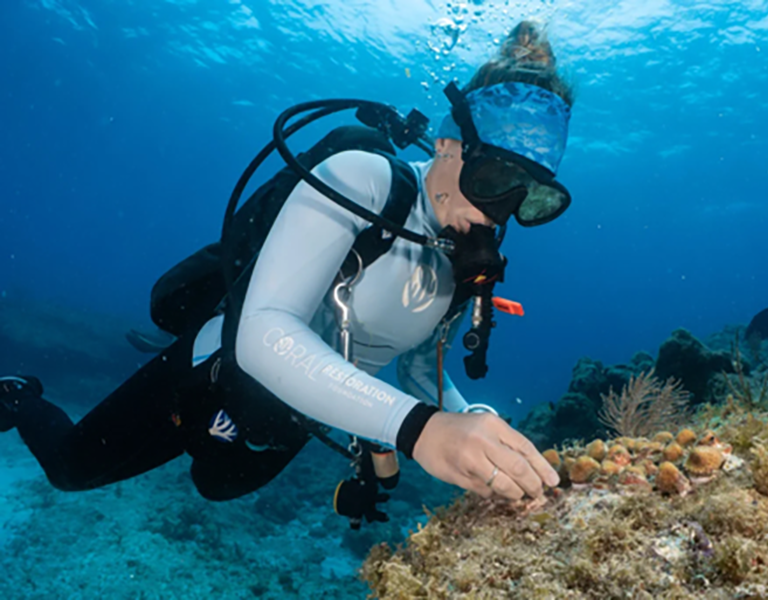
As a coral restoration company, Coral Vita works on precisely this. On land-based farms, corals are grown and toughened against warming and acidifying seas, then transplanted back onto damaged reefs. The approach compresses restoration timelines from decades into months and has already produced over 100,000 corals across more than 50 species in the Bahamas, Saudi Arabia, and the UAE. Restoration is not a substitute for cutting emissions or ending pollution, and it never should be. The single best thing anyone can do for reefs is stop harming them. Alongside that work, though, growing resilient corals gives reefs, and the communities that depend on them, a fighting chance. Protecting and rebuilding coral reef ecosystems is work worth doing, one resilient colony at a time. Adopting a coral or supporting reef conservation are simple ways to join in.
About Coral Vita
Coral Vita is a mission-driven company dedicated to restoring our world’s dying and damaged reefs. Using innovative land-based farming techniques, Coral Vita grows diverse and resilient corals in months instead of the decades they take in nature. These corals are then transplanted into threatened reefs, helping to preserve ocean biodiversity while protecting coastal communities that depend on healthy reefs for protection, food, and income.
Founded by environmental entrepreneurs Sam Teicher and Gator Halpern, Coral Vita’s high-tech coral farms incorporate breakthrough methods to restore reefs in the most effective way possible. In 2021, the company was recognized as the inaugural winner of Prince’s William’s Revive Our Oceans Earthshot Prize Winner for their pioneering work in coral restoration.
To learn more about Coral Vita’s work or to get involved in coral reef conservation efforts, visit their website at www.coralvita.co or contact them directly through their Contact Us page.
Frequently Asked Questions
What is symbiosis in a coral reef?
It is a close, ongoing relationship between two organisms living together. The key reef example is coral and microscopic algae trading food, shelter, and waste in a partnership that builds the whole ecosystem.
Why is the coral and algae partnership so important?
The algae supply up to 90% of a coral’s food through photosynthesis. Without that energy corals starve, which is why the relationship is considered the foundation of reef life.
How does coral bleaching relate to symbiosis?
Bleaching happens when heat stress breaks the coral and algae bond and corals expel their algae. Losing that partner strips corals of most of their energy and leaves them prone to disease.
Can these reef partnerships recover?
Yes. If stressful conditions ease in time, corals can take their algae back in and regain color and health. Growing heat-tolerant corals helps coral reefs rebuild these bonds faster.
References
- https://ocean.si.edu/ocean-life/invertebrates/corals-and-coral-reefs ↩︎
- https://www.noaa.gov/education/resource-collections/marine-life/coral-reef-ecosystems ↩︎
- https://www.ifaw.org/animals/coral ↩︎
- https://imarcs.org/blog/the-tiny-powerhouses-of-the-reef-understanding-zooxanthellae-and-their-critical-role-in-marine-ecosystems ↩︎
- https://asm.org/magazine/2022/spring/symbiosis-coral-reef-relationships-under-stress ↩︎
- https://icriforum.org/4gbe-2025/ ↩︎