Biodiversity finance now has a number attached to it: at least USD 200 billion a year by 2030, and biodiversity credits are one of the mechanisms named to close that gap.1 For development banks, reinsurers, and conservation funds, that target is a demand signal. For a coral restoration company, it is a reason to think hard about what a credit-grade outcome actually requires.
Key Takeaways
- A biodiversity credit is a certificate that represents a measured and evidence-based unit of positive biodiversity outcome that is durable and additional to what would have otherwise occurred.
- Target 19 of the Kunming-Montreal Global Biodiversity Framework commits to mobilizing USD 200 billion a year by 2030 and names credits as one instrument to get there.
- The voluntary market is small today, roughly USD 8 million, but the World Economic Forum projects it could reach USD 2 billion by 2030.
- High-integrity biodiversity credits are local-to-local and like-for-like, not a globally fungible offset.
- Reef restoration produces the kind of measured, additional, durable outcome high-integrity credit frameworks are built around.
What a Biodiversity Credit Actually Is
The Biodiversity Credit Alliance defines a biodiversity credit as a certificate that represents a measured and evidence-based unit of positive biodiversity outcome that is durable and additional to what would have otherwise occurred.2 The International Advisory Panel on Biodiversity Credits (IAPB) adopted that definition.3 Biodiversity credits are not promises or plans. They are certified, measured results tied to a specific project.
Biodiversity Credits vs. Carbon Credits
Carbon credits and biodiversity credits are not the same thing. Carbon credits focus on reducing greenhouse gas emissions, and carbon markets share a common unit, the tonne of CO2 equivalent. Biodiversity credits lack a standardized measurement unit. There is no universal measure of a reef, a grassland, or a wetland. That is part of why biodiversity credit markets are harder to build and easier to get wrong. The carbon credit market has spent years rebuilding trust after scandals, and high-integrity biodiversity credit markets are trying to avoid repeating those mistakes.
How Biodiversity Credits Differ From a Compliance Offset
Biodiversity offsets are a compliance tool. In England, biodiversity net gain requires a developer to deliver a 10 percent uplift and can be met through registered biodiversity units or statutory biodiversity credits. The buyer there is a developer who must prove a gain to get a permit. A voluntary biodiversity credit is a different instrument. The buyer is a bank, a fund, or an institution allocating capital toward a measured conservation outcome, with no permitting obligation. The credit is closer to an investment than a compliance filing. We cover that compliance side in depth in our guide to biodiversity net gain.
Why This Market Exists Now
Target 19 of the Kunming-Montreal Global Biodiversity Framework, adopted in Montreal in December 2022 by the 196 parties to the Convention on Biological Diversity, commits to mobilizing at least USD 200 billion a year by 2030.4 It names payment for ecosystem services, green bonds, biodiversity offsets and credits, and benefit-sharing mechanisms as instruments to move private capital. That commitment is the reason biodiversity credits moved from a niche idea to a named policy instrument.
The gap behind that target is large. Current biodiversity finance flows total around USD 208 billion a year, and governments contribute 83 percent of it, while the private sector provides about USD 35 billion.5 That is the gap credits are meant to help close. Halting and reversing biodiversity loss at that scale is the point of the whole framework.
How Big the Biodiversity Credit Market Is
The World Economic Forum puts the current voluntary biodiversity credit market at roughly USD 8 million, with growth projected to about USD 2 billion by 2030 and USD 69 billion by 2050, contingent on progress on governance.6 Those figures come from a named report and are worth stating plainly. Larger numbers circulate in press coverage of this space, but they do not trace to a primary source. Buyers of biodiversity credits range from development banks to reinsurers, and the market is real and small. Biodiversity credit markets need clear rules before they scale, and that is a reason to be precise about what high-integrity biodiversity credits can and cannot do.
The Integrity Rule That Decides Whether a Credit Is Worth Anything
The IAPB framework is explicit that it does not support international biodiversity offsetting. Compensation must be local-to-local and like-for-like. A credit generated by restoring one ecosystem should serve buyers with a genuine interest or impact in that same ecosystem or region, not function as a generic, tradable-anywhere unit.
That shapes how anyone should talk about this space. A credit tied to a specific reef system in a specific market would primarily suit buyers with financial or regulatory ties to that same region. It is not a globally fungible product. Additionality and permanence are also required. A credit must represent an outcome that would not have happened without the project, and it must last, with the Biodiversity Credit Alliance setting a minimum durability of 20 years. High-integrity biodiversity credits also require independent third-party verification before issuance and must avoid double-counting through registry tracking. For a buyer, the difference between a defensible biodiversity credit and a greenwashing risk is whether a credit clears these tests.
Proof the Model Works at the Reef Level
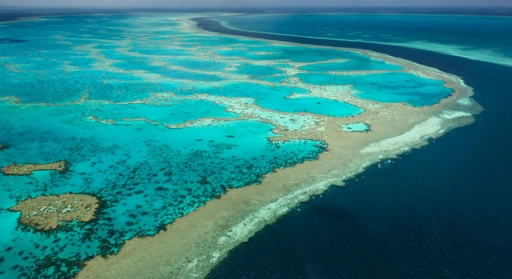
Queensland’s Reef Credit Scheme is a live, operating market. Landholders earn tradable credits for reducing nutrient and sediment runoff into Great Barrier Reef catchments, independently verified by Eco-Markets Australia. Buyers include HSBC.7 This is a water-quality credit, not a biodiversity credit, and it is worth saying so directly. The buyers were not purchasing a biodiversity credit in the strict sense. They were buying a measured, verified outcome tied to a reef, and that is what makes the model instructive. It proves the underlying mechanism works for reef ecosystems.
What Reef Restoration Brings to a Credit-Grade Outcome
Land-based coral farming produces the kind of measured, additional, durable outcome high-integrity credit frameworks are designed around. Coral Vita grows diverse and resilient corals on land in months instead of the decades they take in nature, then outplants them onto degraded reefs. The company has grown more than 100,000 corals across 52 species, with defined restoration sites and monitored survival and outplant data. Those biodiversity outcomes can be verified, which is the foundation of any credible credit.
The local-to-local principle fits reef restoration naturally. Coral Vita operates in the Bahamas, Saudi Arabia, and the UAE, with the Maldives as a target market. Biodiversity credits built on those reef systems would carry a strong local-to-local match and primarily suit buyers with financial or regulatory ties to those regions. The company is positioned to be a credit-generating or credit-supporting partner for conservation finance buyers. Reef restoration that supports local communities and shares benefits is the direction high-integrity markets are moving.
What to Ask Before Structuring a Deal
A development bank, reinsurer, or fund should ask a few questions before structuring a deal around biodiversity credits. Who verifies the outcome? Independent third-party verification is required before credits are issued. How long does the outcome last? Durability has to be demonstrated. Is the gain additional? The outcome has to be something that would not have happened without the investment. Is the match local-to-local? A credit from one ecosystem cannot paper over harm in an unrelated place. And who holds the rights and shares the benefits? Credit frameworks require prior and informed consent from Indigenous Peoples and local communities. Those are the conditions that keep biodiversity conservation funding honest.
How This Connects to Blended Finance
Biodiversity credits do not operate in isolation. They sit alongside blue bonds, debt-for-nature swaps, and conservation trust funds as instruments that move private finance into nature. In blended finance structures, credits can be the revenue layer that makes a conservation project investable while first-loss capital or guarantees absorb some of the risk. Australia has gone further, passing the Nature Repair Act 2023 to create a national, legislated market in biodiversity certificates that can protect or enhance biodiversity in aquatic environments and the ocean.8 That is the direction of travel, and biodiversity credits are one layer in that stack.
Conclusion
Biodiversity credits are a young market with an official target behind them, and they are built on a narrow set of rules. A credit is only worth something if the outcome is measured, additional, durable, and tied to the ecosystem it claims to support. Reef restoration fits that definition. It is a purpose-built way to generate a verifiable conservation outcome in a marine environment that land-based credit projects cannot easily reach. For a buyer weighing biodiversity credits, the question is not whether the market will grow but whether a specific credit clears the integrity bar.
About Coral Vita
Coral Vita is a mission-driven company dedicated to restoring our world’s dying and damaged reefs. Using land-based farming techniques, Coral Vita grows diverse and resilient corals in months instead of the decades reefs take in the wild. These corals are then transplanted into threatened reefs, helping to preserve ocean biodiversity while protecting coastal communities that depend on healthy reefs for protection, food, and income.
Founded by environmental entrepreneurs Sam Teicher and Gator Halpern, Coral Vita’s high-tech coral farms incorporate breakthrough methods to restore reefs in the most effective way possible. In 2021, the company was recognized as the inaugural winner of Prince William’s Revive Our Oceans Earthshot Prize Winner for their pioneering work in coral restoration.
To learn more about Coral Vita’s work or to get involved in coral reef conservation efforts, visit their website at www.coralvita.co or contact them directly through their Contact Us page.
FAQ
What is a biodiversity credit?
A biodiversity credit is a certificate that represents a measured and evidence-based unit of positive biodiversity outcome that is durable and additional to what would have otherwise occurred. It is a verified result, not a promise.
How is a biodiversity credit different from a carbon credit?
Carbon credits focus on reducing greenhouse gas emissions and share a common unit. Biodiversity credits lack a standardized measurement unit, so each credit is tied to a specific ecosystem and project.
How is it different from a biodiversity offset or biodiversity net gain unit?
A biodiversity offset or net gain unit satisfies a compliance obligation. A voluntary biodiversity credit is capital allocated toward a measured conservation outcome, often with no permitting requirement at all.
Can biodiversity credits be traded internationally?
The IAPB framework rejects internationally fungible offsetting. Credits must be local-to-local and like-for-like, so a credit from one reef system should serve buyers with ties to that same region.
References
- https://www.cbd.int/gbf/targets/19 ↩︎
- https://www.biodiversitycreditalliance.org/wp-content/uploads/2024/05/Definition-of-a-Biodiversity-Credit-Rev-220524.pdf ↩︎
- https://www.iapbiocredits.org/framework ↩︎
- https://www.cbd.int/article/cop15-cbd-press-release-final-19dec2022 ↩︎
- https://assets.bbhub.io/professional/sites/24/Biodiversity-Finance-Factbook_COP16.pdf ↩︎
- https://www.weforum.org/publications/biodiversity-credits-demand-drivers-and-guidance-on-early-use/ ↩︎
- https://www.qld.gov.au/environment/coasts-waterways/reef/reef-credit-scheme ↩︎
- https://www.dcceew.gov.au/environment/environmental-markets/nature-repair-market ↩︎