The Earthshot Prize has named 25 winners since 2021, and this list covers ten of the Earthshot Prize winners we follow most closely, starting with our own company, Coral Vita, the inaugural winner of the Revive Our Oceans category.1 Prince William’s Earthshot Prize gives five winners £1 million each every year, one in each of five categories, and runs annually from 2021 to 2030.2 The 2026 winners will be announced on 17 November in Mumbai.3 The ten below include four companies, a nonprofit program, a coalition, a treaty, a city, a national government and a fashion event, and they cover all five Earthshots.
The Short Version
- The Earthshot Prize awards five £1 million prizes a year across five categories: Protect and Restore Nature, Clean Our Air, Revive Our Oceans, Build a Waste-Free World and Fix Our Climate.
- Winners range from companies such as Notpla, 44.01 and Boomitra to governments and treaties such as Costa Rica, the City of Bogotá and the High Seas Treaty.
- Four of the ten winners below are companies selling a product or service, which makes the list a useful screening step for businesses looking for climate and nature partners.
- The 2026 Awards Night is on 17 November in Mumbai, with 15 finalists, three in each category.
How we chose these ten Earthshot Prize winners
We picked ten of the 25 winners the Earthshot Prize lists to cover all five categories and a mix of company, government and coalition models, and several are winners I return to often. We have not tested any of these products or programs. Every number below is the figure the Earthshot Prize or the cited source published, and we did not check it independently.
Coral Vita, 2021 Revive Our Oceans: coral grown on land and replanted on degraded reefs
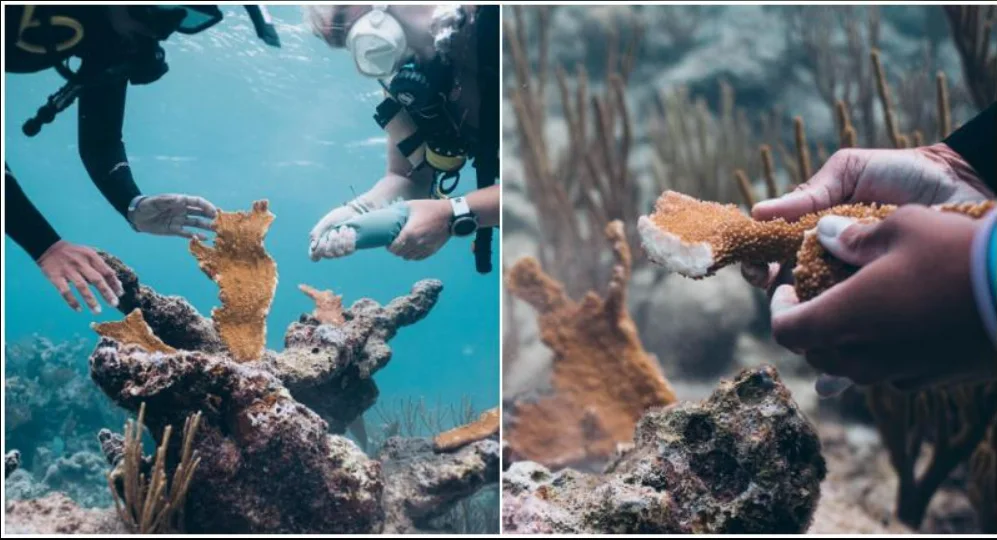
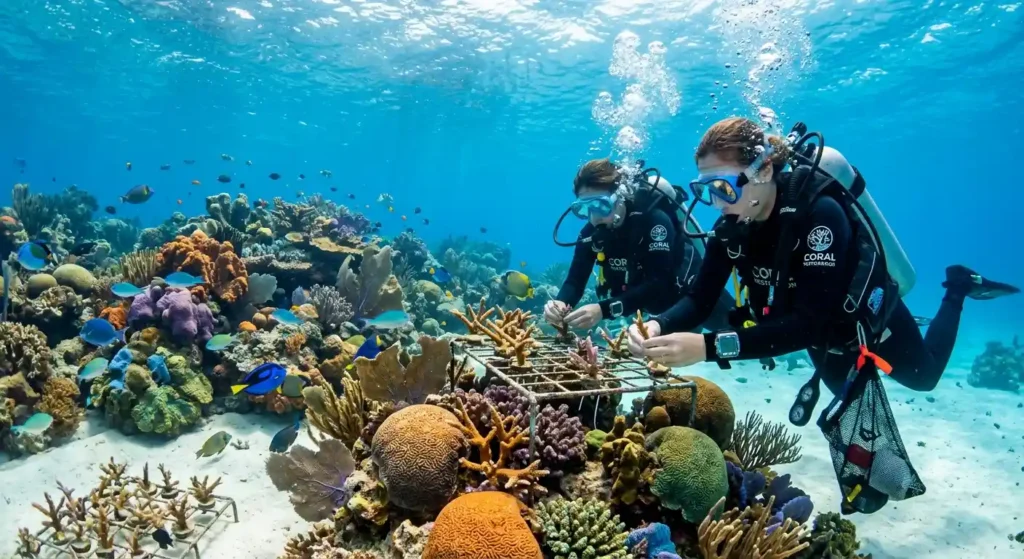
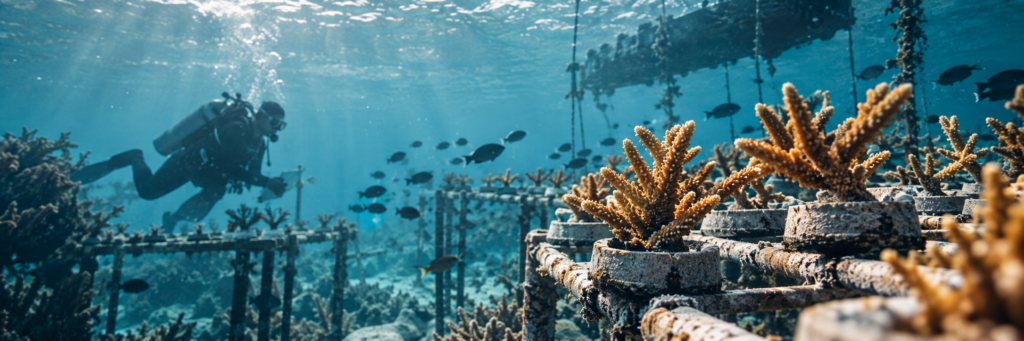
Coral Vita won the first Revive Our Oceans prize in 2021. We grow coral in land-based farms, where it grows in months instead of the decades it takes in nature, and replant it on degraded reefs. Our first farm is in Grand Bahama, and we have grown more than 100,000 corals across 52 species in the Bahamas, Saudi Arabia and the UAE.4
Prince William and Catherine visited the Grand Bahama farm on the last day of a weeklong Caribbean tour, less than six months after the 2021 ceremony. They heard from co-founder Gator Halpern and me about scaling the farm and saw a new “Earthshot Happy Tank” and a year-round coral spawning system.5 In June 2025 we announced a Series A of more than $8 million led by Builders Vision, which supports expanding our restoration-as-a-service offering for reef-dependent clients. If your hotel, port or coastal property depends on a reef, our services page covers how we work.
Republic of Costa Rica, 2021 Protect and Restore Nature: forests brought back by paying people to plant them
Costa Rica won for reversing the forest losses of the 1990s. Its government paid citizens to plant trees and restore ecosystems, and the Earthshot Prize reports that forests doubled in size and that the resulting ecotourism boom brought $4 billion to the economy [VERIFY: exact figure and period on the Earthshot page].6 The country also began tracking more than 5,000 restoration and conservation projects with the mapping platform Restor. The Earthshot Prize presents Costa Rica as a case where paying people to restore forest produced measurable recovery at national scale.
Notpla, 2022 Build a Waste-Free World: packaging made from seaweed and plants
Notpla is a London-based company that makes plastic alternatives from seaweed and plants, including liquid-holding bubbles, food-container coatings and paper. In 2023 it replaced 4.4 million units of plastic, avoided 250 tonnes of carbon dioxide equivalent and created 17 new green jobs.7 Those figures describe one company’s output in one year, and they show a product that is already in customers’ hands.
44.01, 2022 Fix Our Climate: carbon dioxide turned into rock in Oman
44.01 is an Oman-based company that locks away carbon dioxide permanently by speeding up a natural process that turns it into rock. Its first project aims to process 1,000 tonnes of carbon dioxide a year, its long-term goal is 1 billion tonnes by 2040, and it employs more than 50 people.8 Going from 1,000 tonnes to 1 billion would take an enormous increase in scale, so the company’s growth over the next few years is the thing to watch.
Boomitra, 2023 Fix Our Climate: soil carbon credits that pay farmers
Boomitra runs a marketplace where companies and governments buy verified carbon credits, with most of each sale’s revenue going to the farmers who restore their soil. Satellites and artificial intelligence track the soil improvements. The company works with more than 150,000 farmers across more than five million acres and aims to store one gigaton of carbon dioxide in soil by 2030.9 The Earthshot page gives acres rather than hectares and no total credit count.
WildAid Marine Program, 2023 Revive Our Oceans: enforcement that makes protected areas real
The WildAid Marine Program strengthens enforcement in marine protected areas and sustainable fisheries by bringing together governments, charities, non-profits and academics. It currently covers an estimated 1.64 million square kilometers of ocean and aims to reach 250 priority marine areas within five years.10 A marine protected area without enforcement is a line on a map, so this entry matters to anyone who invests in ocean conservation.
High Ambition Coalition for Nature and People, 2024 Revive Our Oceans: governments pledging to protect 30 percent
The High Ambition Coalition for Nature and People pushes governments to formally protect 30 percent of the planet’s land and seas by 2030. The Earthshot page describes it as an alliance of 119 countries and elsewhere gives 120.11 It reports that 17 percent of land and 8 percent of oceans are currently protected, that around 50 member countries have enacted or strengthened conservation laws, and that the coalition draws on more than 40 partners.¹¹ Those protection figures show how far the 30 percent goal still has to go.
High Seas Treaty, 2025 Revive Our Oceans: rules for the ocean no country owns
The High Seas Treaty establishes the means to create marine protected areas beyond national jurisdiction and requires environmental impact assessments there. It also covers fair access to and benefit sharing from marine genetic resources.12 It reached 60 ratifications in September 2025, which triggered entry into force on 17 January 2026. The Earthshot Prize recognized it as strengthening protection for biodiversity in international waters and supporting the global goal of protecting 30 percent of the ocean by 2030.13
Lagos Fashion Week, 2025 Build a Waste-Free World: a fashion calendar with responsible-practice requirements
Omoyemi Akerele founded Lagos Fashion Week in 2011. It requires every designer who shows to document responsible practice across the supply chain, from fiber origin and coloring to manufacturing and shipping, and it runs skills programs that rebuild local supply chains and turn waste into material.14 The Earthshot Prize cites two figures behind the problem: consumers buy around 60 percent more clothing than twenty years ago and keep each piece for roughly half as long, and less than 1 percent of textiles are recycled into new clothes.
City of Bogotá, 2025 Clean Our Air: air quality policy at city scale
The Clean Our Air prize in 2025 went to the City of Bogotá in Colombia, where clean-air policies have cut air pollution by 24 percent since 2018 across a city of about 8 million people. The 24 percent figure comes from a magazine report rather than the Earthshot Prize’s own winner page, so check the Earthshot page before quoting it elsewhere [VERIFY].
The 2025 Earthshot Prize winners were announced in Rio de Janeiro
The 2025 ceremony took place on 5 November at the Museum of Tomorrow in Rio de Janeiro, hosted by Luciano Huck, with performances from Kylie Minogue, Shawn Mendes, Anitta, Gilberto Gil and Seu Jorge. The five Earthshot Prize 2025 winners were re.green (Protect and Restore Nature), the City of Bogotá (Clean Our Air), the High Seas Treaty (Revive Our Oceans), Lagos Fashion Week (Build a Waste-Free World) and Friendship (Fix Our Climate). re.green uses artificial intelligence, drones and satellite imagery to find Brazilian land suited to forest regrowth and funds the work through carbon credits and sustainable timber, with more than 12,000 hectares under active restoration.15
Earthshot Prize finalists for 2026 include three ocean projects
The 15 Earthshot Prize finalists for 2026 were announced in September, and the Awards Night is on 17 November in Mumbai, hosted by Karan Johar. The finalists are:
- Protect and Restore Nature: Yellowstone to Yukon, Indigenous Desert Alliance and Bhutan
- Fix Our Climate: Mahila Housing Trust, Pula and Ørsted
- Build a Waste-Free World: PFAS-Free France, Korea Zero Waste Movement Network and Mother Earth Foundation
- Revive Our Oceans: the Zero Emission Maritime Buyers Alliance (ZEMBA), Niue Ocean Wide Trust and the City of Barcelona
- Clean Our Air: AirQo, Satellites on Fire and Mahindra Last Mile Mobility
The Revive Our Oceans finalists are ZEMBA, which gathers cargo owners to secure binding commitments to zero-emission shipping, Niue Ocean Wide Trust, which uses Indigenous-led ocean conservation commitments to finance marine protection, and the City of Barcelona, which is redesigning its urban coastline for climate adaptation.³ We will be watching that category closely.
How to use an Earthshot Prize list when you are choosing climate partners
If you are screening climate and nature companies for a partnership, treat an Earthshot Prize win as a starting point, not a due diligence file. Ask for the current figures behind the headline numbers, because most entries above publish targets and early results rather than audited outcomes. Separate the winners that sell a product or service from the governments and coalitions, since you can only contract with the first group. Our guides to climate tech companies, nature positive and the regenerative blue economy cover the next steps, and our press page lists our own coverage. Contact Coral Vita if you want to talk about restoring a reef your business depends on.
About Coral Vita
Coral Vita is a mission-driven company dedicated to restoring our world’s dying and damaged reefs. Using innovative land-based farming techniques, Coral Vita grows diverse and resilient corals in months instead of the decades they take in nature. These corals are then transplanted into threatened reefs, helping to preserve ocean biodiversity while protecting coastal communities that depend on healthy reefs for protection, food, and income.
Founded by environmental entrepreneurs Sam Teicher and Gator Halpern, Coral Vita’s high-tech coral farms incorporate breakthrough methods to restore reefs in the most effective way possible. In 2021, the company was recognized as the inaugural winner of Prince William’s Revive Our Oceans Earthshot Prize Winner for their pioneering work in coral restoration.
To learn more about Coral Vita’s work or to get involved in coral reef conservation efforts, visit their website at www.coralvita.co or contact them directly through their Contact Us page.
FAQ
Who won the Earthshot Prize in 2025?
The 2025 winners were re.green, the City of Bogotá, the High Seas Treaty, Lagos Fashion Week and Friendship. They won in Protect and Restore Nature, Clean Our Air, Revive Our Oceans, Build a Waste-Free World and Fix Our Climate, respectively.
How much is the Earthshot Prize worth?
Each year five winners receive £1 million each, one per category. The prize runs annually from 2021 to 2030, and 15 finalists are shortlisted each year, three per category.
When is the 2026 Earthshot Prize ceremony?
The 2026 Earthshot Prize Awards Night is on 17 November 2026 in Mumbai, India, hosted by Karan Johar. The 15 finalists were announced in September 2026.
What are the five Earthshots?
The five Earthshots are Protect and Restore Nature, Clean Our Air, Revive Our Oceans, Build a Waste-Free World and Fix Our Climate. One winner is chosen in each category every year.
References
- https://earthshotprize.org/winners-finalists/ ↩︎
- https://en.wikipedia.org/wiki/Earthshot_Prize ↩︎
- https://sustainabilitymag.com/news/who-are-the-15-finalists-for-the-earthshot-prize-2026 ↩︎
- https://impactalpha.com/builders-vision-leads-8-million-series-a-for-land-based-coral-farming/ ↩︎
- https://earthshotprize.org/prince-william-visits-earthshot-prize-winner-as-2021-finalists-reveal-the-incredible-impact-of-the-prize/ ↩︎
- https://earthshotprize.org/winners-finalists/costa-rica/ ↩︎
- https://earthshotprize.org/winners-finalists/notpla/ ↩︎
- https://earthshotprize.org/winners-finalists/44-01/ ↩︎
- https://earthshotprize.org/winners-finalists/boomitra/ ↩︎
- https://earthshotprize.org/winners-finalists/wildaid-marine-program/ ↩︎
- https://earthshotprize.org/winners-finalists/high-ambition-coalition-for-nature-and-people/ ↩︎
- https://iucn.org/press-release/202509/high-seas-treaty-achieves-milestone-60-ratifications-paving-way-ocean ↩︎
- https://www.countryandtownhouse.com/culture/earthshot-prize/ ↩︎
- https://earthshotprize.org/winners-finalists/lagos-fashion-week/ ↩︎
- https://earthshotprize.org/winners-finalists/re-green/ ↩︎