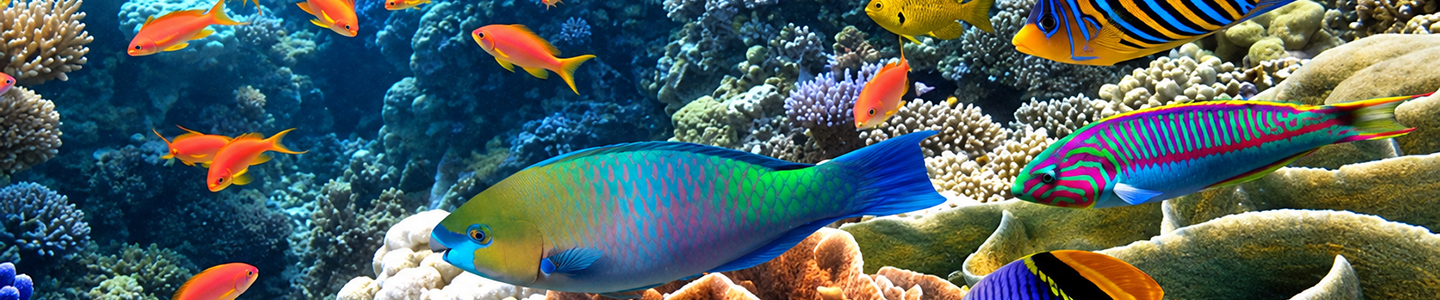
“Nature positive” is one of the most used phrases in corporate sustainability right now, and one of the least understood. It is not a synonym for “sustainable.” It is a specific, dated global goal, and most companies using it cannot yet back it up. That gap is exactly where a verifiable action matters.
Key Takeaways
- Nature positive is a global societal goal defined as halting and reversing nature loss by 2030 on a 2020 baseline, and achieving full recovery by 2050.
- It is modeled on “net zero” for climate, and codified in the Kunming-Montreal Global Biodiversity Framework.
- TNFD and SBTN are how companies operationalize it, through disclosure and science-based target setting.
- Most companies using the phrase are making a values statement, not backing it with targets or disclosure.
- A named, public coral restoration partnership is closer to genuine nature positive proof than almost anything in a press release.
What Nature Positive Actually Means
The Nature Positive Initiative (NPI), the coalition of organizations including IUCN, WWF, and Business for Nature that coined and stewards the term, defines nature positive as halting and reversing nature loss by 2030 on a 2020 baseline, and achieving full recovery by 2050.1 Put simply, it means more nature in the world in 2030 than there was in 2020, and continued recovery after that.
That is not the same as doing less harm. A company can reduce its footprint and still be net negative on nature. Nature positive is an absolute improvement against a baseline. It requires the abundance, diversity, and resilience of species and ecosystems to measurably increase. The term nature positive was deliberately modeled on “net zero” for climate, the same way net zero gave climate commitments a single measurable target, nature positive is meant to do that for biodiversity.
The Global Goal for Nature and a 2020 Baseline
The definition was first published in 2020 and later codified in the mission of the Kunming-Montreal Global Biodiversity Framework, adopted by 196 countries under the UN Convention on Biological Diversity.2 It is the global goal for nature, the biodiversity equivalent of the 1.5 degree target for climate. The 2020 baseline matters because it anchors the goal. Without a baseline, “positive” has no reference point.
The Nature Positive Initiative
The Nature Positive Initiative launched in September 2023 with 27 of the world’s largest conservation organizations, institutes, and business and finance coalitions.3 Its job is to preserve the integrity of the term, drive alignment around the definition, and support longer-term efforts to deliver nature-positive outcomes. The fact that a coalition formed specifically to keep the phrase honest is itself a signal that the term was being used loosely.
Why the Phrase Is Spreading Faster Than the Proof
The credibility gap is real and worth naming plainly. Nature positive has grown faster than the alignment around what it means. The NPI was created precisely because use of the term spread without a clear, shared understanding among business, finance, government, and civil society about what it does and does not represent.
That matters because nature positive is the global goal that the entire biodiversity framework hangs on. Over 50 percent of global GDP, roughly USD 44 trillion in economic value, depends on natural resources.4 When a goal that large is used as a slogan, it loses the weight that makes it useful.
The criticism is not unreasonable. Nature positive is critiqued for being vague and prone to greenwashing. Some groups argue the “net” framing can dilute biodiversity protection by allowing continued loss elsewhere. That is why integrity is not a nice-to-have. It is the difference between a commitment and a deflection.
How Companies Are Supposed to Operationalize It
Two frameworks turn “nature positive” from a slogan into something a company can actually show.
TNFD: The Disclosure Side
The Taskforce on Nature-related Financial Disclosures (TNFD) gives companies a structured way to disclose nature-related dependencies, impacts, risks, and opportunities.5 Its recommendations are built around four pillars: governance, strategy, risk and impact management, and metrics and targets. It is the reporting side of a nature positive commitment, and it asks companies to say where their assets sit, what they depend on, and how they are responding. The TNFD was designed to align with the global policy goals of the Kunming-Montreal Global Biodiversity Framework.
SBTN: The Target-Setting Side
The Science Based Targets Network (SBTN) gives companies a methodology for setting actual, measurable nature targets.6 The steps start with understanding impacts through materiality screening and value chain assessment, then prioritizing action, then setting science-based targets for land, freshwater, or ocean. Independent validation by the Accountability Accelerator confirms targets are in line with best available science.
The two frameworks work together. TNFD is what you disclose. SBTN is how you set the target. Both are asking for the same thing: measurable gains, not adjectives.
What Real Proof Looks Like: DP World and Coral Vita at Mina Rashid
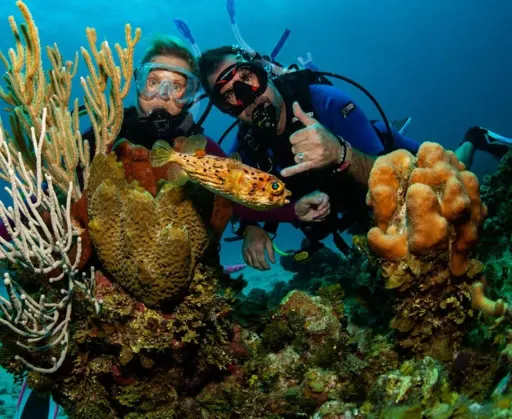
This is where a specific action beats a phrase. DP World and Coral Vita opened the UAE’s first land-based coral restoration and educational exhibition at Mina Rashid, Dubai, on 8 December 2023.7 It is a real, named, public partnership, not a hypothetical. DP World put its name on a coral restoration facility that is open to the public, in a port it operates, and it announced it as part of its sustainability commitment.
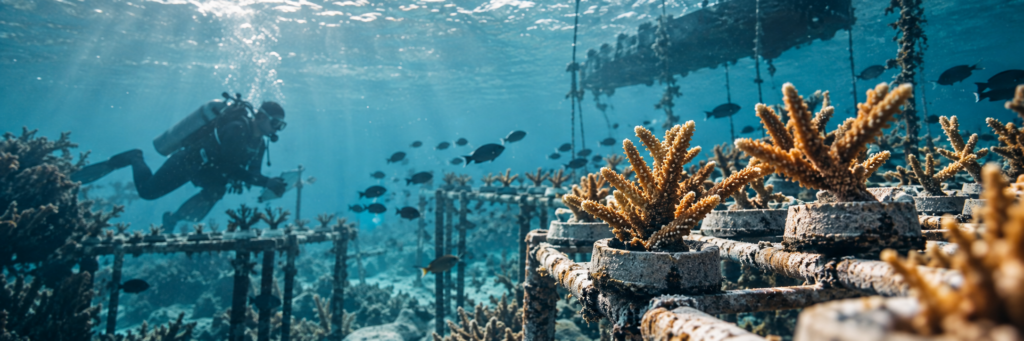
The facility grows native corals in solar-powered, closed-loop systems that mimic natural ocean conditions, and it works with the Dubai municipality on the pilot. It functions as a demonstration and education center, and it signals where the partnership is heading: integrating coral farming and restoration into DP World’s global network of ports and terminals.
That is closer to genuine nature positive proof than almost anything a company can say in a press release. It is a measurable, verifiable, publicly visible restoration outcome tied to a specific place.
Why Reef Restoration Is a Credible Nature Positive Action
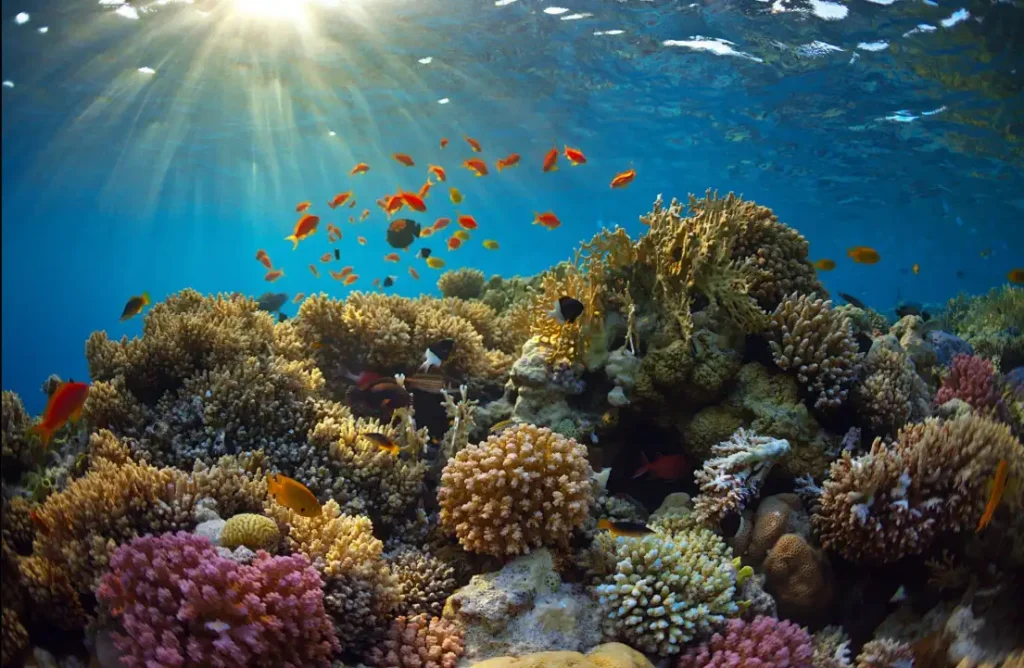
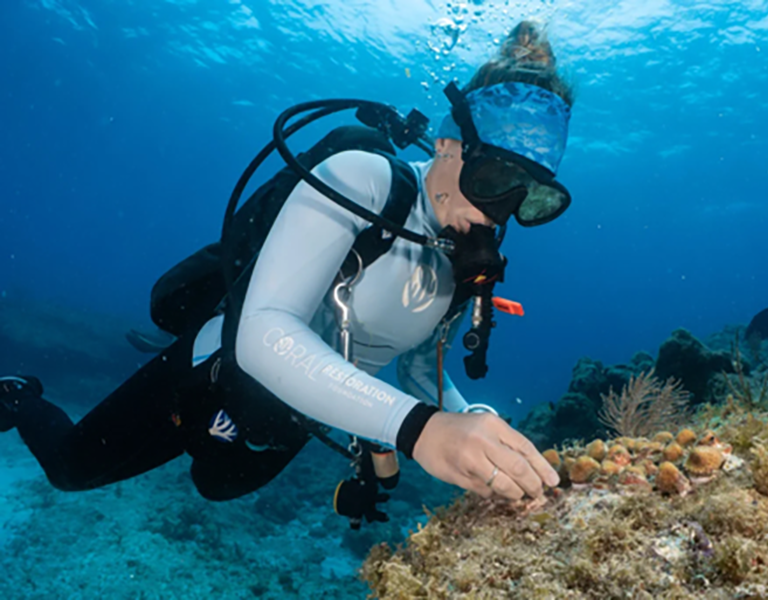
A coral reef restoration project is not a CSR gesture. It is the kind of concrete, auditable action TNFD and SBTN are asking companies to be able to point to. Coral Vita grows diverse and resilient corals on land in months instead of the decades they take in nature, then outplants them onto degraded reefs. The company has grown more than 100,000 corals across 52 species, with defined restoration sites, monitored survival data, and a TIME Best Inventions recognition for its BrainCoral platform.
That data is what makes the outcome defensible. Measurable gains in species abundance, diversity, and ecosystem resilience are exactly what a nature-positive approach requires. A restored reef is a verifiable unit of positive nature, and it produces measurable improvements in water quality and habitat that can be tracked over time.
Three Ways a Company Builds Nature Positive Proof With Coral Vita
Marketing and Mission
The strongest angle for most buyers. A named facility like Mina Rashid gives a company a story it can tell in public, and a physical place stakeholders can visit. It turns a commitment into something a customer, employee, or investor can see.
Compliance and Disclosure
The secondary motivation. Reef restoration supports the kind of measurable gains TNFD disclosure and SBTN target-setting ask for. A company that can point to a verified restoration site has something concrete to report, not just a pledge.
HR and Employee Engagement
A lighter mention, because this motivation is better served by other planned content. Farm visits, coral adoption, and employee engagement programs give teams a tangible connection to the work, but they are not the core of a nature positive commitment.
Conclusion
Nature positive is a global goal with a date, a baseline, and a full-recovery target. It asks for more nature in 2030 than in 2020, and it demands measurable gains, not adjectives. The companies that will be able to use the phrase honestly are the ones that can point to something real. For a maritime, port, or logistics company, that something can be a reef it helped restore. Explore how corporate funding for reef restoration turns a commitment into a verifiable outcome, and how reef restoration supports coastal climate resilience for the communities a company serves.
About Coral Vita
Coral Vita is a mission-driven company dedicated to restoring our world’s dying and damaged reefs. Using land-based farming techniques, Coral Vita grows diverse and resilient corals in months instead of the decades reefs take in the wild. These corals are then transplanted into threatened reefs, helping to preserve ocean biodiversity while protecting coastal communities that depend on healthy reefs for protection, food, and income.
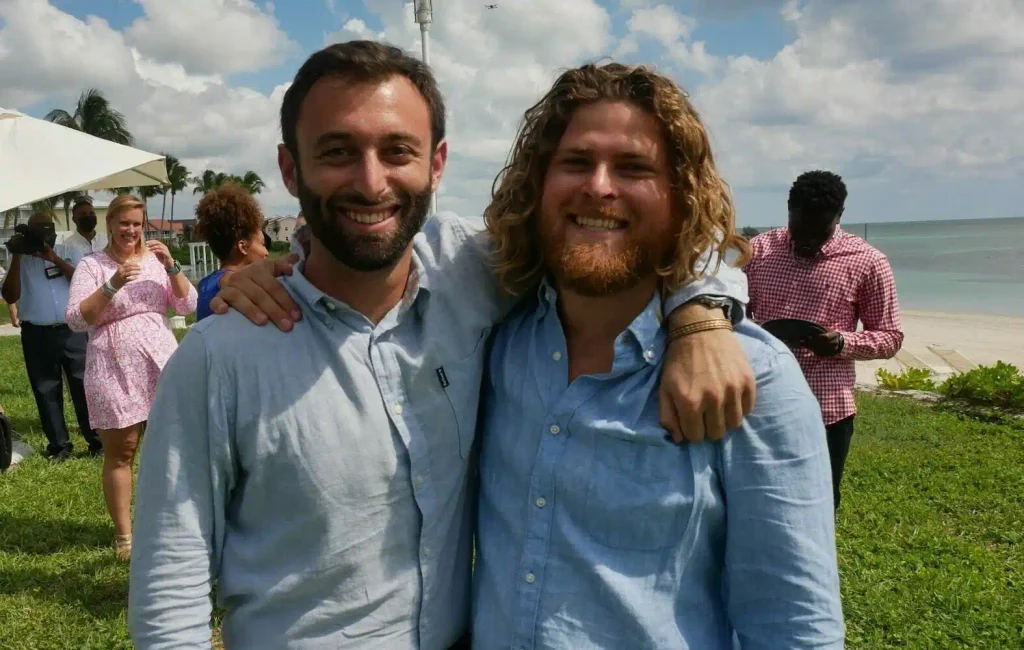
Founded by environmental entrepreneurs Sam Teicher and Gator Halpern, Coral Vita’s high-tech coral farms incorporate breakthrough methods to restore reefs in the most effective way possible. In 2021, the company was recognized as the inaugural winner of Prince William’s Revive Our Oceans Earthshot Prize Winner for their pioneering work in coral restoration.
To learn more about Coral Vita’s work or to get involved in coral reef conservation efforts, visit their website at www.coralvita.co or contact them directly through their Contact Us page.
FAQ
What does nature positive mean?
Nature positive is a global societal goal to halt and reverse nature loss by 2030 on a 2020 baseline, and achieve full recovery by 2050. It means more nature in 2030 than in 2020.
Is nature positive the same as net zero?
No. Net zero targets climate and greenhouse gas emissions. Nature positive targets biodiversity and the state of nature, using a 2020 baseline and a 2050 full-recovery goal.
What is TNFD and how does it relate to nature positive?
TNFD is a disclosure framework for nature-related risks, dependencies, and impacts. It is the reporting side of a nature positive commitment, structured around four pillars.
How do companies prove a nature positive claim?
Companies prove it with measurable, verifiable gains in species abundance, diversity, and ecosystem resilience, backed by disclosure and targets. A named restoration site is a concrete example.
References
- https://www.naturepositive.org/app/uploads/2024/02/The-Definition-of-Nature-Positive.pdf ↩︎
- https://www.cbd.int/article/cop15-cbd-press-release-final-19dec2022 ↩︎
- https://www.naturepositive.org/news/latest-news/nature-positive-initiative-launches-to-promote-the-integrity-and-implementation-of-the-global-goal-for-nature/ ↩︎
- https://www.worldbank.org/en/news/immersive-story/2022/12/07/securing-our-future-through-biodiversity ↩︎
- https://tnfd.global/recommendations/ ↩︎
- https://sciencebasedtargetsnetwork.org/companies/take-action/ ↩︎
- https://www.dpworld.com/news/releases/dp-world-and-coral-vita-open-the-uaes-first-restorative–educational-coral-exhibition/ ↩︎