Corporate funding for reef restoration is moving out of the charity bucket and into the boardroom. Businesses across hospitality, finance, and coastal development now have real mechanisms to protect the reefs their revenue depends on. Here’s what those mechanisms look like and why the stakes are too high to wait.
Key Takeaways
- Coral reefs generate an estimated $2.7 trillion in annual global economic value, making reef decline a direct business liability.
- Businesses can fund reef restoration through service contracts, adopt-a-coral programs, parametric insurance, blue bonds, and CSR partnerships.
- The Global Fund for Coral Reefs (GFCR) runs a blended finance model spanning 23 countries, pairing grant and investment capital for reef conservation.
- The Coral Reef Stewardship Fund provides domestic grant program funding for U.S.-based reef conservation projects.
- Coral Vita’s $8 million Series A is the first institutional funding round ever raised by a coral restoration company.
Coral Reefs: Far More Than Scenery
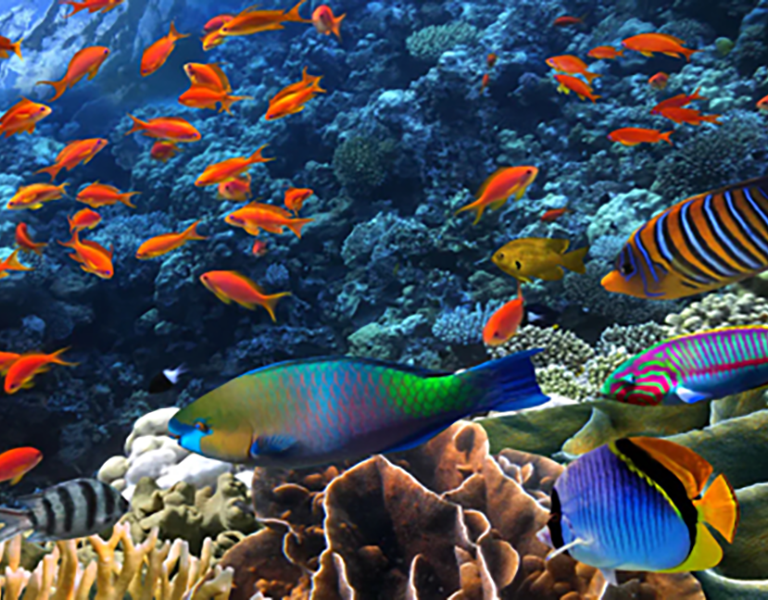
Coral reefs cover less than one percent of the ocean floor, yet support an estimated 25 percent of all marine species and provide food security for over one billion people.1 They deliver economic output, coastal protection, and pharmaceutical potential at a scale most businesses have never fully priced in.
Reef-based tourism generates approximately $36 billion annually.2 Healthy reefs absorb up to 97 percent of incoming wave energy.3 In the United States, coral reef ecosystems provide an estimated $1.8 billion in annual coastal flood protection value. When reefs die, those numbers go with them. Half of the world’s coral reefs have been lost since the 1970s,4 and scientists warn that over 90 percent of remaining reefs could be gone by 2050.5
Coral Reef Conservation: Why the Business Case Has Arrived
The economic value of coral reef conservation extends beyond tourism and fisheries. World Economic Forum analysis puts reef ecosystem services at up to $9.9 trillion annually when full replacement costs are accounted for.6 Meanwhile, the Kunming-Montreal Global Biodiversity Framework is pushing nature-related disclosures through TNFD and SBTN into mainstream ESG reporting.7
Only around $258 million has been invested in global reef restoration over the past decade.8 The Coral Reef Breakthrough calls for $12 billion in public and private investment by 2030.9 That gap is exactly where businesses can move.
Coral Reef Stewardship Fund: The Federal Grant Program
For organizations working within U.S. jurisdictions, the Coral Reef Stewardship Fund is the primary competitive grant program for reef conservation. Administered through NOAA’s Coral Reef Conservation Program and the National Fish and Wildlife Foundation (NFWF), the fund makes approximately $3.5 million available annually for projects addressing land-based sources of pollution, coral restoration scaling, and reef management capacity building.10
NOAA’s broader program aims to award at least $8 million per year in grants and cooperative agreements.11 The U.S. Coral Reef Task Force, established in 1998, coordinates federal conservation efforts across twelve agencies and U.S. reef jurisdictions including Florida, Hawaii, Puerto Rico, and the Virgin Islands.12
Florida’s Coral Reef: A Regional Case for Investment
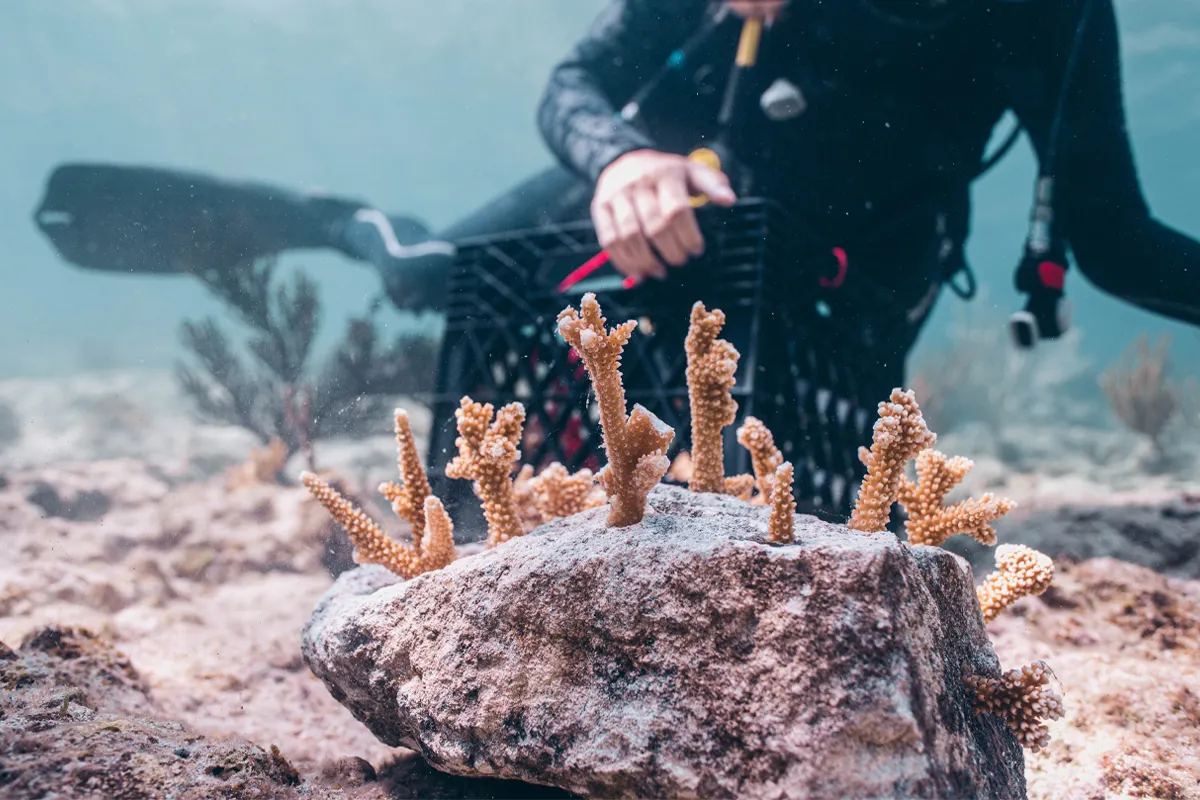
Florida’s coral reef stretches over 350 nautical miles and borders counties home to more than 6 million residents.13 It supports commercial fisheries, tourism, and coastal protection for one of the most developed shorelines in the United States.
A targeted investment of $3 million per kilometer in reef restoration along Florida and Puerto Rico could protect nearly 3,000 people from flooding annually and prevent over $391 million in annual property damage.14 For developers and insurers in southeast Florida, that math makes reef restoration a risk management conversation, not a philanthropic one.
The Global Fund for Coral Reefs: Scale Finance for Coral Reef Management
The Global Fund for Coral Reefs (GFCR) is the world’s leading financial vehicle for coral reef management at a global scale. The first United Nations multi-partner trust fund dedicated to SDG 14, the GFCR seeks to mobilize $500 million in grants and investment capital for reef ecosystem conservation and reef-dependent communities.15
The GFCR model pairs a grant window with an investment window, leveraging approximately three dollars in funding for every dollar invested.16 By 2030, the fund aims to catalyze over 400 reef-positive businesses, protect at least 12 percent of global coral reefs, and leverage up to $3 billion in finance across 23 countries.17 Its portfolio already spans waste treatment, sustainable aquaculture, ecotourism, blue carbon credits, and marine protected area finance. Explore Coral Vita’s perspective on the regenerative blue economy to understand where reef finance fits within the broader ocean economy.
GFCR Seeks: What the Global Fund Looks for in Partners
GFCR seeks businesses generating sustainable revenue while improving reef health — ecotourism, sustainable fisheries, waste management, and coral restoration services. The fund uses blended finance to de-risk early-stage businesses and attract mainstream investors, a model already producing results in Kenya, Papua New Guinea, the Philippines, and the Mesoamerican Reef region.
Financial Institutions and Blue Bonds
Blue bonds are debt instruments earmarked for ocean conservation, including reef restoration projects. Since the Seychelles issued the first sovereign blue bond in 2018, the market has grown to $2.5 billion issued in a single recent year.18 The Green Climate Fund committed $125 million as anchor investor to the GFCR’s investment window to encourage further public and private participation.19
For financial institutions with coastal exposure, blue bonds offer a structured, return-generating vehicle with defined conservation outcomes.
Climate Change, Capacity Building, and the Urgency of Threat Reduction
Climate change is the central driver of reef loss. The fourth global coral bleaching event, announced in 2024, was already affecting an estimated 84 percent of the world’s reefs.20 Environmental stressors from land-based sources of pollution, agricultural runoff, and coastal development compound the damage.
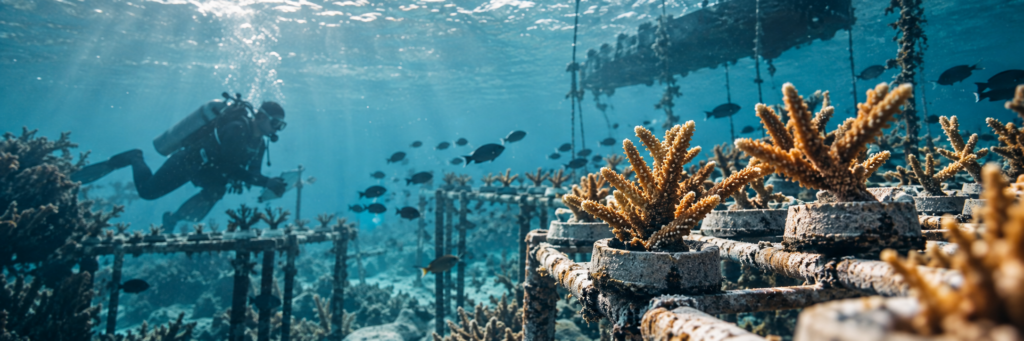
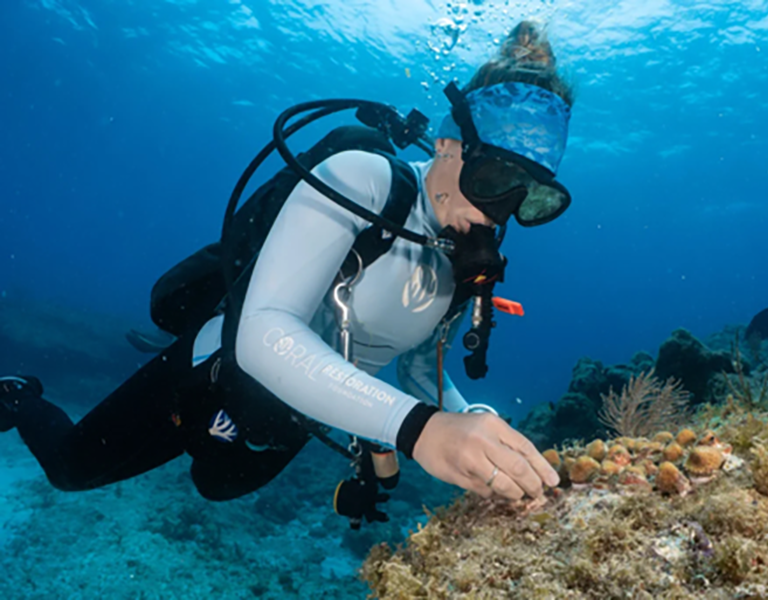
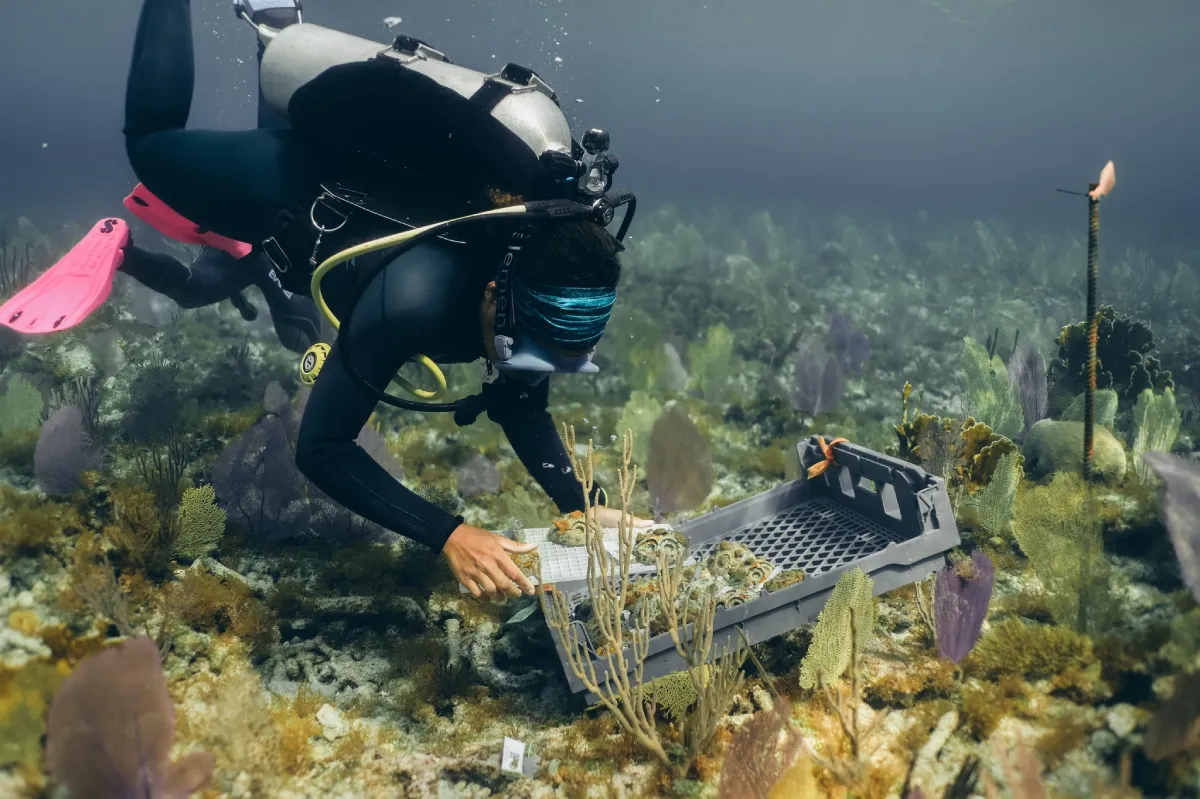
Effective coral reef restoration requires capacity building alongside funding: trained local workforces, monitoring systems, and ongoing scientific oversight. Coral Vita builds this into its model directly, hiring locally at each farm site and running education programming that creates reef management expertise within frontline communities.
Co-founder Sam Teicher is clear about the limits of restoration: “the best thing to do for coral reefs is not actually to hire us — it’s to stop killing them.” Reef restoration is necessary. It is not a license to continue polluting. Corporate partners who integrate reef investment into a broader nature-positive commitment make the strongest, most credible impact.
Funding Opportunities: Five Pathways for Corporate Partners
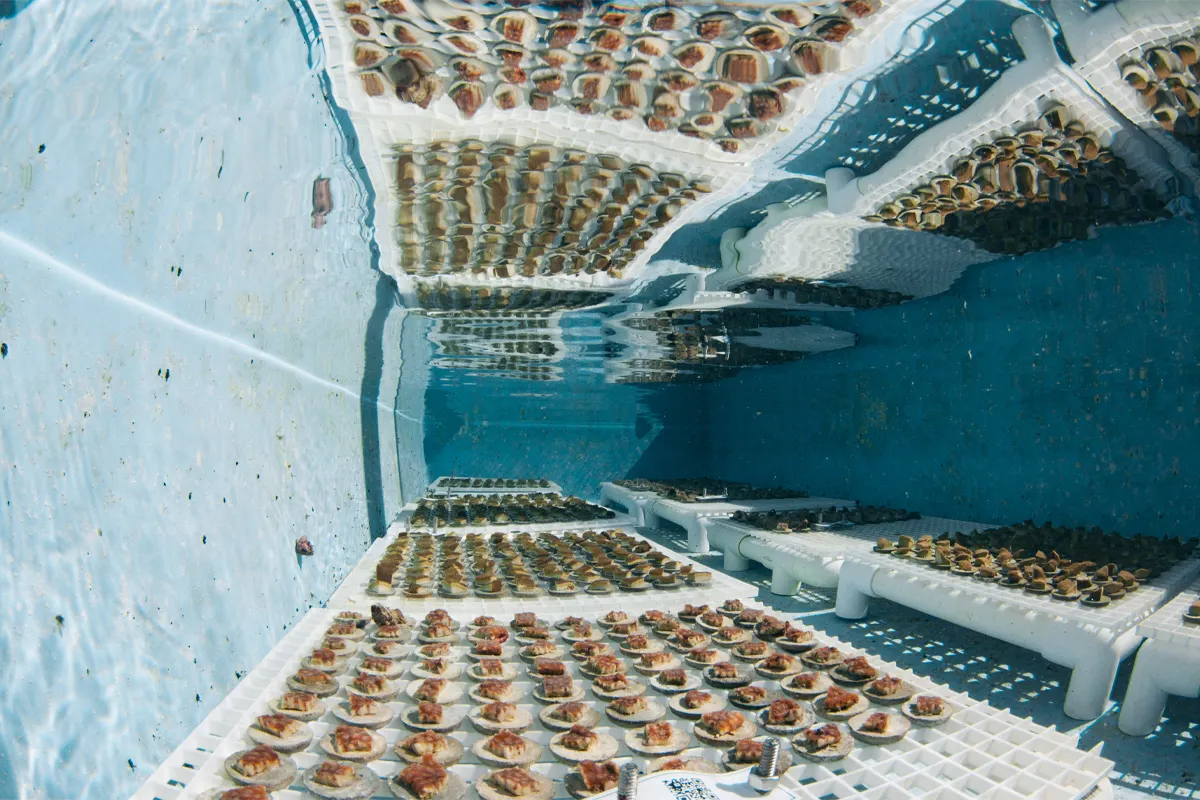
The coral reef restoration funding ecosystem now offers five proven pathways for businesses.
Restoration-as-a-service contracts let resort operators, developers, and coastal governments hire a provider to grow and outplant corals at defined sites with ESG-reportable outcomes. Coral adoption programs, like Coral Vita’s adopt-a-coral program, fund specific coral growth with co-branding rights for corporate partners. Parametric insurance turns reef conservation into an insurable resilience service; Mexico’s Quintana Roo model, built with the hotel industry, covers reefs providing an estimated $20 million in annual value to local businesses.21 Blue bonds and blended finance give larger actors structured vehicles with conservation-linked returns. CSR partnerships provide measurable, co-branded outcomes for companies funding reef restoration through existing sustainability budgets.
Conclusion
Reef decline is a material business risk. The restoration funding infrastructure to address it exists, is proven, and is reaching commercial scale.
Coral Vita is the world’s first land-based commercial coral farming company focused on reef restoration. With active farms in The Bahamas, Saudi Arabia, and the UAE, and an $8 million Series A behind it,22 the company has built the science, scale, and commercial track record that corporate partners need. Whether you are protecting a coastal asset, mitigating development impact, or deploying capital into ocean-positive infrastructure, Coral Vita can help you build a reef investment strategy that delivers measurable ecological and business results. Explore partnership opportunities or learn more about Coral Vita’s services.
About Coral Vita
Coral Vita is a mission-driven company dedicated to restoring our world’s dying and damaged reefs. Using innovative land-based farming techniques, Coral Vita grows diverse and resilient corals in months instead of the decades they take in nature. These corals are then transplanted into threatened reefs, helping to preserve ocean biodiversity while protecting coastal communities that depend on healthy reefs for protection, food, and income.
Founded by environmental entrepreneurs Sam Teicher and Gator Halpern, Coral Vita’s high-tech coral farms incorporate breakthrough methods to restore reefs in the most effective way possible. In 2021, the company was recognized as the inaugural winner of Prince’s William’s Revive Our Oceans Earthshot Prize Winner for their pioneering work in coral restoration.
To learn more about Coral Vita’s work or to get involved in coral reef conservation efforts, visit their website at www.coralvita.co or contact them directly through their Contact Us page.
Frequently Asked Questions
What is corporate funding for reef restoration?
Corporate funding for reef restoration means businesses directly financing the protection and recovery of coral reef ecosystems. Reefs underpin billions in coastal economic activity, and the funding gap cannot be closed by governments alone.
How can a business get started with reef restoration funding?
Companies can start with a coral adoption or sponsorship program, then scale toward service contracts or blended finance participation. Coral Vita offers dedicated options for corporate partners at multiple investment levels.
What is the Global Fund for Coral Reefs and how does it work?
The GFCR is a UN-backed blended finance vehicle pairing grant and investment capital to back reef-positive businesses across 23 countries. It aims to mobilize up to $3 billion in public and private finance for reef conservation by 2030.
What does eco friendly business engagement with reef restoration look like?
Eco friendly reef engagement includes reducing land-based pollution near reefs, funding restoration service contracts, purchasing parametric reef insurance, and integrating measurable reef outcomes into existing ESG reporting frameworks.
References
- https://coralreef.noaa.gov/aboutcrcp/news/featuredstories/nov24/local-national-capacity.html ↩︎
- https://coast.noaa.gov/states/fast-facts/coral-reefs.html ↩︎
- https://www.usgs.gov/centers/pcmsc/news/new-study-quantifies-reef-benefits-flood-protection ↩︎
- https://www.ipcc.ch/sr15/ ↩︎
- https://www.unep.org/news-and-stories/press-release/global-fund-coral-reefs-approves-more-us25-million-additional ↩︎
- https://www.weforum.org/stories/2025/01/ocean-economy-coral-reefs/ ↩︎
- https://tnfd.global/ ↩︎
- https://www.nature.com/articles/s41559-021-01604-w ↩︎
- https://coralreefbreakthrough.org/ ↩︎
- https://www.nfwf.org/programs/coral-reef-stewardship-fund/coral-reef-stewardship-fund-2025-request-proposals ↩︎
- https://coralreef.noaa.gov/conservation/funding_welcome.html ↩︎
- https://www.coris.noaa.gov/activities/uscrtf.html ↩︎
- https://taskforce.coralreef.noaa.gov/u-s-coral-jurisdictions/florida/ ↩︎
- https://www.science.org/doi/10.1126/sciadv.aax0503 ↩︎
- https://mptf.undp.org/fund/fcr00 ↩︎
- https://globalfundcoralreefs.org/reef-plus/news/gfcr-coalition-action-for-coral-2024-in-review ↩︎
- https://www.uncdf.org/article/8917/gfcr-partners-pledge-over-us25-million-for-coral-reefs-amid-escalating-global-bleaching-crisis ↩︎
- https://www.ft.com/content/blue-bond-issuance ↩︎
- https://www.greenclimate.fund/project/fp180 ↩︎
- https://globalfundcoralreefs.org/news/global-fund-for-coral-reefs-approves-more-than-25-million-usd-in-additional-funding-for-resilience-action/ ↩︎
- https://www.nature.com/articles/s41598-019-55188-6 ↩︎
- https://coralvita.co/in-the-press/coral-vita-raises-8m-series-a-led-by-builders-vision-impactalpha/ ↩︎