The ocean covers more than 70% of our planet, drives our weather systems, and supports more life than any terrestrial environment on Earth. Yet marine ecosystems are shrinking, fragmenting, and dying faster than most people realize. Marine conservation is one of the most urgent environmental priorities of our time — and the window to act is still open.
Key Takeaways
- The world has already lost 30 to 50% of its coral reefs, threatening the marine species and coastal communities that depend on them.
- Marine biodiversity underpins food security, coastal protection, and economic stability for over one billion people worldwide.
- Marine protected areas now cover roughly 10% of the ocean, but only a fraction of that coverage is actively managed or fully effective.
- Marine biologists, marine conservationists, and NOAA Fisheries are driving critical research and restoration across the world’s oceans.
- Coral Vita’s land-based reef restoration model links ocean health to community resilience and long-term economic opportunity.
The Ocean Is More Than Water — It’s the Foundation of Life on Earth
Ask most people what the ocean means to them and you’ll get answers about beaches, vacations, seafood. But the ocean’s role runs much deeper. Marine ecosystems produce more than half of the world’s oxygen, regulate global temperatures, cycle nutrients across continents, and provide protein for billions of people.
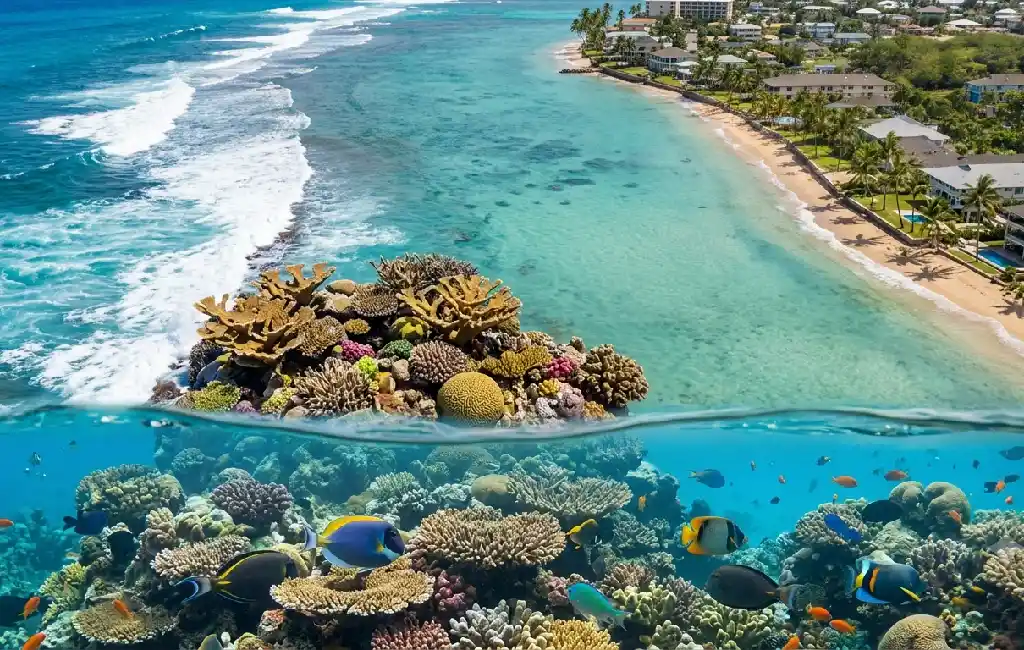
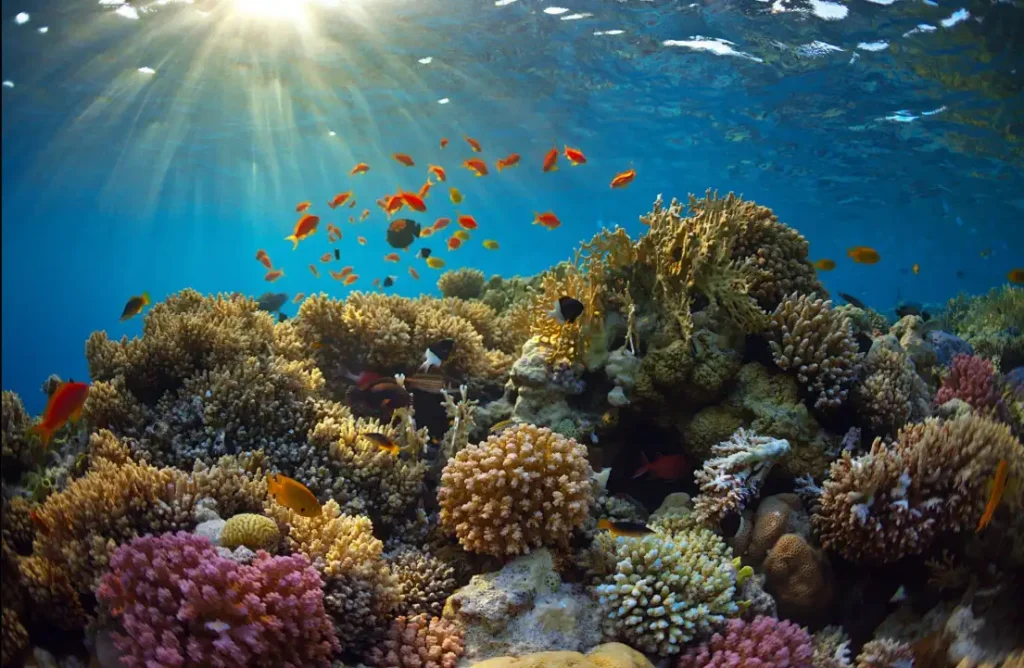
Coral reefs alone — covering less than 1% of the seafloor — support approximately 25% of all marine species on Earth.¹ Losing them doesn’t just hurt the fish. It unravels fisheries, strips coastlines of natural wave protection, and hits the economies of coastal nations hard.
This is why marine conservation matters beyond the science community. It matters to governments, insurers, developers, fishermen, and every person who eats fish, walks a beach, or live near the sea.
What Marine Conservation Actually Means
Marine conservation is the practice of protecting, managing, and restoring ocean habitats and the marine species that depend on them. It operates at multiple levels: from international policy and marine protected areas to local fishing regulations, habitat restoration, and science communication with the public. It draws from marine biology, ecology, conservation biology, and marine science — bringing together marine biologists, marine conservationists, policy makers, local communities, and the public, because protecting the ocean is not a job any single discipline can do alone.
Why Marine Ecosystems Are Under Pressure
Human activities are the primary driver of ocean decline. Climate change has pushed sea surface temperatures to record highs — for 13 consecutive months as of April 2024, oceans registered their hottest readings on record.1 The result is mass coral bleaching, habitat loss, and disruption of the food chains that sustain marine animals from tiny invertebrates to whales and dolphins.
Beyond temperature, pollution from plastics, agricultural runoff, and chemical discharge degrades water quality across marine habitats. Overfishing has reduced the global percentage of sustainably harvested fish stocks from 90% in 1974 to just 62.3% in 2021. Coastal development destroys the nursery habitats that juvenile fish, sea turtles, and marine mammals depend on. The pressure is real — and it’s cumulative
Marine Biodiversity: Why Variety in the Ocean Is Non-Negotiable
Marine biodiversity — the variety of life across ocean habitats — is what makes the ocean resilient. A healthy reef with dozens of coral species and hundreds of fish species can withstand a bleaching event far better than a degraded reef where monocultures dominate. Biodiversity is the ocean’s immune system.
Coral reefs are often called the rainforests of the sea. They harbor fish, invertebrates, marine plants, crustaceans, marine mammals like dolphins, and charismatic marine animals from the humble sea cucumber to the hawksbill sea turtle. Many of these species are endangered not because they’re rare by nature, but because their habitats are disappearing.
What Happens When Marine Biodiversity Collapses
When marine species disappear, the effects cascade fast. Losing apex predators like sharks disrupts prey populations. The decline of herbivorous fish allows algae to overtake coral. Native species lose ground to invasive ones. The ocean’s ecological balance shifts in ways that are difficult and expensive to reverse.
For local fishing communities along the Atlantic coast and Pacific Islands, these shifts aren’t abstract. They’re measured in catch declines, rising costs, and loss of cultural heritage tied to the sea.
Marine Mammals, Sea Turtles, and the Endangered Species Crisis
The Animals Most Visible — and Most at Risk
Marine mammals including whales, dolphins, and sea lions draw public attention to ocean health in ways statistics often can’t. They’re also among the species most affected by entanglement, ship strikes, noise pollution, and prey depletion. Several whale species remain listed under the Endangered Species Act, with NOAA Fisheries leading conservation efforts that combine research, regulation, and public education.2
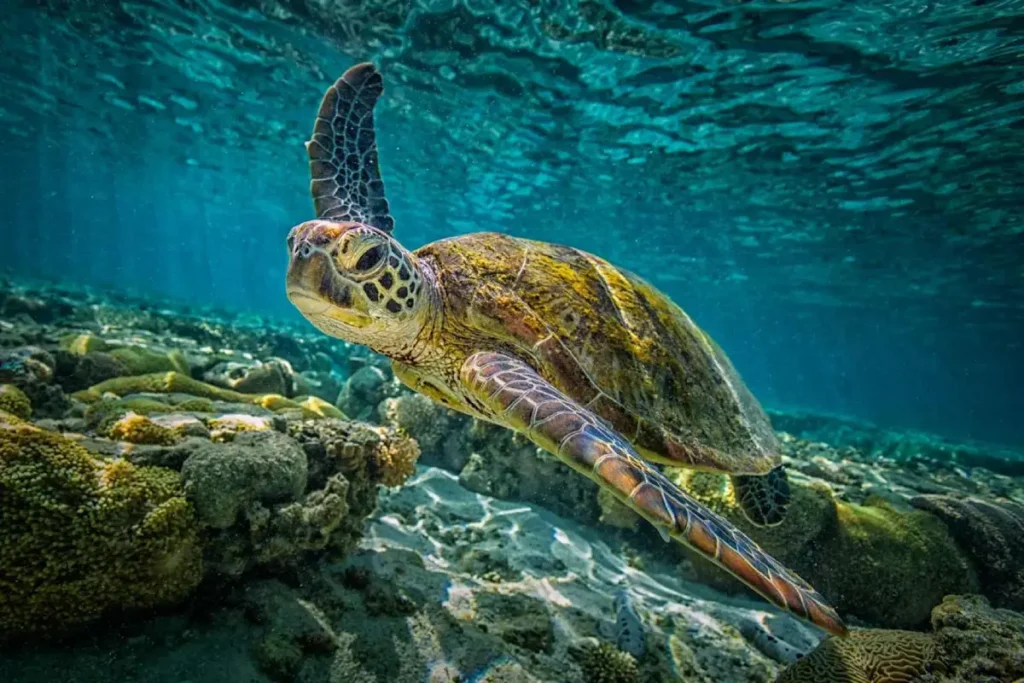
All seven species of sea turtle are listed as threatened or endangered. They nest on beaches, feed in open water, and depend on healthy coral reefs for shelter and food. Marine biologists who conduct research on these animals accumulate critical data about migration routes and population recovery — scientific information that feeds directly into decisions about fishing practices, shipping lanes, and protected areas.
Marine Plants: The Quiet Workhorses of Ocean Health
Seagrasses, Mangroves, and Algae — The Unsung Heroes
When people imagine ocean conservation, they picture coral reefs and whales. But marine plants are equally important. Seagrasses form underwater meadows that sequester carbon, filter water, and serve as nursery habitat for juvenile fish and foraging grounds for sea turtles and marine mammals. Mangrove forests buffer coastlines from storm surge, lock in carbon, and support remarkable biodiversity at the land-sea boundary.
Microscopic algae — particularly zooxanthellae — live inside coral tissue and provide up to 90% of a coral’s energy through photosynthesis. When ocean temperatures spike, corals expel these algae in what we call bleaching. Without the algae, the coral starves. This relationship makes marine plants an inseparable part of coral reef ecology.
The Science Behind Marine Conservation: What Marine Biologists and Researchers Do
Research, Data, and the Work of Marine Science
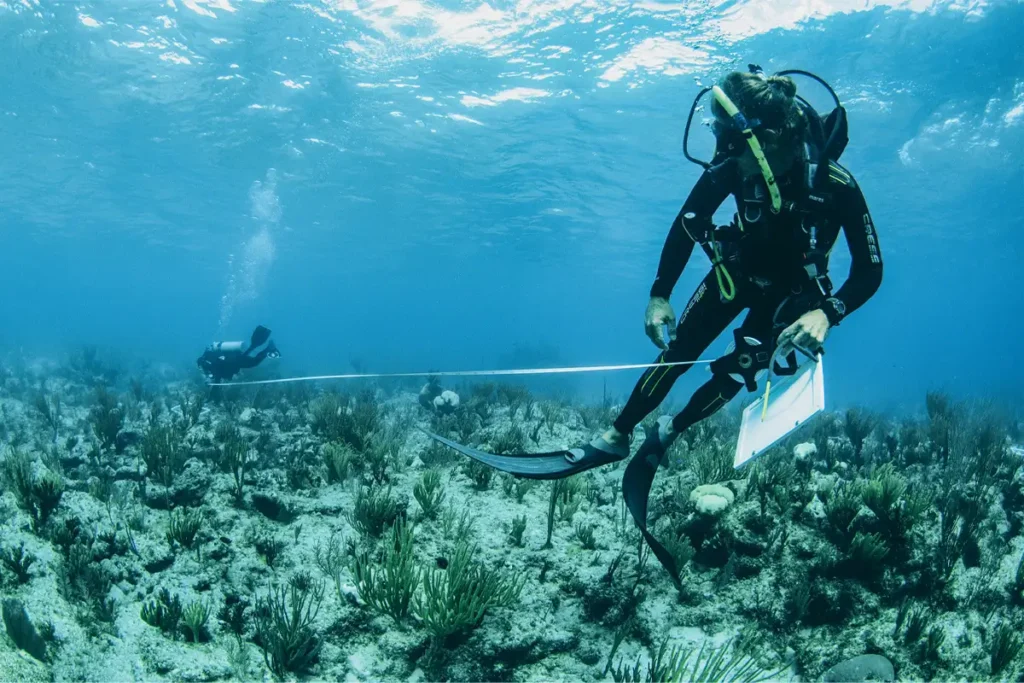
Marine biologists and marine conservationists conduct research that forms the backbone of every conservation effort. They collect data on species populations, track migration patterns, monitor reef health, and model how marine ecosystems might respond to different climate scenarios.
NOAA Fisheries runs expansive monitoring programs across the Atlantic coast, Pacific, and Caribbean, feeding data into management decisions for fisheries, endangered species listings, and protected area designations. Science communication is an increasingly critical part of this work — translating marine science findings into information that policy makers and the public can act on. Many marine biologists begin with a bachelor’s degree in ecology or marine biology before pursuing research within universities, marine conservation groups, or agencies like NOAA.
Conservation Biology Meets Restoration Science
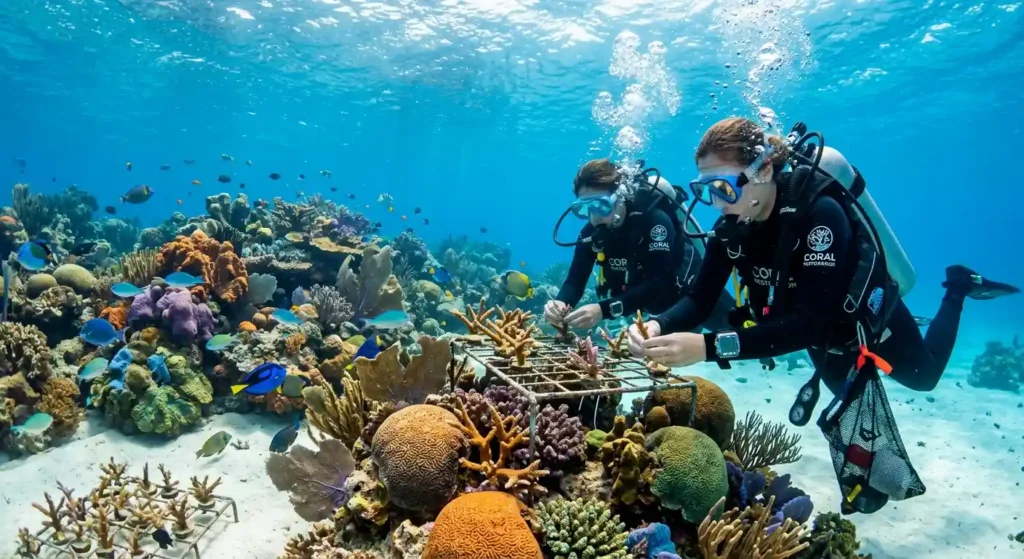
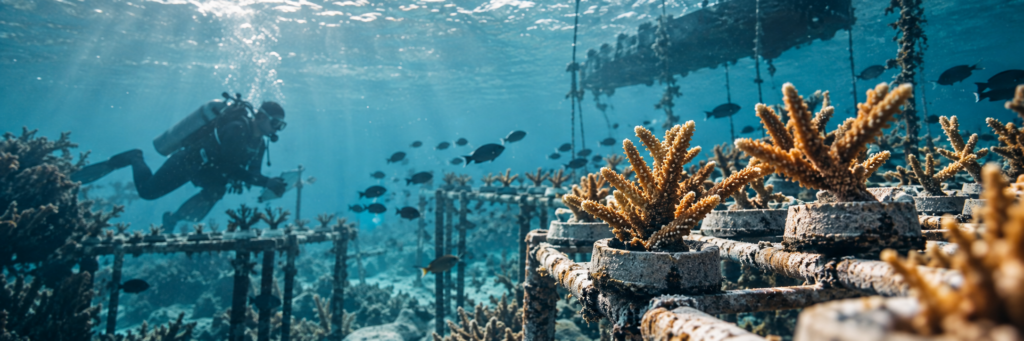
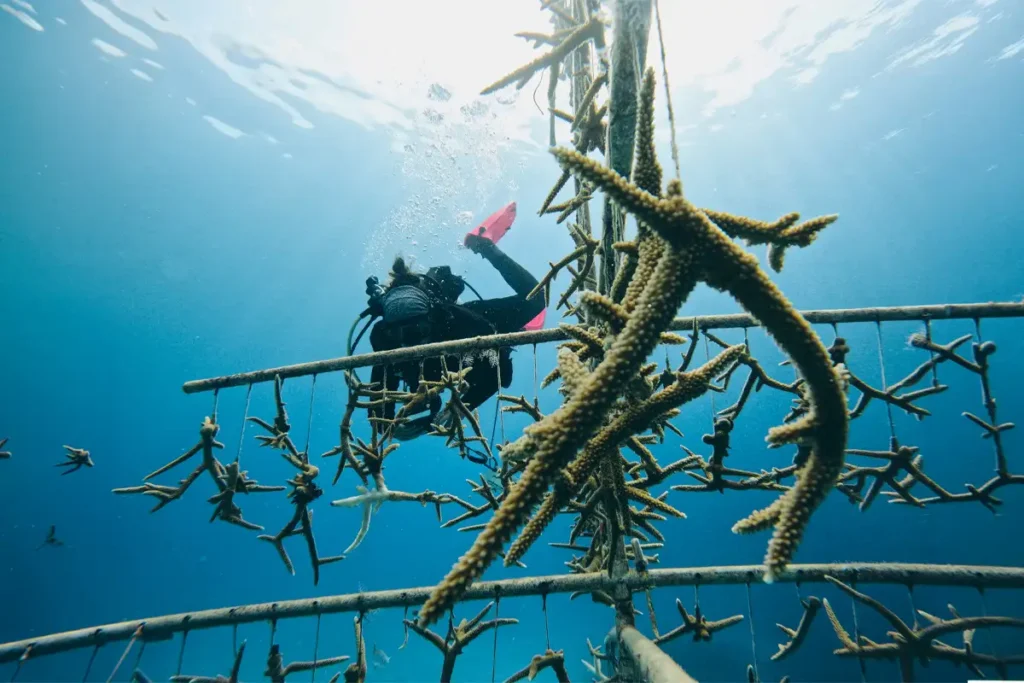
Conservation biology applies ecological knowledge to protecting and restoring species and habitats. In the marine environment, this has expanded from pure protection to active restoration — growing coral fragments, transplanting seagrasses, removing invasive species, and engineering conditions where native species can recover.
Coral Vita sits at the cutting edge of this work. Operating land-based coral farms in The Bahamas, Saudi Arabia, and the UAE, Coral Vita grows climate-resilient corals using techniques that incorporate assisted evolution — helping corals adapt to warmer, more acidic ocean conditions. After raising $8 million in Series A funding led by Builders Vision, Coral Vita is scaling a model that links restoration science to commercial viability.3 The goal is to build a reef restoration economy that sustains itself beyond grants.
Marine Protected Areas: What They Can and Can’t Do
The Promise and Limits of Protecting Ocean Areas
Marine protected areas — zones where human activity is limited to protect ocean habitats — are a primary tool in the marine conservation toolkit. As of 2024, roughly 8.6% of the world’s ocean and coastal areas were within documented protected and conserved areas, and in early 2026 that figure crossed 10%.4
That sounds like progress. And it is. But protection on paper isn’t the same as protection in practice. Research shows that many marine protected areas lack active management and fail to restrict the most damaging human activities. Only about 1.3% of the ocean is covered by protected areas where management effectiveness has been formally assessed. The global target — 30% of land and sea under effective conservation by 2030 — is still a long way off. For marine conservation to deliver real results, protected areas need enforcement, monitoring, and coordination across national parks and international marine areas alike.
Ocean Conservation Beyond Borders: The Role of International Cooperation
Policy Makers, Marine Conservation Groups, and the Global Response
No country can protect the ocean alone. Two-thirds of the ocean lies beyond national jurisdiction — and until the UN High Seas Treaty came into force in January 2026, those waters were essentially unprotected. The treaty establishes mechanisms to designate protected areas on the high seas, a historic step for global ocean conservation.
Marine conservation groups operating internationally — including scientific bodies, marine science institutes, and NGOs — have been central to pushing these policy changes forward. They educate people, lobby governments, conduct research, and hold polluters accountable.
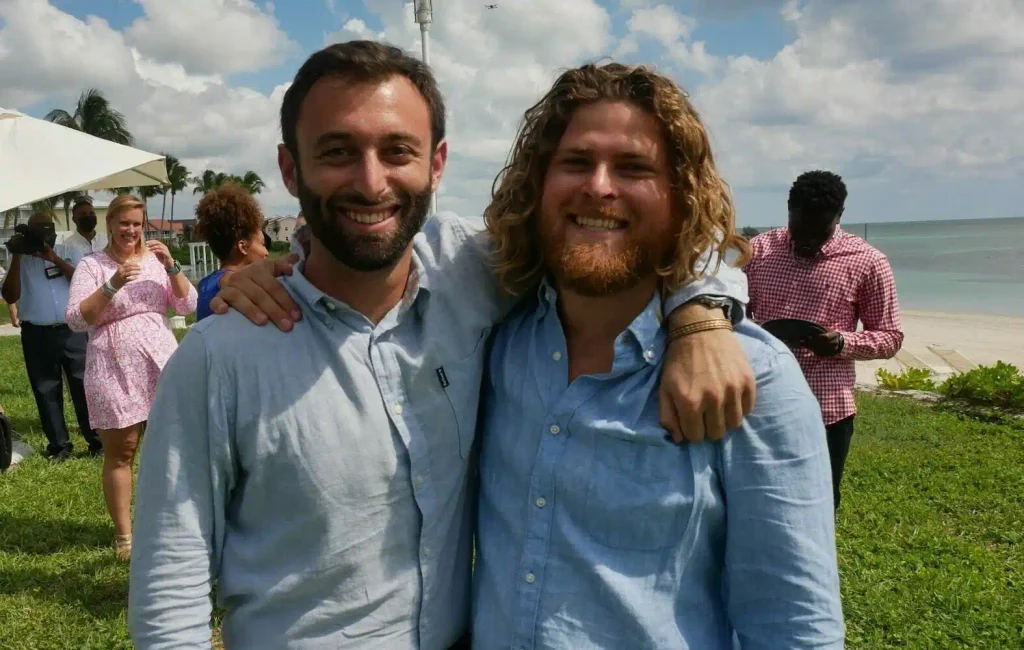
Coral Vita’s approach reflects this collaborative ethic. Rather than positioning restoration as a silver bullet, co-founder Sam Teicher is clear: the single best thing anyone can do for coral reefs is stop contributing to their decline. Restoration matters and works. But it shouldn’t be an excuse to keep burning fossil fuels or polluting the ocean. Marine conservation requires integrity — being honest about what can and can’t be fixed.
How Coral Reef Restoration Fits Into the Bigger Marine Conservation Picture
Coral Restoration as Ecological Infrastructure
Coral reefs are ecological infrastructure — protecting coastlines, supporting fisheries, and harboring the marine biodiversity that keeps ocean life systems functioning. When reefs degrade, everything built on top of them — from fishing industries to tourism economies — starts to fail.
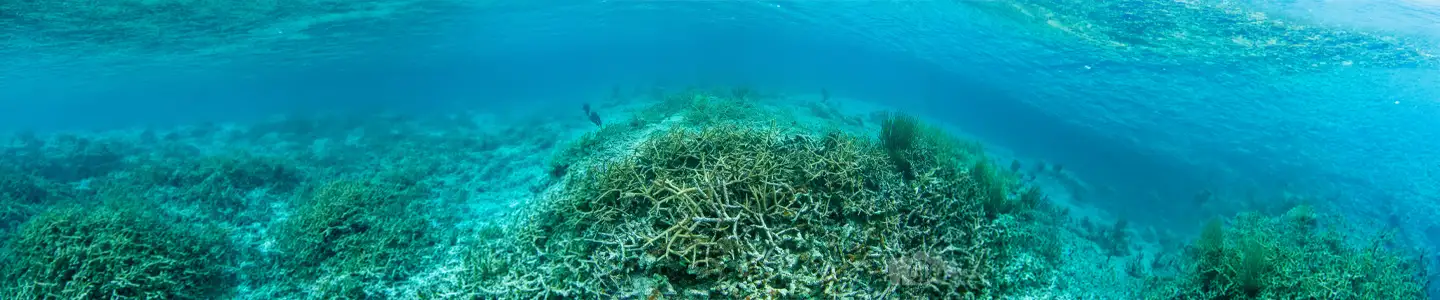
The world has already lost 30 to 50% of its coral reefs. That happened within the last three decades, to organisms that have been on this planet for 50 million years. The fourth global coral bleaching event, triggered in 2024, brought mass bleaching conditions to reefs across multiple ocean basins.
Active restoration can’t replace the need to reduce carbon emissions, stop pollution, and strengthen marine protected areas. But it plays a critical role in buying reefs time to adapt — and in rebuilding what’s been lost.
Coral Vita’s Model: Land-Based Farming at Scale
Coral Vita grows corals on land, in controlled farm environments, where conditions can be carefully managed and corals conditioned to tolerate warmer, more acidic water. This approach allows production at a scale that traditional underwater coral gardening cannot achieve.
The farm model also turns coral restoration into an economically viable enterprise. Hotels, developers, governments, and individuals can pay directly for coral reef restoration, with Coral Vita’s adopt-a-coral program offering one of the most accessible entry points into ocean conservation. Revenue from these programs funds scientific work, workforce development, and R&D that keeps the restoration model improving.
Coral Vita’s farms also function as education centers — places where local communities can volunteer, learn, and see restoration happening firsthand. That educational layer is essential. Marine conservation needs a much larger base of people who are genuinely involved, not just informed.
Who Becomes a Marine Conservationist?
Careers and Entry Points in Conservation Efforts
Marine conservationists come from diverse backgrounds. Marine biologists and ecologists lead research programs. Policy specialists push for better legal protections. Science communicators translate technical data for the public. Educators bring ocean conservation into classrooms. Community organizers engage fishing villages and coastal towns closest to the reefs.
Many entry points don’t require a biology degree. Volunteering with local conservation efforts, participating in citizen science programs, or adopting a coral through Coral Vita’s program are all meaningful ways to get involved in the conservation space. The regenerative blue economy also needs people who understand business, finance, and communications — because protecting the ocean at scale is as much an economic challenge as an ecological one.
Promoting Marine Conservation in Everyday Life
Individual Action Within a Bigger System
The biggest threats to ocean life require systemic policy change. But daily choices add up too: choosing reef-safe sunscreen, reducing single-use plastic, eating sustainably sourced seafood, and supporting credible marine conservation work. These habits build a culture of ocean stewardship that eventually shapes policy. And talking about what coral reefs actually do — protect coastlines, feed communities, support ocean life5 — brings more people into the conversation.
Conclusion: The Ocean Isn’t Lost — But It Needs Us to Act Like It Matters
We are not losing a scenic backdrop. We are losing the foundation of a living system the entire biosphere depends on.
Marine conservation requires marine biologists running long-term research programs, marine conservationists advocating in policy spaces, and organizations building restoration models that are honest about their limits. It requires the public to care enough to vote, donate, change habits, and keep asking hard questions.
But it is not hopeless. The science is advancing. Policy frameworks are getting stronger. And restoration efforts, including Coral Vita’s land-based farms, demonstrate that ecosystem-scale impact is within reach when the right science, business model, and community relationships align.
We’re in a bad spot. But we have the tools and capacity to make it meaningfully better — and everything we do in that direction counts.
Learn more about Coral Vita’s adopt-a-coral program and how you can support coral reef restoration.
About Coral Vita
Coral Vita is a mission-driven company dedicated to restoring our world’s dying and damaged reefs. Using innovative land-based farming techniques, Coral Vita grows diverse and resilient corals in months instead of the decades they take in nature. These corals are then transplanted into threatened reefs, helping to preserve ocean biodiversity while protecting coastal communities that depend on healthy reefs for protection, food, and income.
Founded by environmental entrepreneurs Sam Teicher and Gator Halpern, Coral Vita’s high-tech coral farms incorporate breakthrough methods to restore reefs in the most effective way possible. In 2021, the company was recognized as the inaugural winner of Prince’s William’s Revive Our Oceans Earthshot Prize Winner for their pioneering work in coral restoration.
To learn more about Coral Vita’s work or to get involved in coral reef conservation efforts, visit their website at www.coralvita.co or contact them directly through their Contact Us page.
Frequently Asked Questions
What is marine conservation and why does it matter?
Marine conservation protects, manages, and restores ocean habitats and the species living in them. It matters because marine ecosystems sustain over a billion people through food, coastal protection, and economic activity — and they’re declining rapidly from climate change, pollution, and overfishing.
What do marine biologists do in conservation?
Marine biologists research ocean species and habitats, collect data to track ecosystem health, and produce scientific information that informs fishing regulations and restoration programs. Their work spans fieldwork, lab analysis, and communicating findings to policy makers and the public.
How do marine protected areas help ocean conservation?
Marine protected areas restrict harmful activities in specific ocean zones, giving marine species and habitats room to recover. When actively managed, they restore fish populations, protect endangered species, and increase marine biodiversity in surrounding waters.
How can I get involved in marine conservation efforts?
Volunteer with local conservation groups, support Coral Vita’s adopt-a-coral program, reduce plastic use, choose sustainably sourced seafood, and advocate for stronger ocean protection policies at local and national levels.
References
- https://coast.noaa.gov/states/fast-facts/coral-reefs.html ↩︎
- https://www.fisheries.noaa.gov/national/habitat-conservation/restoring-coral-reefs ↩︎
- https://coralvita.co/in-the-press/coral-vita-raises-8m-series-a-led-by-builders-vision-impactalpha/ ↩︎
- https://iucn.org/press-release/202604/world-reaches-milestone-nature-10-ocean-now-officially-protected ↩︎
- https://unstats.un.org/sdgs/report/2024/goal-14 ↩︎