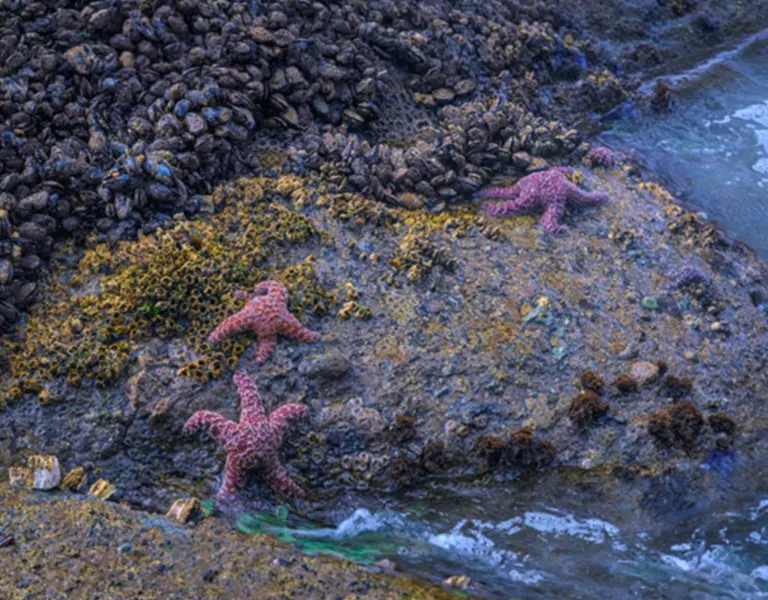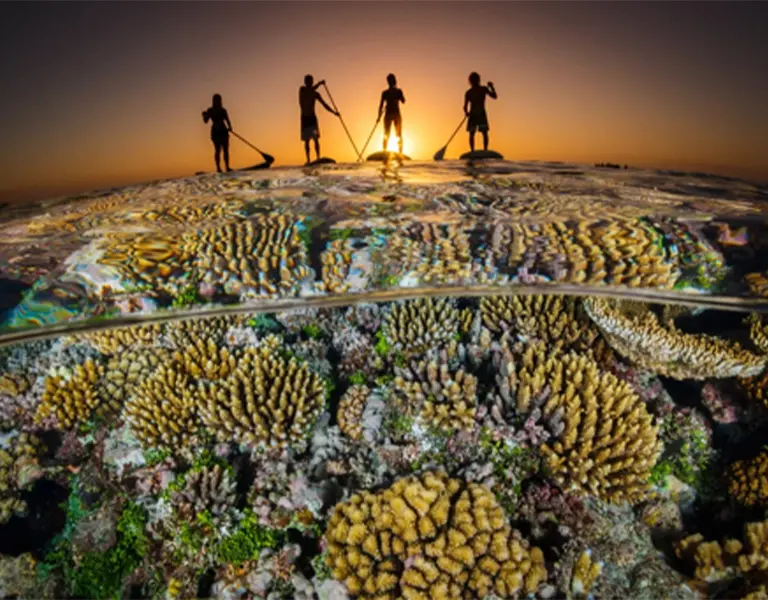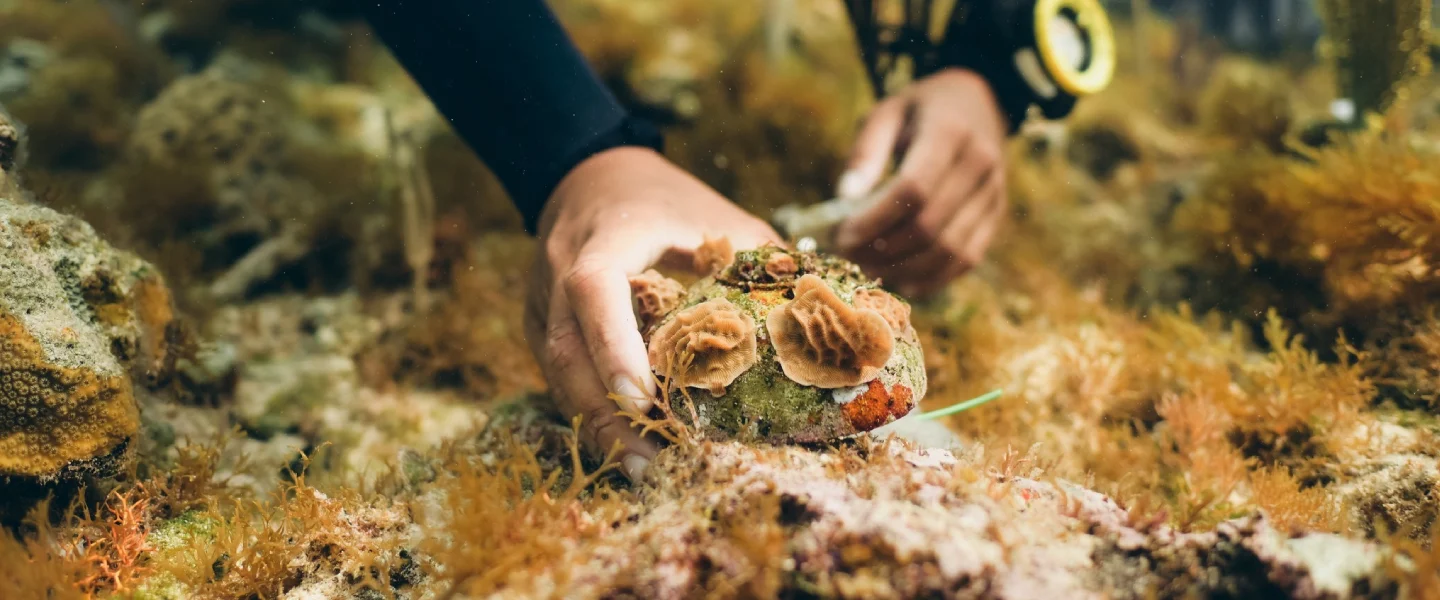
Coral restoration is the scientific practice of actively repairing and rebuilding degraded coral reefs. It covers nurseries, fragment propagation, larval settlement, and substrate repair, and it exists because reefs are now losing coral faster than natural recovery can replace it. Half the world’s coral has disappeared since 1970, and 30% to 50% of global reef cover is already gone.
Quick Facts
- Coral reefs cover less than 1% of the ocean floor and house roughly 25% of all marine life
- Restoration splits into two tracks: asexual propagation using coral fragments, and sexual reproduction using coral larvae collected during spawning
- A study of 20 outplanting projects in Florida tracked 2,419 staghorn colonies and found survival ranged from 4% to 89% across cohorts monitored five years or longer
- NOAA’s Mission: Iconic Reefs targets 25% average coral cover at seven Florida sites by 2040
- Healthy reefs absorb up to 97% of wave energy, which gives coastal communities a direct financial stake in restoration
What Coral Restoration Involves
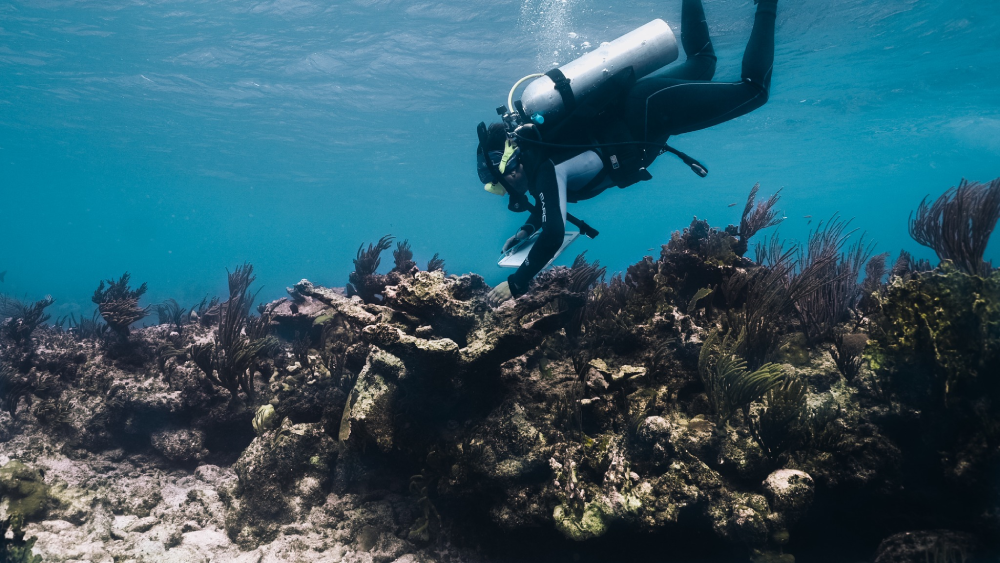
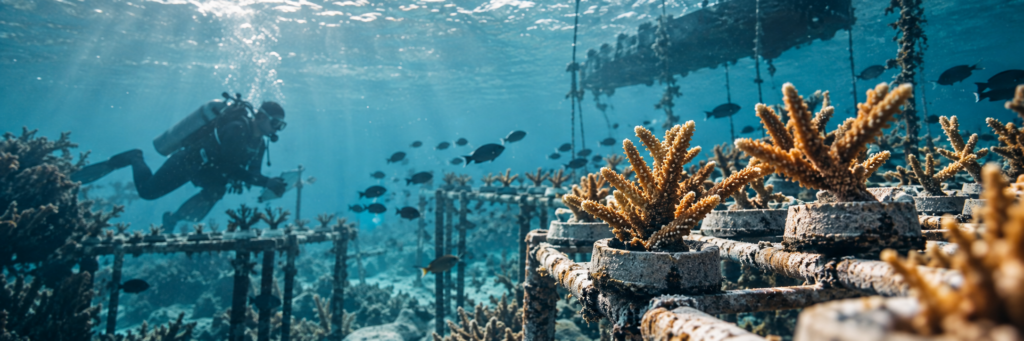
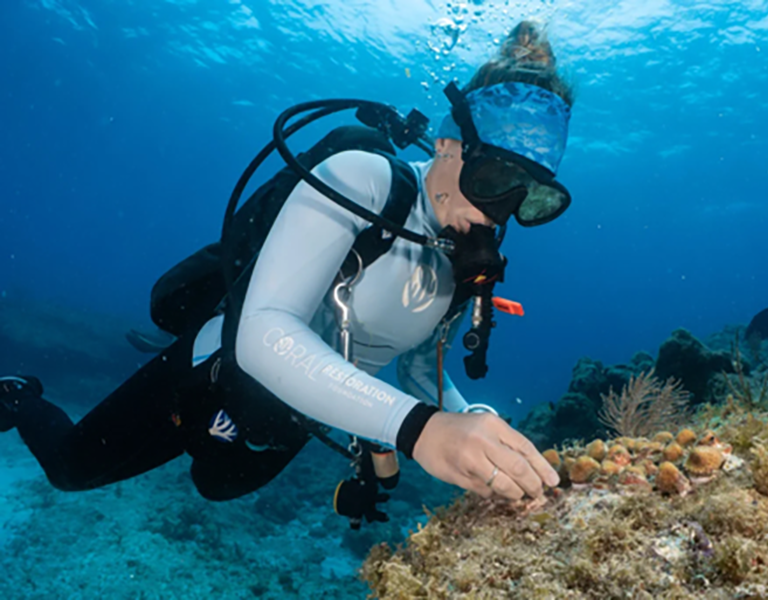
Restoration means putting living coral back onto reef structure that has lost it, then keeping that coral alive long enough to reproduce on its own. Practitioners grow corals in nurseries, either in the sea or on land, and outplant them onto damaged reefs once the colonies reach transplant size.
The animal doing the building is the coral polyp, a small soft-bodied organism that pulls calcium carbonate out of seawater to form a skeleton. Reading up on what coral is helps here, because the biology drives every propagation method that follows. Coral polyps also host algae in their tissue, and that partnership supplies most of their energy.
Why Coral Reef Ecosystems Cannot Recover Alone
Reefs have always taken damage from storms and wave action, and they have always grown back. What changed is the pace, and the stacking of pressures that climate change has accelerated. Warming water triggers coral bleaching, which strips the algae out of coral tissue and leaves colonies starving. Ocean acidification makes it harder for corals to build calcium carbonate skeletons at all. Coral disease outbreaks, pollution runoff, and sediment smothering finish the job on reefs already weakened by heat.
The 2023 to 2025 global bleaching event is the most widespread on record, with 84% of the world’s reefs hit by bleaching-level heat stress.1 Natural recovery works on a timescale of decades. The other threats to coral reefs are arriving on a timescale of years. Human intervention closes that gap.
Coral Reef Restoration Methods
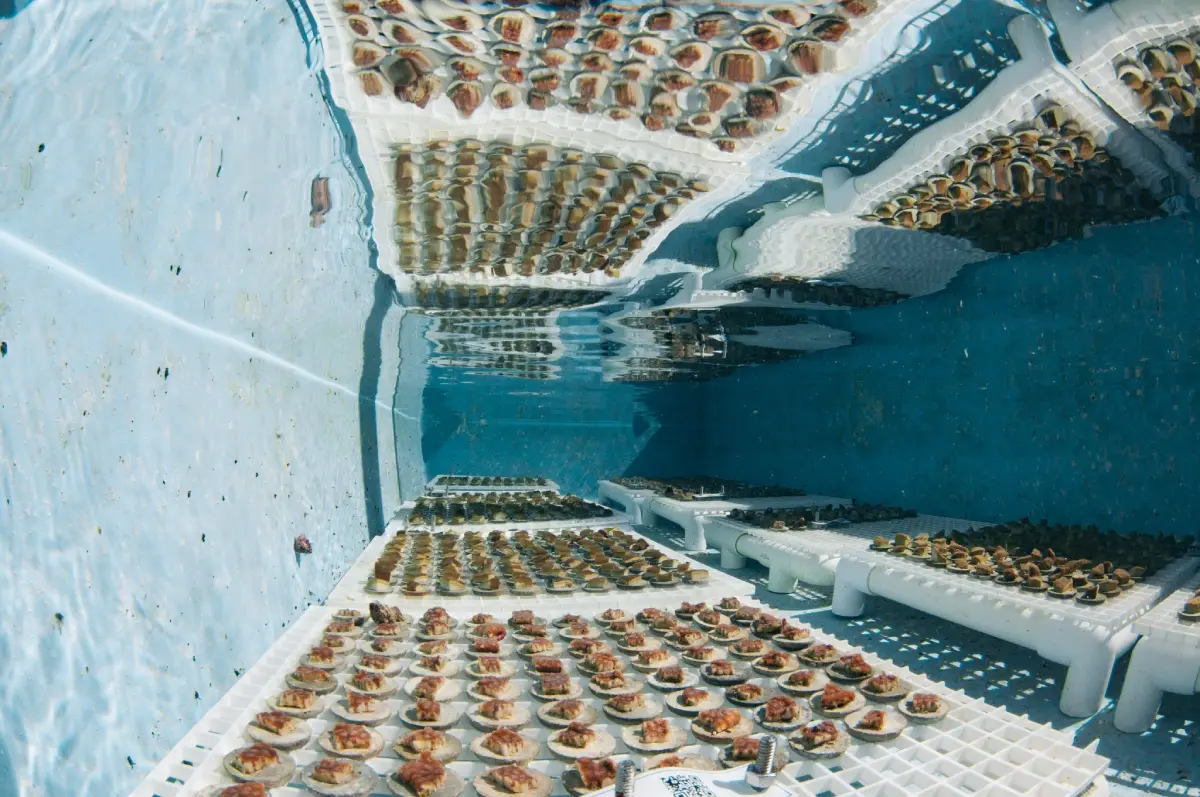
Restoration activities vary widely and there is no single technique. Programs pick propagation methods based on the species involved, the condition of the reef substrate, and what they are trying to achieve.
Asexual Reproduction and Coral Fragments
Most restoration activity worldwide relies on asexual propagation. A small piece is cut from a healthy donor colony, grown out in a nursery, and outplanted. Because the fragment is a clone, the resulting colony carries the same genetics as its parent.
Coral gardening is the standard version of this, and it works well for branching species with fast growth rates. Micro-fragmentation extends the same logic to slow growing corals such as brain and boulder species. Cutting a colony into pieces of roughly one square centimeter triggers rapid tissue regrowth, and fragments of the same genotype fuse back together when their edges meet2. The result is a large colony assembled in months instead of the decades that process takes in the wild. Our breakdown of coral fragmentation covers the cutting and mounting process in detail.
The limitation of asexual reproduction is genetic. Clones of the same parent share the same tolerances, so a reef planted from a handful of donor colonies carries a narrow set of responses to future disturbances.
Coral Larvae and Sexual Reproduction
Larval propagation solves that. Teams collect eggs and sperm during mass coral spawning events, fertilize them in tanks, and rear the resulting coral larvae until they are ready to settle. Every larva is a new genetic combination, so populations built this way carry far more genetic diversity than nursery clones.
That diversity is the point. Coral populations with a wide genetic base recover better after bleaching and disease events, because some genotypes survive conditions that kill others. Programs increasingly pair both tracks: asexual propagation for volume and speed, sexual reproduction for the genetic range that determines whether restored coral colonies survive the next heat wave.
Substrate Work and Coral Recruitment
Coral larvae need hard, stable, clean surfaces to settle on. Reefs broken up by ship groundings or storm damage often have none, and loose rubble grinds away any recruit that manages to attach. Substrate stabilization repairs that physical damage, and substrate enhancement adds eco-friendly structures that give larvae somewhere to land.
Site preparation matters just as much. Restoration teams clear macroalgae and nuisance organisms before outplanting, since algae compete directly with young corals for space and light. Both steps aim at the same outcome: natural coral recruitment resuming without further help, restoring coral to the reef through its own reproduction rather than repeat outplanting.
Land Based Coral Farming
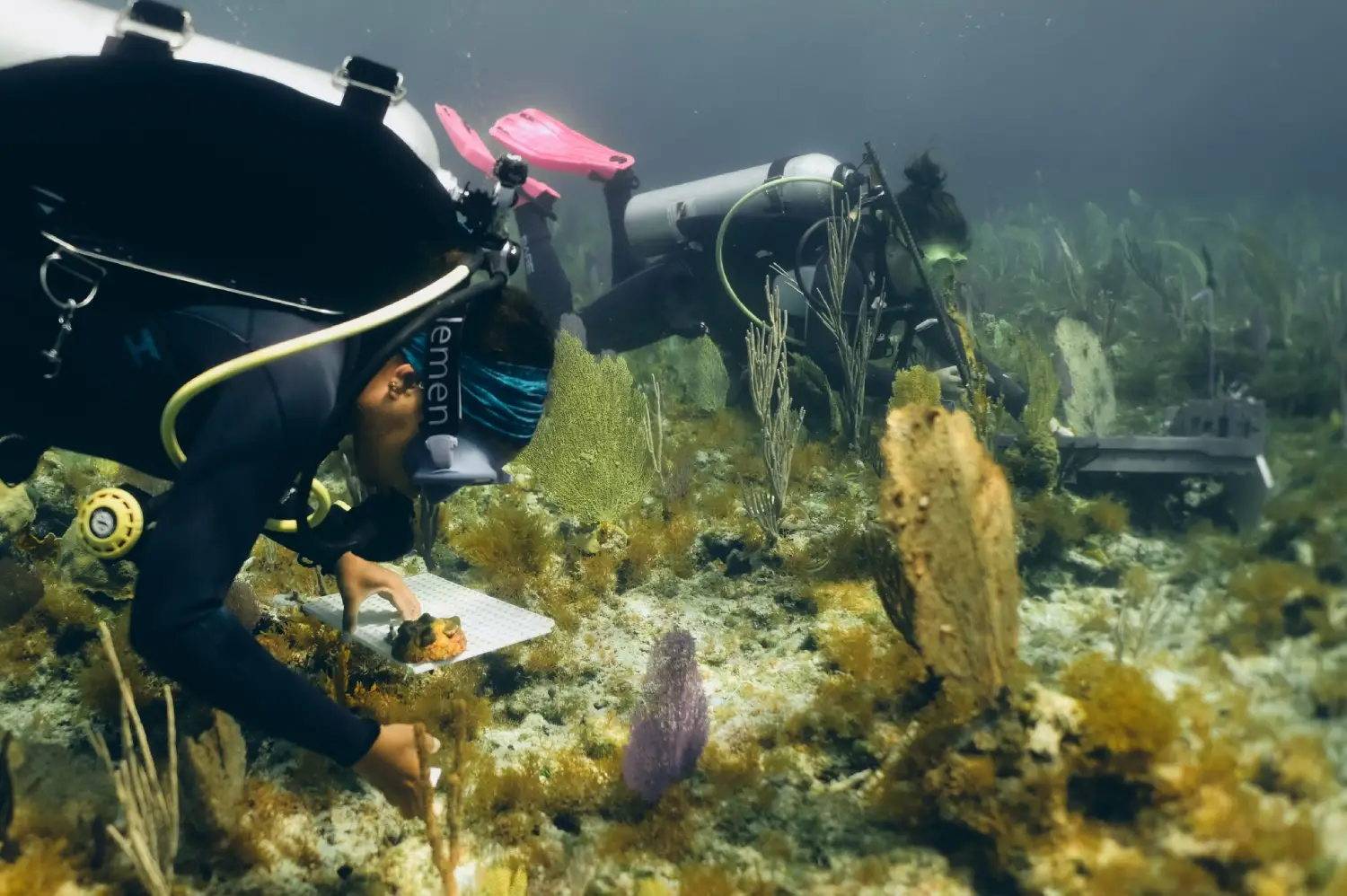
Ocean nurseries put corals through the same heat, disease, and storm exposure as the reefs they came from. Land based farms take that variability away. Tanks let growers hold temperature, light, water chemistry, and flow at chosen values, which means production runs on a schedule instead of a season.
That control also makes assisted evolution possible. Corals can be exposed to elevated temperature and acidity in a tank, and the genotypes that handle those conditions are the ones bred forward, which is the practical route to improving coral resilience before anything goes in the water. Coral Vita grows resilient corals in months instead of the decades reefs take in the wild, and has produced more than 100,000 corals across 52 species since 2019, with active projects in The Bahamas, Saudi Arabia, and the United Arab Emirates. The farm in Freeport, Grand Bahama also runs as an education site, which folds local community involvement into the operation rather than treating it as outreach. Other marine conservation efforts work alongside this, from marine protected areas to fisheries management.
What the Coral Restoration Foundation Data Shows
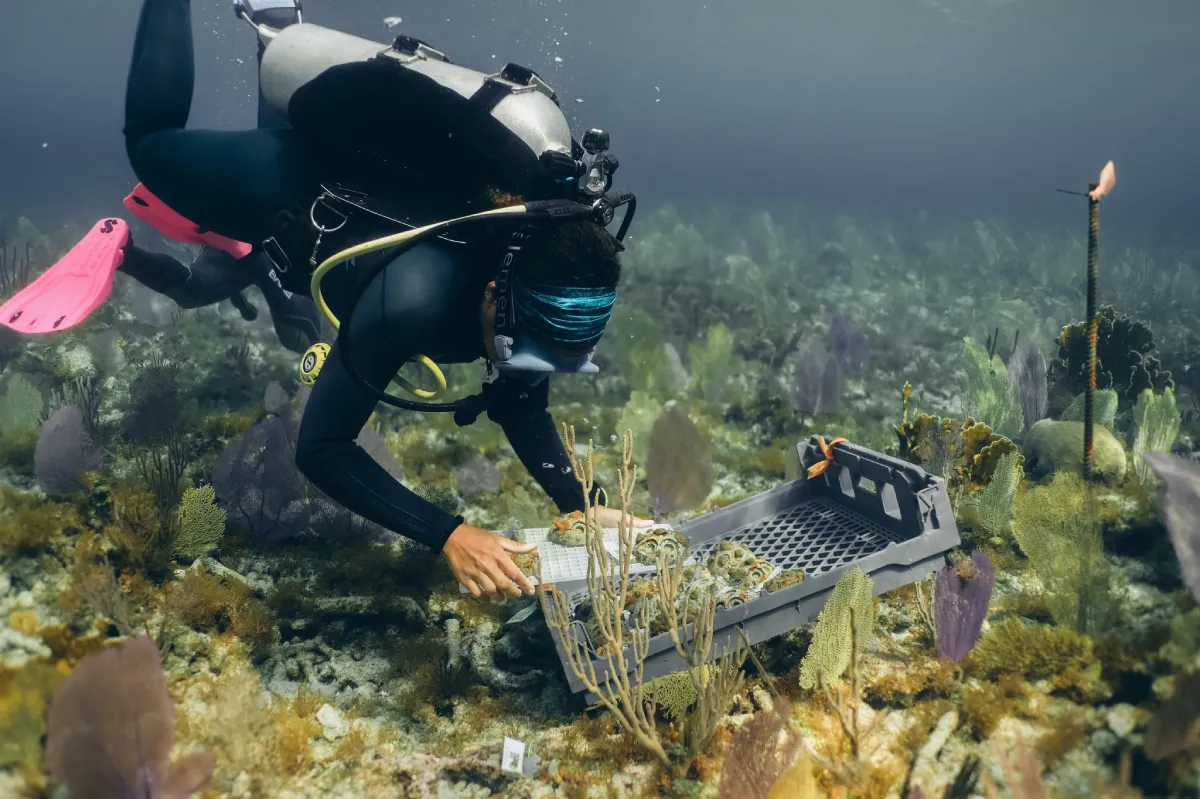
The Coral Restoration Foundation began outplanting staghorn coral, Acropora cervicornis, to Florida Keys reefs in 2007 from its base near Key Largo. A 2020 analysis of 20 of those projects tracked 2,419 colonies through eight years of monitoring.3
The findings are worth reading closely. The projects aimed at rebuilding abundance where staghorn was once common. Monitoring showed high survival rates in the first two years, after which mortality climbed. Across cohorts monitored at least five years, survival ranged from 4% to 89% depending on site and habitat. Populations of A. cervicornis and A. palmata had already declined more than 90% since the 1970s, driven by coral disease and bleaching with pollution and predation adding to the losses.
The authors’ conclusion is the useful part: reducing the underlying stressors has to come before restoration produces real population growth. Until then, outplanting protects species against local extinction and keeps genetic diversity in the wild. That is a narrower claim than restoration is often given credit for, and it is the honest one.
Coral Cover and Reef Resilience Targets
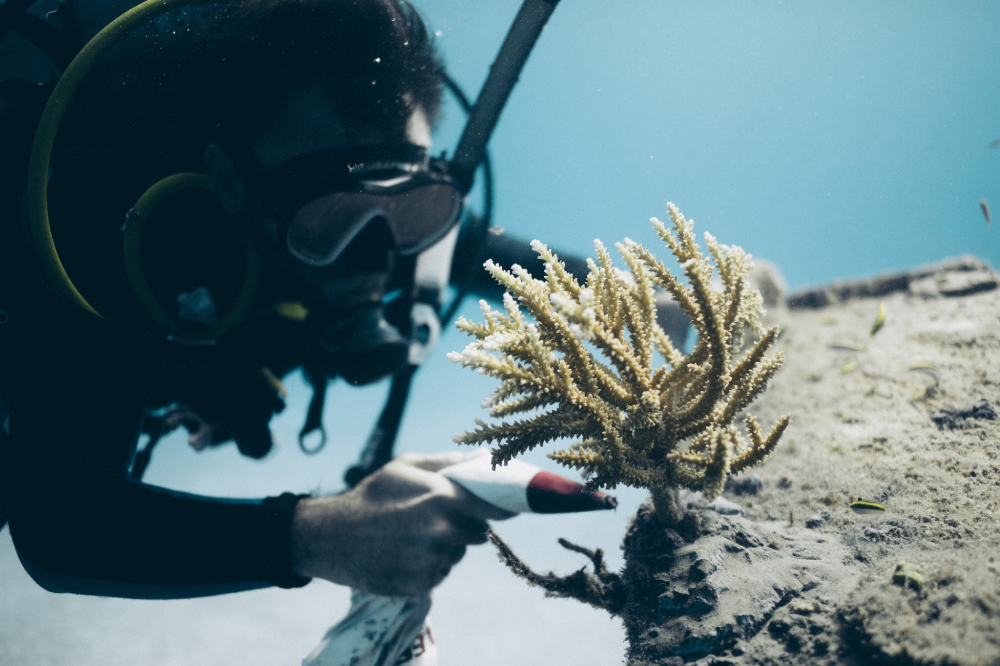
Restoration programs are judged on coral cover, the percentage of reef surface carrying living coral. Mission: Iconic Reefs, run by NOAA, aims to bring seven Florida reef sites to 25% average coral cover by 2040, which would return them to self-sustaining levels.4
Reef resilience is the harder measure, and it depends on things a coral cover number does not capture: how many genotypes are present, whether fish and grazing species have returned, and whether new recruits are settling without help. The Iconic Reef Guardians program brings divers and snorkelers into monitoring and maintenance work,5 which is how a program covering seven sites keeps eyes on all of them. Results from Florida also feed restoration efforts on other reefs, from the Caribbean to the Red Sea.
Community involvement is not a soft add-on. Projects that engage local stakeholders early tend to last longer, partly because residents hold knowledge about local conditions that visiting scientists do not, and partly because it settles arguments over who benefits before they turn into conflicts.
Reef Restoration and Coastal Communities
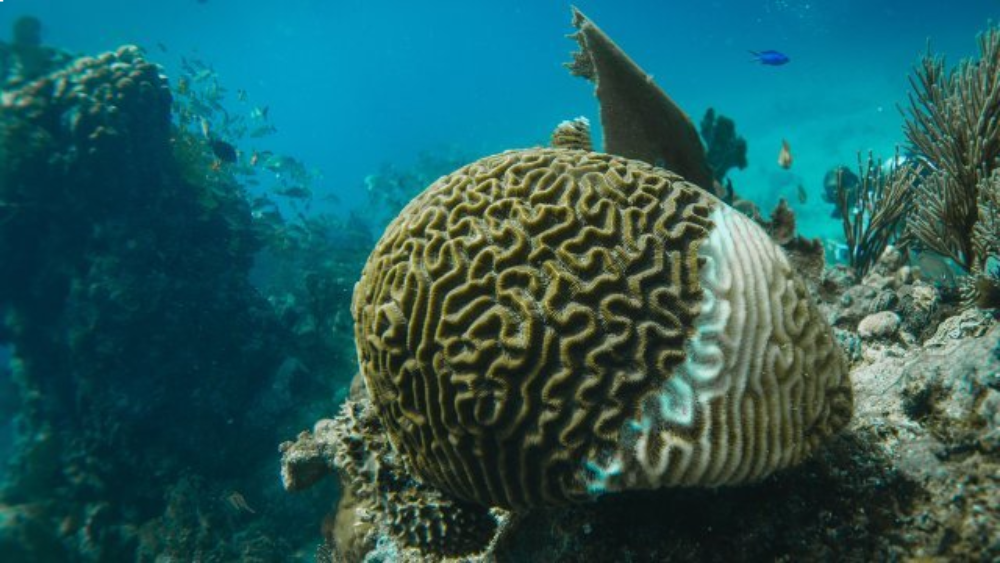
The economic case is straightforward. Reefs break wave energy before it reaches shore, absorbing up to 97% of it, which delivers an estimated $1.8 billion a year in flood protection benefits in the United States alone6. Lose the reef and that protection has to be rebuilt in concrete.
Reefs also feed people. They supply about a quarter of the total fish catch in developing countries and contribute food for an estimated one billion people in Asia.7 Florida’s Coral Reef alone generates more than $8 billion in economic impact, and global reef tourism runs to roughly $36 billion annually. Worldwide, reefs provide around $2.7 trillion a year in goods and services.8 The full economic impact of coral reef loss puts numbers on what disappears when reefs go.
Community involvement is not a soft add-on. Projects that engage local stakeholders early tend to last longer, partly because residents hold knowledge about local conditions that visiting scientists do not, and partly because it settles arguments over who benefits before they turn into conflicts.
Reef Restoration and Coastal Communities
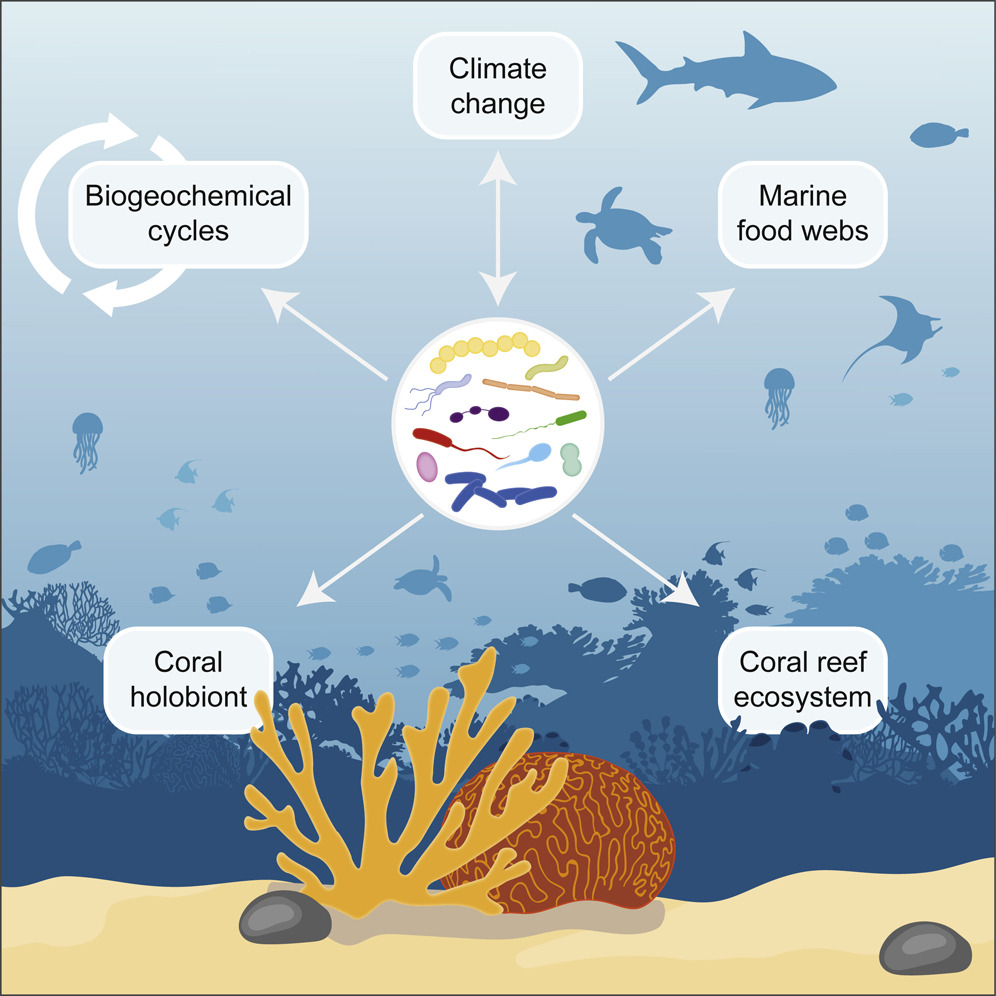
The economic case is straightforward. Reefs break wave energy before it reaches shore, absorbing up to 97% of it, which delivers an estimated $1.8 billion a year in flood protection benefits in the United States alone.⁶ Lose the reef and that protection has to be rebuilt in concrete.
Reefs also feed people. They supply about a quarter of the total fish catch in developing countries and contribute food for an estimated one billion people in Asia.⁷ Florida’s Coral Reef alone generates more than $8 billion in economic impact, and global reef tourism runs to roughly $36 billion annually. Worldwide, reefs provide around $2.7 trillion a year in goods and services.⁸ The full economic impact of coral reef loss puts numbers on what disappears when reefs go.
Reefs also move species and nutrients between mangroves and seagrass beds, so reef decline pulls down the habitats next door as well. The symbiotic relationships on a reef show how tightly linked those systems are.
What Coral Reefs Need Beyond Restoration
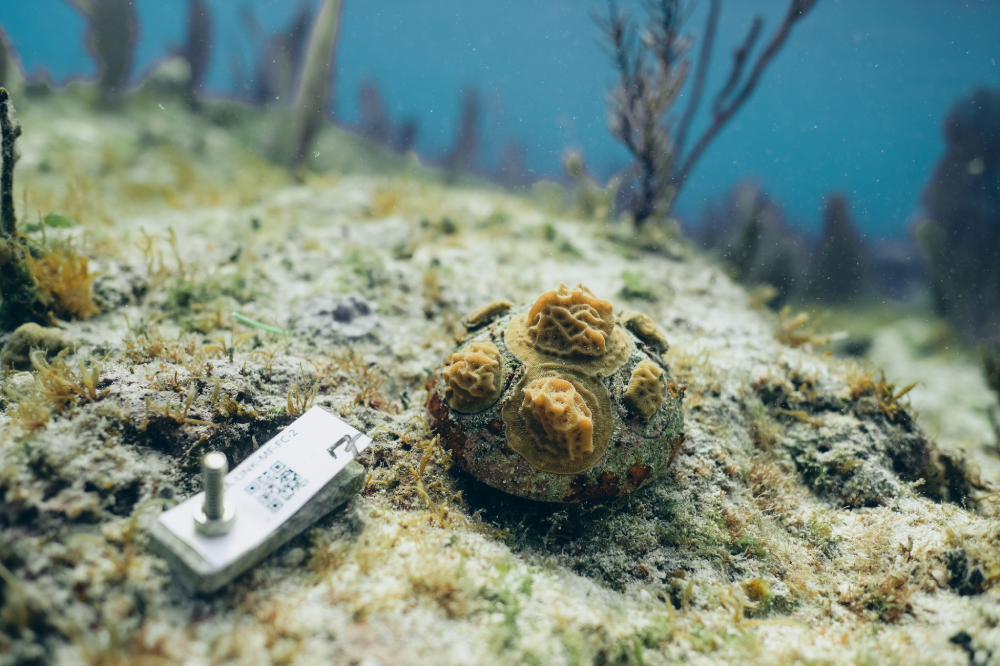
Restoration puts coral back. It does not lower sea temperature, cut nitrogen runoff, or stop ocean acidification. Outplanted corals face the same conditions that killed the originals, and the Florida survival data shows what happens when those conditions go unaddressed.
The work that pairs with restoration is unglamorous: wastewater treatment, fishing limits, sediment control from coastal development, and emissions reduction. Efforts to restore coral reefs buy time and hold populations together while that happens.
If you want to be involved, three routes are open. Fund restoration directly through a coral adoption or corporate sponsorship program. Push for coastal water quality rules and coral conservation policy where you live. Or book a farm tour and see the propagation methods in person before deciding where your resources go.
About Coral Vita
Coral Vita is a mission-driven company dedicated to restoring our world’s dying and damaged reefs. Using land-based farming techniques, Coral Vita grows diverse and resilient corals in months instead of the decades they take in nature. These corals are then transplanted into threatened reefs, helping to preserve ocean biodiversity while protecting coastal communities that depend on healthy reefs for protection, food, and income.
Founded by environmental entrepreneurs Sam Teicher and Gator Halpern, Coral Vita’s high-tech coral farms incorporate breakthrough methods to restore reefs in the most effective way possible. In 2021, the company was recognized as the inaugural winner of Prince William’s Revive Our Oceans Earthshot Prize Winner for their pioneering work in coral restoration.
To learn more about Coral Vita’s work or to get involved in coral reef conservation efforts, visit their website at www.coralvita.co or contact them directly through their Contact Us page.
Frequently Asked Questions
What is coral restoration?
Coral restoration is the practice of actively rebuilding degraded coral reefs. Teams grow corals in nurseries using fragments or larvae, then outplant them onto damaged reefs and repair the substrate so new coral recruitment can resume.
How long does coral restoration take?
Nursery grow-out takes months to a few years depending on species and method. Reaching self-sustaining coral cover on a restored reef takes far longer, which is why programs like Mission: Iconic Reefs set targets two decades out.
Does coral restoration actually work?
It works at site scale. Florida monitoring found outplant survival ranging from 4% to 89% over five years. Restoration protects species from local extinction, but population recovery needs pollution and heat stress reduced too.
What is the difference between coral gardening and micro-fragmentation?
Both use asexual propagation. Coral gardening grows branching fragments in nurseries until they mature. Micro-fragmentation cuts colonies into roughly one-centimeter pieces, which regrow quickly and fuse together, making it suited to slow growing boulder and brain corals.
References
- https://icriforum.org/4gbe-2025/ ↩︎
- https://www.viridismag.com/articles-viridis-magazine/microfragmentation-5an9n/ ↩︎
- https://journals.plos.org/plosone/article?id=10.1371%2Fjournal.pone.0231817 ↩︎
- https://www.climate.gov/news-features/features/mission-iconic-reefs-noaa-aims-restore-florida-keys-climate-resilient-corals/ ↩︎
- https://www.sciencedaily.com/releases/2024/03/240308123248.htm ↩︎
- https://www.sciencedirect.com/science/article/pii/S0308597X17300635 ↩︎
- https://coast.noaa.gov/states/fast-facts/coral-reefs.html ↩︎
- https://reefresilience.org/value-of-reefs/ ↩︎